
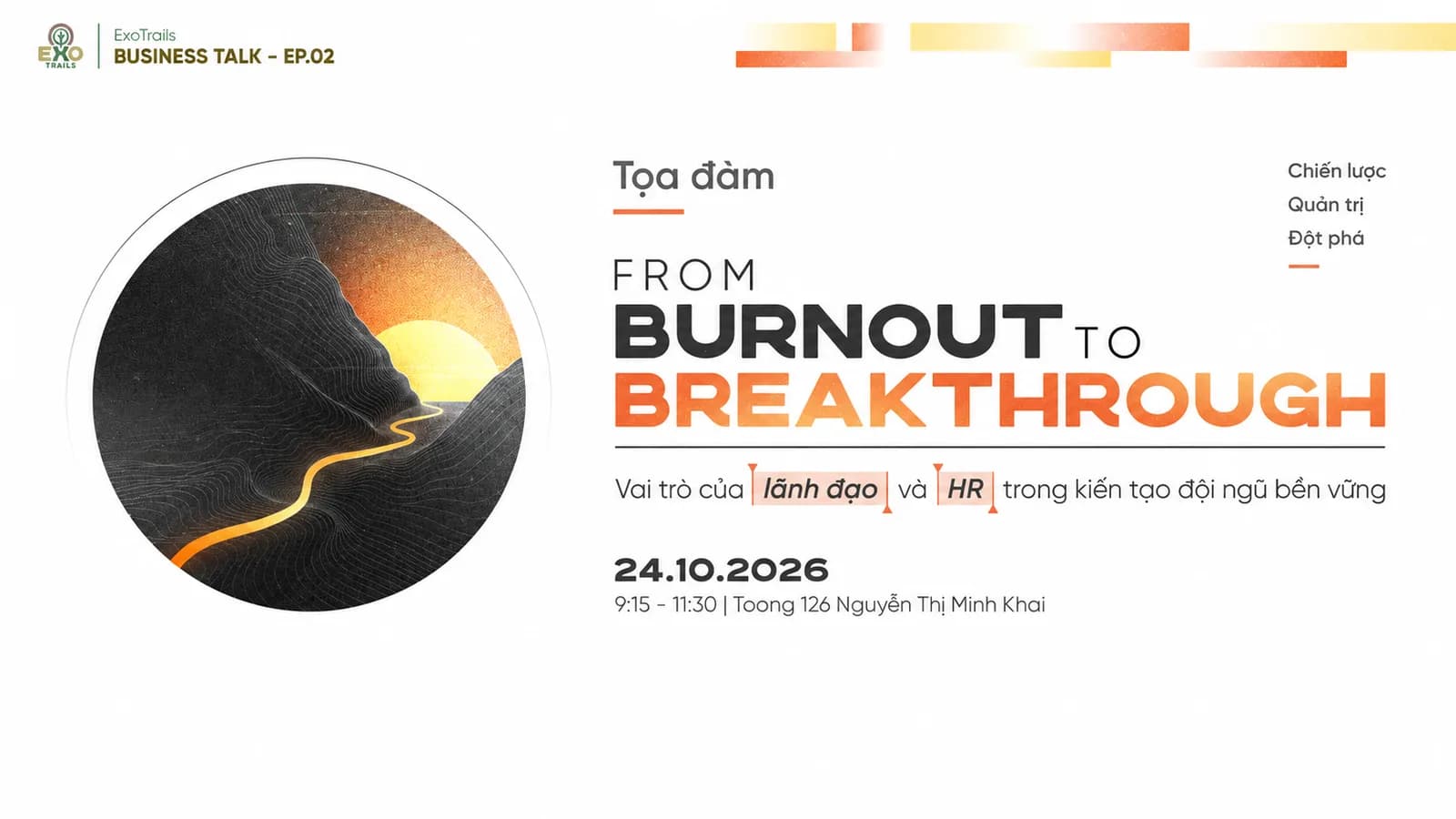
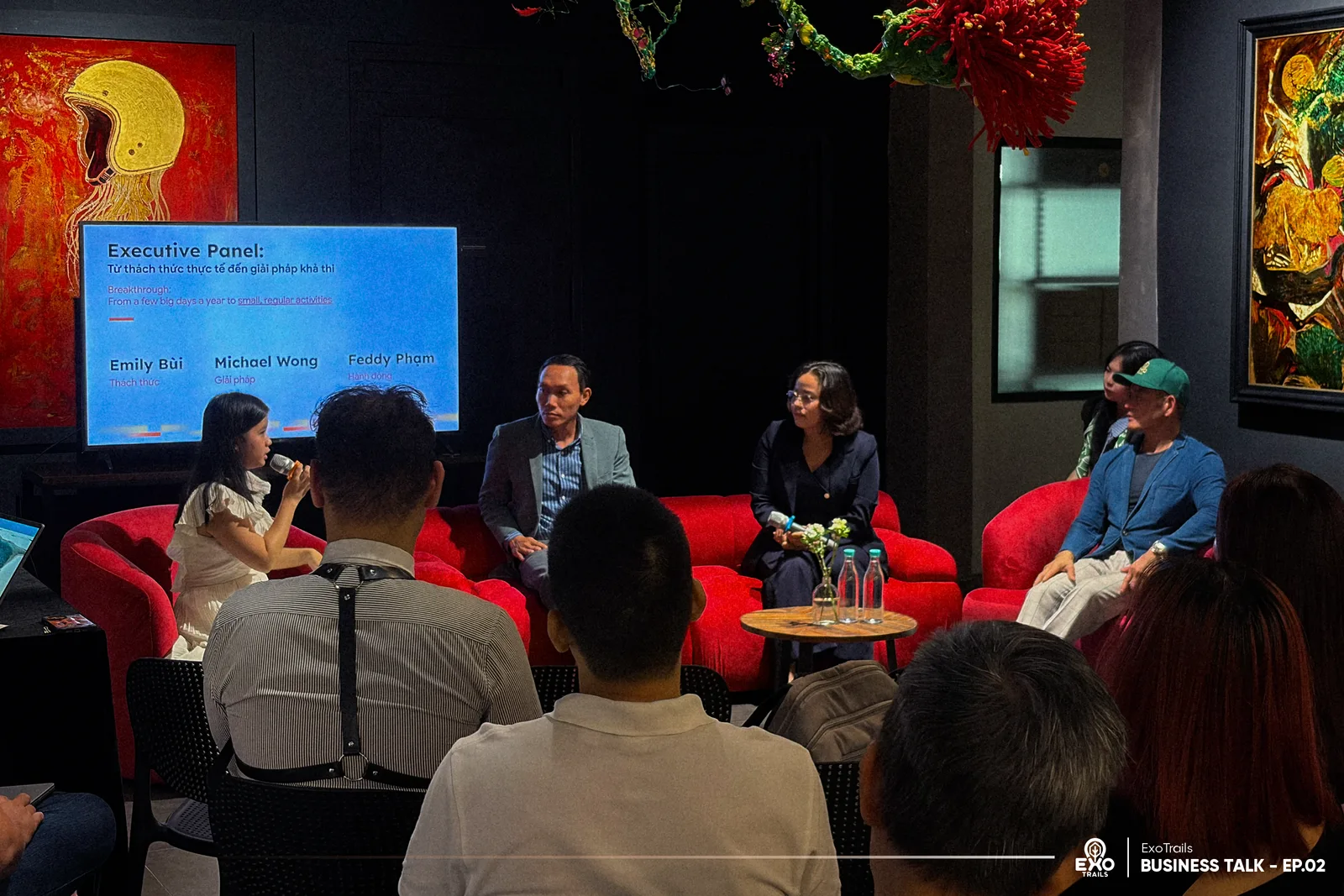
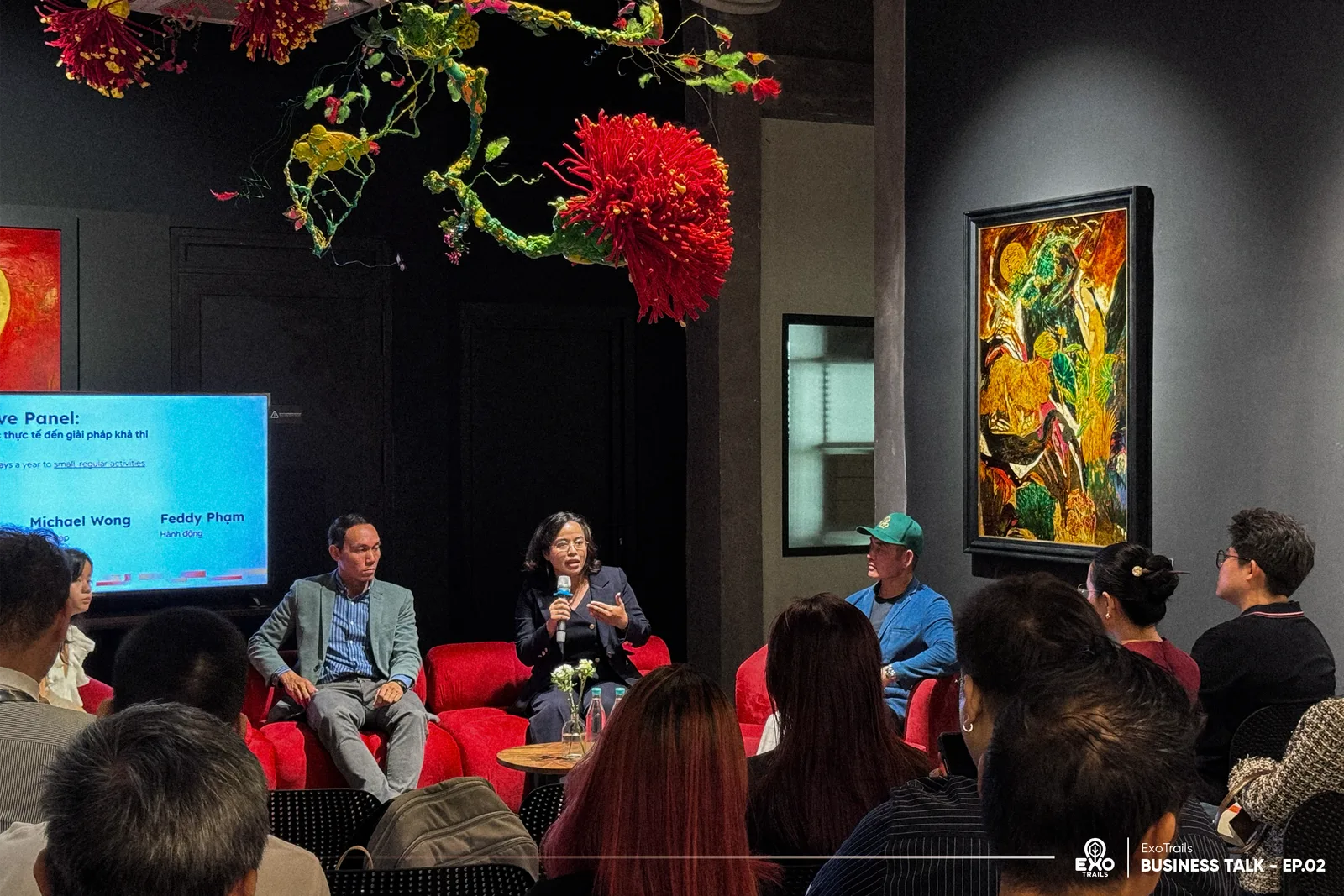
On October 24 at Toong, Ho Chi Minh City, ExoTrails hosted From Burnout to Breakthrough, bringing together business leaders, HR professionals and guests to discuss the role of leadership and HR in building more sustainable teams.
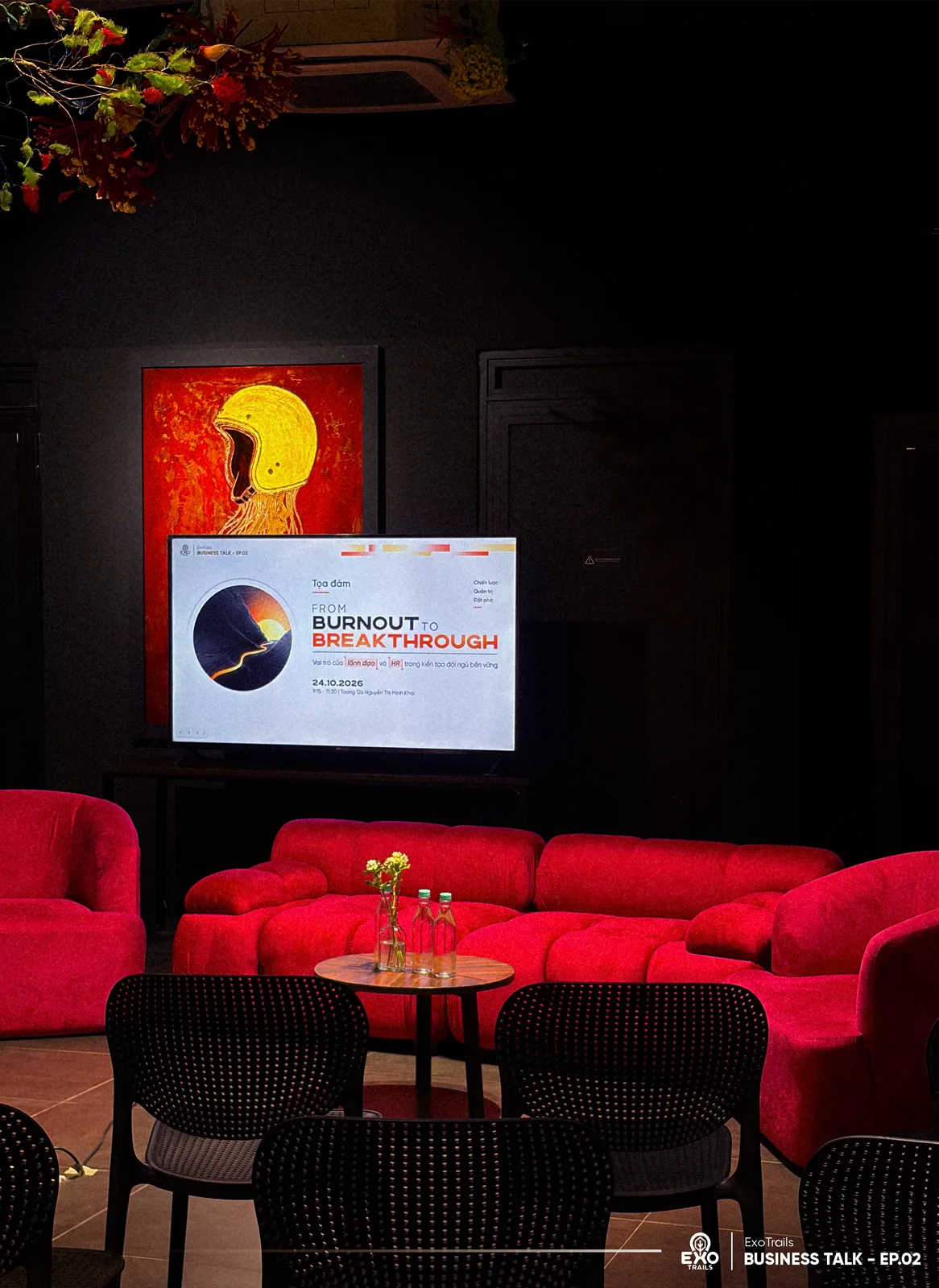
From understanding burnout and designing meaningful wellbeing initiatives to applying technology, the session focused on practical ways businesses can start making an impact with the resources they already have.
Joining the conversation were three speakers whose experience brought complementary perspectives to the discussion:
Michael Wong — Founder & CEO, ExoTrails: leadership, business building and the development of outdoor technology solutions.
Emily Bùi — Senior HRBP: more than 10 years of experience in people development, training and HR business partnering, with previous roles at KPMG and GeoComply.
Feddy Phạm — Race Director & World Triathlon Technical Official: 15 years of experience in event operations and community building, including marathon events with more than 10,000 participants.
Throughout the session, the panel explored practical questions: How are employee needs changing? Why are wellbeing programs difficult to sustain? And how can engagement initiatives create meaningful value for both employees and the organization?
Burnout Starts with Leadership
The session opened by looking at the broader context of workplace pressure and employee engagement.
From there, Michael brought the discussion back to something businesses can directly influence: how leaders shape culture every day, especially when pressure increases.
One message stood out:
“People can handle challenging work. What wears them down is a workplace that feels like a constant battle.”
From Michael’s perspective, a sustainable culture should help people perform, recover, adapt and continue moving forward.
That shows up through everyday leadership practices: listening without judgment, setting clear expectations, recognizing contributions, giving people autonomy and protecting time for recovery.
For leaders, supporting a team also means identifying the outcomes that matter most, reviewing timelines and resources, redistributing work when someone is overloaded, simplifying processes and creating an environment where employees feel safe speaking up.
Drawing from everyday practices at ExoTrails, Michael shared how businesses can begin building a more people-centered workplace through small, consistent actions.
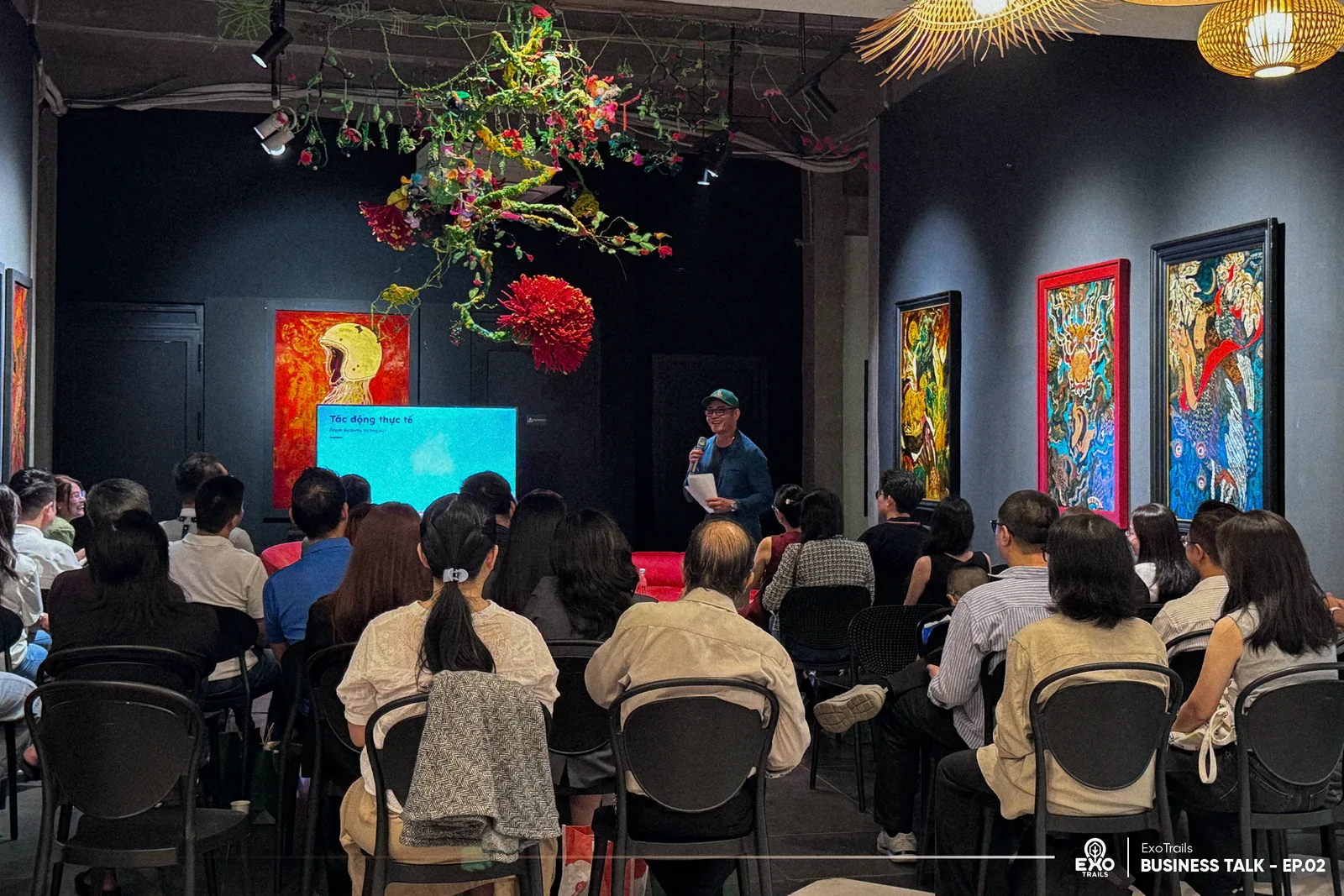
This also creates the foundation for wellbeing programs to work: employees need to experience support not only through initiatives, but in the way work happens every day.
Wellbeing Is Becoming Part of How Businesses Operate
During the panel, Emily Bùi highlighted three significant shifts she has observed through her experience in HR.
First, the role of wellbeing within organizations has changed.
What was once rarely discussed, and later became something of a workplace trend, is increasingly being embedded into organizational culture and operations.
Employee wellbeing commitments now appear in employer branding and recruitment messaging, while companies are also translating those commitments into ongoing programs.
Second, employee needs are becoming more diverse.
With multiple generations in the workplace — particularly a growing younger workforce — HR teams are facing new expectations.
According to Emily, employees are increasingly looking for meaning in their work, opportunities for self-expression and new forms of experience. Wellbeing programs therefore need to become more flexible.
Third, the way programs are delivered is evolving.
Alongside traditional onsite activities, businesses are starting to build seasonal and year-round initiatives while using technology to support operations, measurement and engagement through gamification.
From the perspective of sports events and community building, Feddy has observed similar changes.
Some companies now have dedicated wellbeing roles within HR teams. Sports participation is also shifting from individual activity toward more organized team experiences: colleagues register for races together, companies build internal movement communities and organizations create their own programs.
Together, these perspectives point to one clear need:
Businesses need wellbeing programs that fit their people and can be sustained over time.
The HR Challenge: Balancing Employee Needs with Business Outcomes
When discussing implementation challenges, Emily emphasized that wellbeing programs need to balance what employees need with the outcomes the organization wants to achieve.
Two major challenges emerged:
Resources for sustainability: How can a program be maintained over time while keeping people motivated to participate?
Data for evaluation: How can businesses manage and track performance, then demonstrate the value of the program to leadership?
This is where leadership and technology can play complementary roles.
Leadership creates the conditions for a program to fit the reality of the organization, while technology can reduce operational workload and provide better data for evaluation.
This also creates a clearer principle for program design: wellbeing should deliver benefits employees can genuinely feel while being linked to objectives the business can track.
Designing the Full Experience: Before, During and After
According to Feddy, sustainable engagement requires businesses to look at the entire participant journey.
Before the Program: Make Participation Feel Achievable
An overly complicated plan, unclear communication or a single competitive format applied to every fitness level can create barriers before the program even begins.
When employees have different levels of fitness and different activity habits, the experience should give beginners an accessible place to start while still motivating more experienced participants.
During the Program: Adapt to the Rhythm of the Team
A program that keeps the same format and targets throughout the year may not work equally well for every department.
Different teams have different peak periods and different levels of readiness.
Feddy suggested adjusting targets during busier periods, refreshing challenges seasonally and using technology to introduce more discovery and interaction.
Features such as TrackMate by ExoTrails were also discussed as tools that can support more varied movement experiences.
After the Program: Make Individual Progress Visible
Beyond an overall dashboard, the individual participant experience also matters.
How far have they progressed? What has improved? What milestones have they reached?
When people can see and recognize their own journey, they have more reason to return for the next program.
This is also one of the areas most easily overlooked when businesses rely heavily on manual data or tools that do not fully support the experience they are trying to create.
ExoActive: Connecting Employee Experience with HR and Leadership Management
Building on the challenges raised by Emily and Feddy, Michael introduced how ExoActive — ExoTrails’ outdoor intelligence platform — can support businesses in delivering movement and engagement programs with appropriate resources.
Technology can add value in three key areas.
Reducing manual work for program teams.
Data aggregation and customized reporting can reduce the time HR spends processing information, allowing more resources to go toward program design and participant experience.
Creating connection and making progress visible.
Activity tracking, team challenges, leaderboards and personal milestones create additional engagement points while making participant effort more visible.
Providing data for leadership conversations.
Information on participation, retention and program outcomes gives HR a stronger basis for evaluating initiatives, making adjustments and communicating their value to leadership.
Michael also connected the technology discussion back to the practical experience of implementation, showing how HR operational needs relate directly to the way employees participate in a program.
The underlying message was clear:
Technology can make programs easier to operate and measure, but the ultimate value lies in the experience and positive change they create for people.
Q&A
How Much Should Businesses Invest in Wellbeing?
The Q&A brought the conversation to a direct question from the audience:
“What percentage of revenue should businesses allocate to wellbeing? Why not use that budget to hire more talent instead?”
Michael shared that wellbeing does not necessarily need to begin with a major investment.
Businesses can start with small practices embedded in everyday work and gradually develop longer-term programs that match their capabilities.
Drawing from the ExoTrails experience, he emphasized the role of a people-centered culture in encouraging ownership, responsibility and contribution across the team.
Emily suggested starting with a different question: What business outcome is the organization trying to achieve?
What role should wellbeing play in addressing the company’s current people and business challenges?
In her view, wellbeing budgets should be considered within the broader HR budget rather than being tied to a fixed percentage of revenue.
Investment should also be accompanied by tracking, measurement and evaluation to determine whether a program is actually supporting its intended objectives.
The discussion therefore shifted away from finding a universal budget benchmark and toward a more practical approach: understand the need, choose a program that fits the organization’s capacity and evaluate its value throughout implementation.
The Questions Businesses Were Already Asking Before the Event
Even before the event, participants submitted a number of highly practical questions.
Behind the interest in wellbeing initiatives were broader concerns about ways of working, available resources and the ability to sustain a healthy workforce over time.
These questions also helped shape the discussion during the session.
When workload pressure cannot easily be reduced, what can businesses change?
Participants raised concerns around tight deadlines, multiple simultaneous projects, constantly changing strategies and the risk of silent burnout.
Michael’s discussion highlighted several areas leaders can directly influence: setting priorities, clarifying expectations, giving people autonomy, recognizing contributions and creating space for employees to speak up when workloads become unsustainable.
How can wellbeing feel like a benefit rather than another task?
Several participants raised the reality that employees already have full schedules or may prefer to spend their personal time with family and on their own interests.
The panel emphasized simplifying participation, designing activities for different levels and adapting programs to the working rhythms of different teams.
How can engagement continue after a program ends?
This was a recurring concern.
An activity may generate strong energy for a short period, but maintaining that momentum is more difficult.
The speakers discussed refreshing the experience, recognizing individual progress and creating smaller, regular activities that give employees a reason to keep coming back.
How can HR demonstrate the value of the investment?
Questions around ROI, performance and retention showed that HR needs more than participation numbers.
The discussion connected measurement with business objectives and explored how ExoActive can help consolidate data, monitor participation and generate reporting that gives HR a stronger foundation for conversations with leadership.
Where should businesses begin with wellbeing?
Participants were also interested in holistic health, work-life balance and building a more people-centered culture.
Within the scope of the session, the speakers focused particularly on leadership, movement and engagement — with one consistent recommendation: start from the organization’s real needs, choose a manageable scale and continue adjusting as the program evolves.
From Conversation to Continued Connection
As the session came to a close, three principles stood out:
Sustainable teams begin with the way leaders and HR support people every day.
Wellbeing needs to fit both employee needs and organizational resources if it is going to last.
Starting small, measuring progress and adapting over time allows businesses to find the model that works for them.
The networking session and teabreak continued the conversation between guests, speakers and the ExoTrails team, creating space to discuss specific organizational needs and potential applications in greater depth.
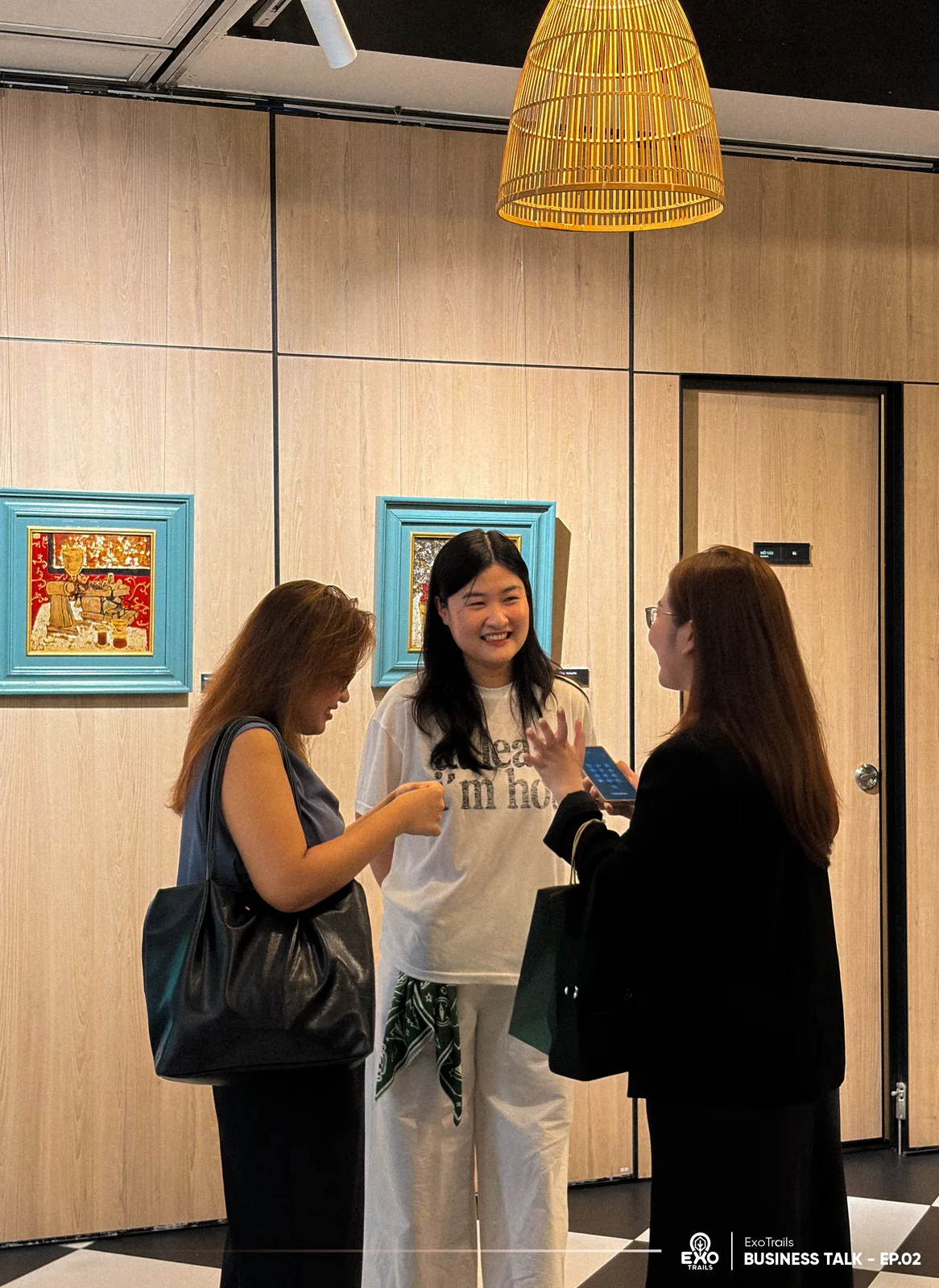
ExoTrails sincerely thanks Michael Wong, Emily Bùi, Feddy Phạm, all participating guests and Toong for being part of From Burnout to Breakthrough.
Is your organization looking for a better way to integrate movement and engagement into its wellbeing strategy?
Connect with ExoTrails to explore how ExoActive can be adapted to your organization’s objectives, scale and available resources.