
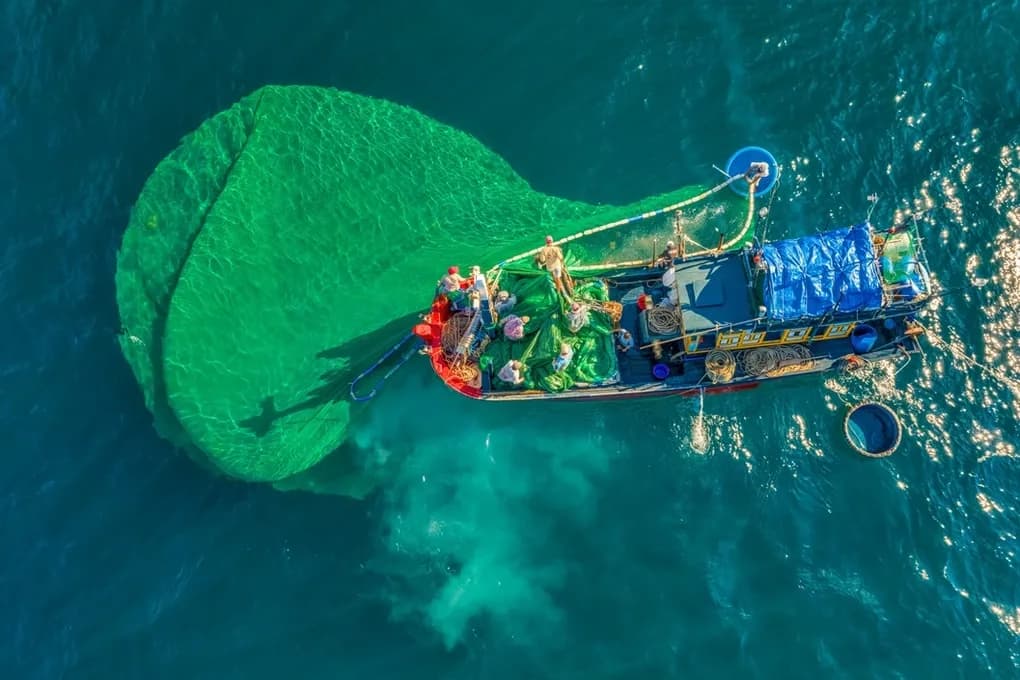

Before Vietnamese fish sauce reaches a dining table, it begins with a much slower transformation.
Fish and salt are brought together, then given months to develop into a liquid with a distinctive aroma and deeply savoury flavour. Behind that familiar bottle is a craft connecting coastal ingredients, fermentation knowledge and the people who make it.
So, how is fish sauce made? In traditional production, fish is mixed with salt and fermented over an extended period. Enzymes break down fish proteins into smaller components, including amino acids that contribute to flavour. The liquid is then extracted and prepared for sale according to the producer’s method.
For travellers, understanding this process can add another dimension to a coastal journey through Vietnam.
Discover more with ExoTrails:
What Is Vietnamese Fish Sauce Made From?
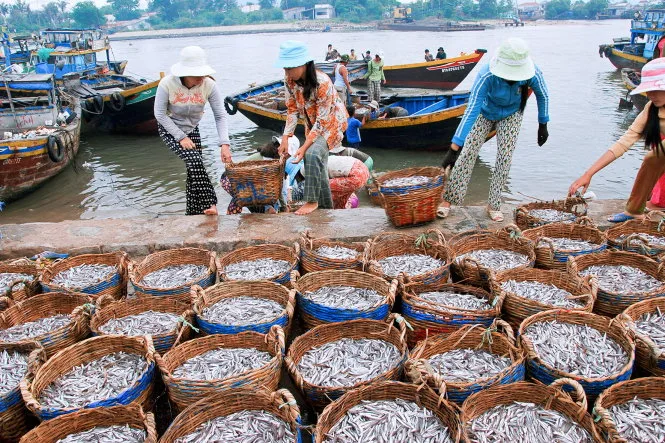
The basic ingredients are fish and salt. Anchovies are particularly associated with well-known Vietnamese production traditions, including those of Phu Quoc and Phan Thiet.
However, the ingredients and production details of a particular bottle should be checked individually.
For example, Phu Quoc producer Red Boat states that its fish sauce uses anchovies and sea salt, followed by 12 months of fermentation. That describes this producer’s approach rather than a rule applying to every Vietnamese brand.
When buying fish sauce, read the ingredient list alongside information about its origin and production method. The word “traditional” alone cannot answer every question about what is inside.
How Is Fish Sauce Made? The Main Stages
1. Select the Fish and Add Salt
Production begins with selecting the raw material and controlling how it is handled.
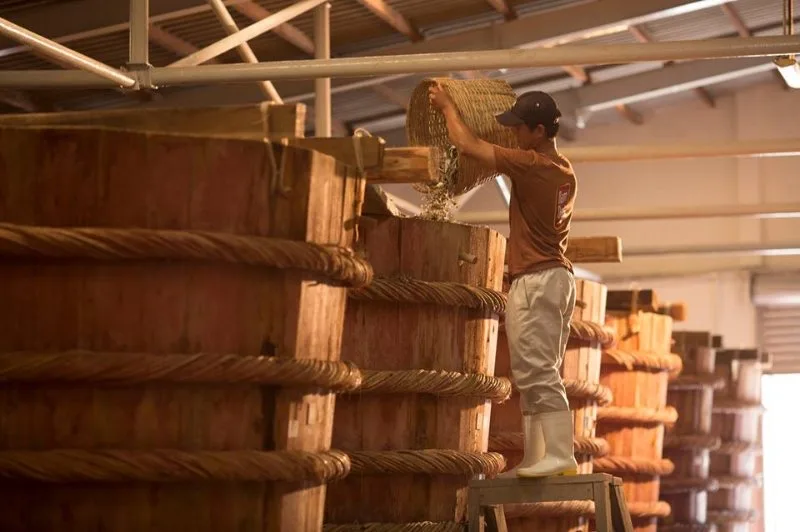
In the Phu Quoc method described by Vietnam’s tourism website, anchovies are layered with salt aboard fishing boats before being transferred to barrels on land.
This corrects a common assumption that salting always starts inside the workshop. The process can begin before the catch reaches shore.
For visitors, useful questions include which fish the producer uses, where they are sourced and when salting takes place.
2. Prepare the Fermentation Vessel
The fish-and-salt mixture is placed in a vessel suited to the producer’s method.
Large wooden barrels are a defining feature of many Phu Quoc barrelhouses. In Phan Thiet, tourism authorities describe production using vessels that include earthenware jars and wooden containers.
These differences are part of the interest of visiting producers in different regions. Avoid expecting every workshop to resemble photographs of Phu Quoc’s towering barrels.
3. Allow Fermentation to Develop
During fermentation, enzymes from the fish and microorganisms contribute to the breakdown of proteins. The resulting peptides and amino acids help shape the sauce’s flavour.
Time varies. The published Phu Quoc protected-origin application describes fermentation lasting 12–15 months, while other methods and products follow different schedules.
For a workshop visit, asking “How long does this batch ferment?” will give you a more useful answer than relying on one figure for all fish sauce.
4. Extract the Liquid
Once the batch reaches the required stage, the liquid is drawn from the fermented mixture.
The Phu Quoc specification distinguishes the first extraction from later extractions. It also describes different product grades, demonstrating that the finished category involves more than one simple label.
This is a good moment to ask your host how the liquid is collected, whether further processing takes place and how different batches become finished products.
5. Prepare and Bottle the Product
The final steps depend on the producer. Ask what happens between extraction and bottling, whether products are blended and what information appears on the label. A clear explanation helps connect the workshop experience with the bottle you take home.
What Does “First Press” Fish Sauce Mean?
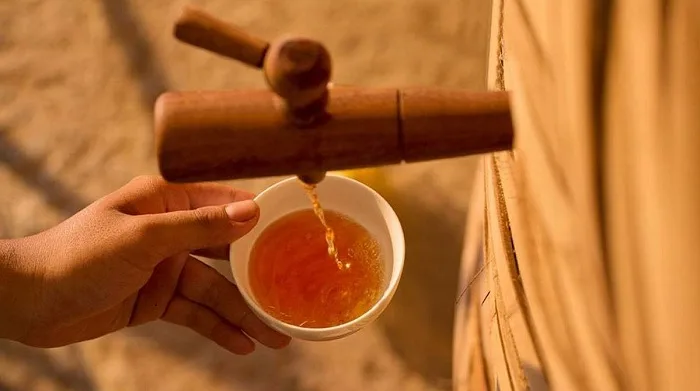
“First press” generally describes the initial liquid extracted from a fermented batch.
Vietnam’s tourism website describes a premium Phu Quoc example drawn from the first extraction without dilution or mixing with other batches. Red Boat likewise identifies the first press as part of its own production approach. It is useful information, but it should be read alongside the ingredient list, origin and producer’s explanation.
When comparing bottles, ask:
What does this producer mean by first press?
Is the finished sauce blended?
What ingredients are listed?
How does the producer recommend using it?
A bottle intended for dipping may suit a different purpose from one you regularly use in cooking.
Why Does Fish Sauce Have Such a Savoury Flavour?
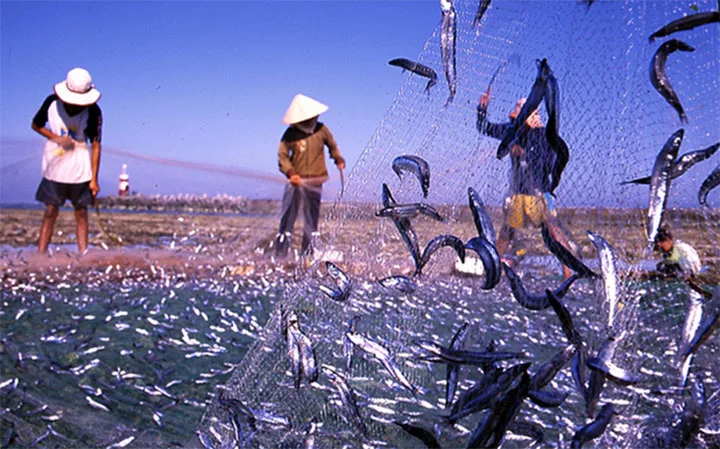
Fermentation changes the fish proteins and creates flavour-active compounds. Amino acids released during this process contribute to the taste of fermented fish products.
In a guided tasting, pay attention to more than aroma. Notice saltiness, savouriness, intensity and the finish. Compare products only if the producer offers a tasting and explains how to approach it.
Afterwards, explore ExoTrails’ guide to using fish sauce in cooking for ideas that connect the production story with everyday meals.
Where Can Travellers Learn About Fish Sauce in Vietnam?
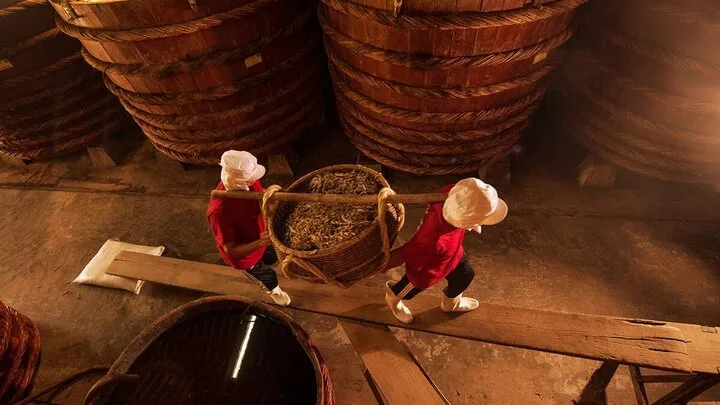
Phu Quoc: Discover the Barrelhouse Tradition
Phu Quoc is a well-known destination for learning about fish sauce production. Vietnam’s official tourism website recommends visiting barrelhouses to understand the relationship between anchovies, salt and wooden barrels.
Before visiting, contact the producer to confirm:
Whether visitors are currently accepted.
Whether a reservation is required.
Which production areas are accessible.
Whether explanations are available in English.
Whether tasting and purchases are offered.
Build the visit into a relaxed island itinerary rather than treating it solely as a shopping stop.
Phan Thiet: Explore a Different Regional Tradition
Phan Thiet offers another perspective on the craft. Tourism authorities describe its long-established fish sauce industry, production vessels and opportunities to learn about the process.
Visitor options can include production-related experiences and museum interpretation. An official tourism article identifies both producer visits and the Lang Chai Xua fish sauce museum among local options. Confirm current arrangements directly.
Ask whether your visit involves a working facility, a demonstration, a museum or a shop. Each can be worthwhile, but they offer different experiences.
How to Get More from a Fish Sauce Producer Visit
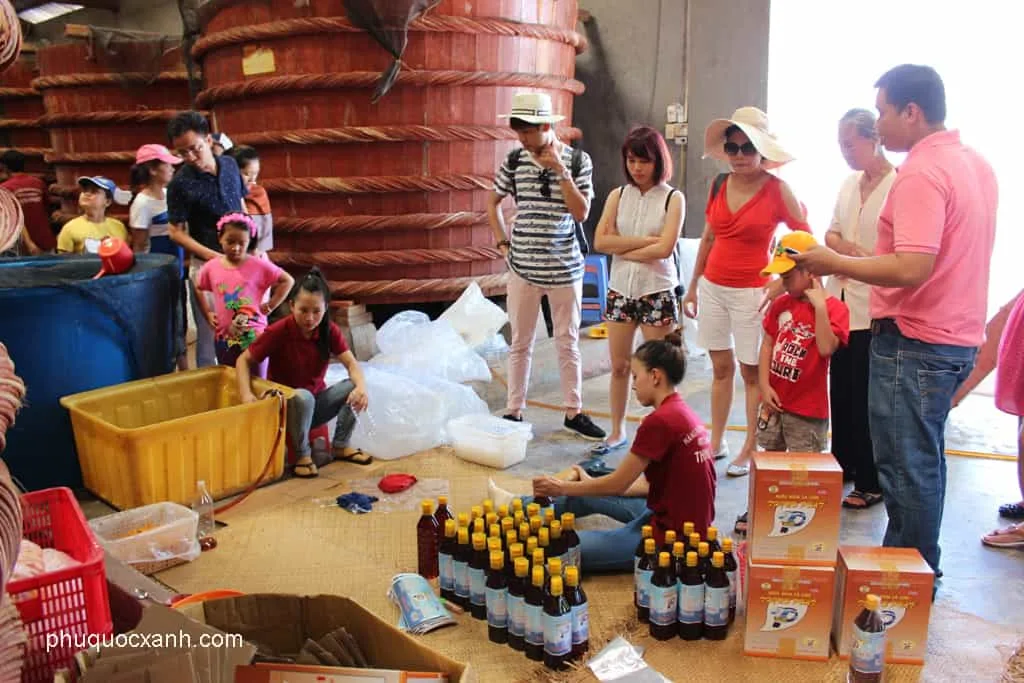
A few questions can turn a brief stop into a memorable learning experience.
Ask about | What you can learn |
Fish sourcing | Species, origin and handling |
Salt | How the producer selects and uses it |
Fermentation | Duration and how a batch is assessed |
Vessels | Why this workshop uses its particular containers |
Extraction | Differences between the products offered |
Local work | Roles involved in making and selling the sauce |
Respect the workshop as a workplace. Follow instructions, ask before photographing workers and avoid touching vessels or equipment without permission.
For a broader food-focused itinerary, pair the visit with a market walk. ExoTrails’ culinary tourism guide offers ideas for exploring ingredients and regional dishes.
Supporting the Craft Responsibly
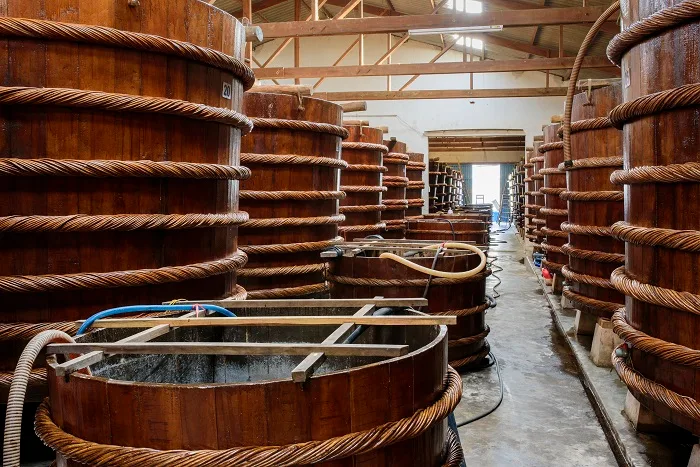
Traditional production provides a useful starting point for learning about coastal livelihoods. Environmental and social claims still need specific evidence.
Ask producers about sourcing, waste management and the people involved in their business. If a product is described as sustainably sourced, ask what supports that claim.
Buying a clearly labelled product directly from its maker can also give you an opportunity to understand the work behind it. Choose what suits your taste and intended use, and respect any restrictions on access to production areas.
FAQs About Traditional Fish Sauce
How long does fish sauce take to ferment?
It depends on the product and method. The published Phu Quoc protected-origin application describes 12–15 months, while individual producers may specify their own duration.
Is all Vietnamese fish sauce made in wooden barrels?
No. Wooden barrels are associated with Phu Quoc, while production in Phan Thiet also includes other vessels, such as earthenware jars.
Does traditional fish sauce always contain only two ingredients?
Check the individual product. Some producers explicitly use only fish and salt, but that claim should not be extended to every bottle marketed as traditional.
Can I visit a fish sauce factory in Vietnam?
Visitor experiences are documented in Phu Quoc and Phan Thiet. Contact the chosen venue to confirm current access, reservations and what the visit includes.
Discover the Story Behind the Flavour
Learning how fish sauce is made changes what you notice at the table: the time behind the flavour, the regional differences and the people whose work connects the sea with the kitchen.
On your next coastal journey, leave room to meet a producer, ask questions and understand the craft.
Download ExoTrails to discover places and gather ideas for your next journey through Vietnam.
Follow ExoTrails on Facebook and join the ExoTrails community to share discoveries with fellow explorers.