
A sheet of Vietnamese rice paper can seem almost weightless. At the table, it might hold herbs and pork, wrap a spring roll or become a crisp accompaniment to another dish. Its simplicity can make the work behind it easy to overlook.
In a traditional workshop, batter is spread over a steaming surface, lifted carefully and transferred to a drying rack. The finished texture depends on ingredients, technique and conditions—details that become much more interesting when explained by the person making it.
Exploring Vietnam’s rice paper traditions offers a way to connect food with place. Start with the finished sheet, then follow its story back to the workshop, the recipe and the community.
Discover more with ExoTrails:
What Is Vietnamese Rice Paper?
The term covers a range of rice-based sheets used in different ways.
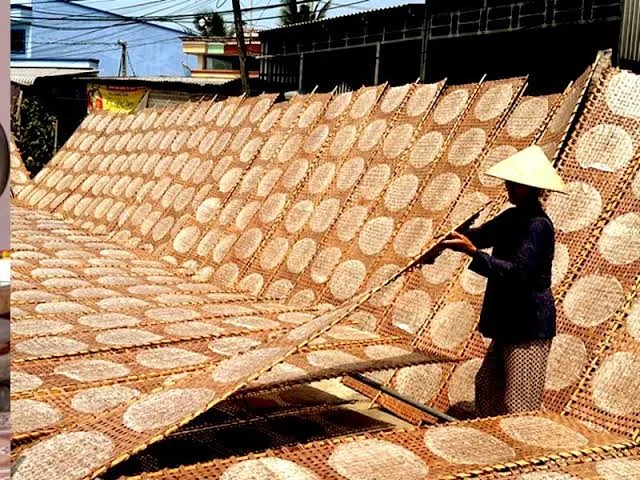
In Thuận Hưng, for example, published reporting describes plain, salted, sweetened and coconut varieties, with products intended for uses including wrapping and grilling. This variety helps explain why one sheet may behave differently from another.
When buying bánh tráng, ask what it is made for. A thin wrapper and a thicker product intended for grilling should not automatically be prepared in the same way.
The recipe matters too. Some regional varieties contain seasonings beyond rice and water, so check ingredients rather than assuming every sheet is plain.
How Is Rice Paper Made?
Methods differ between workshops. The following stages describe a traditional approach, rather than a fixed recipe for every Vietnamese producer.
1. Prepare the Rice Batter
Production begins with selecting rice, soaking it and grinding it into a batter.
Vietnam’s tourism authority describes these stages in Trảng Bàng, where makers then spread the batter over a stretched cloth surface.
Ask your host what makes the rice suitable and whether the recipe includes other ingredients. This can reveal more than a general description of “traditional methods.”
2. Spread and Steam the Sheet
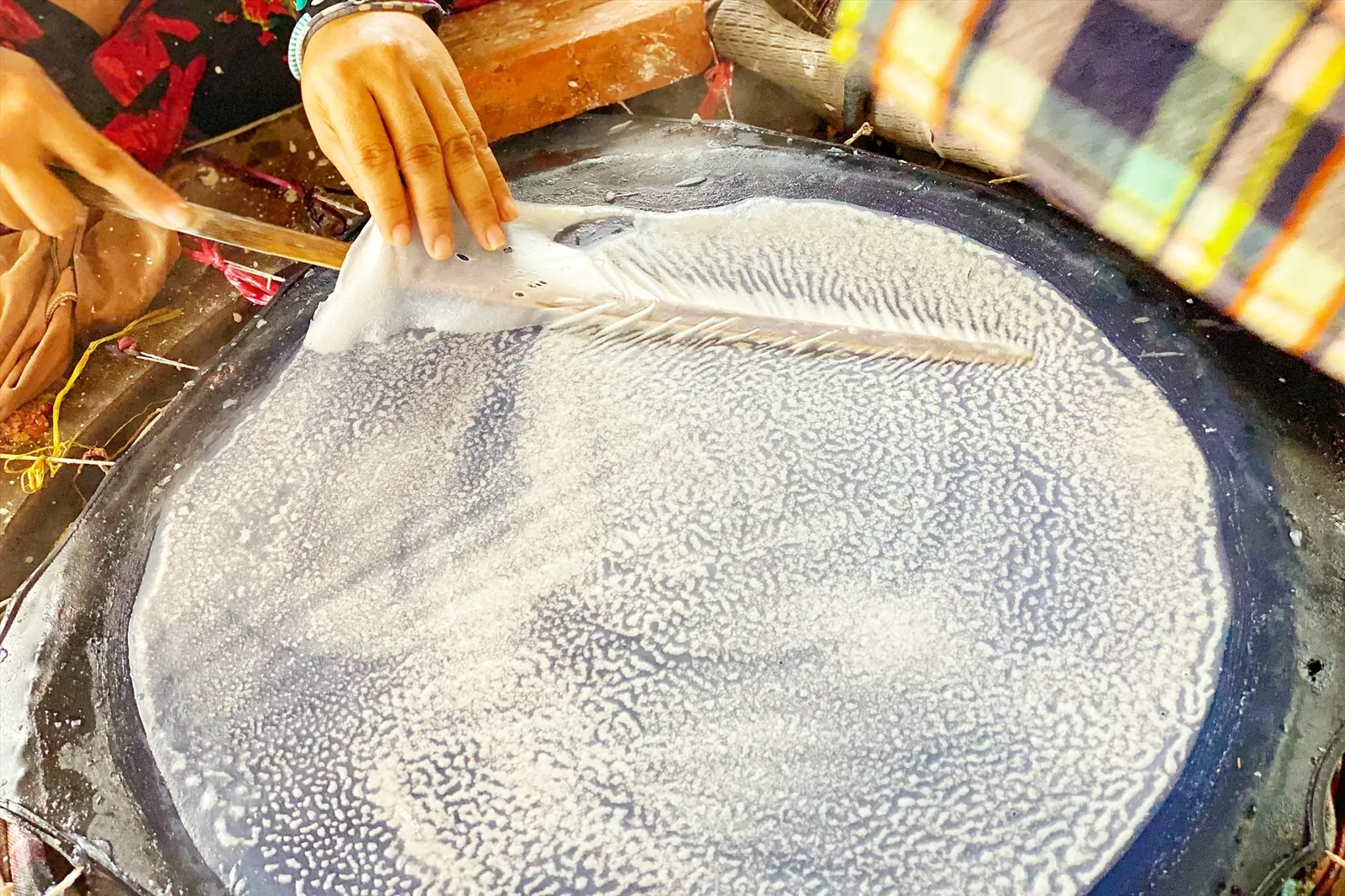
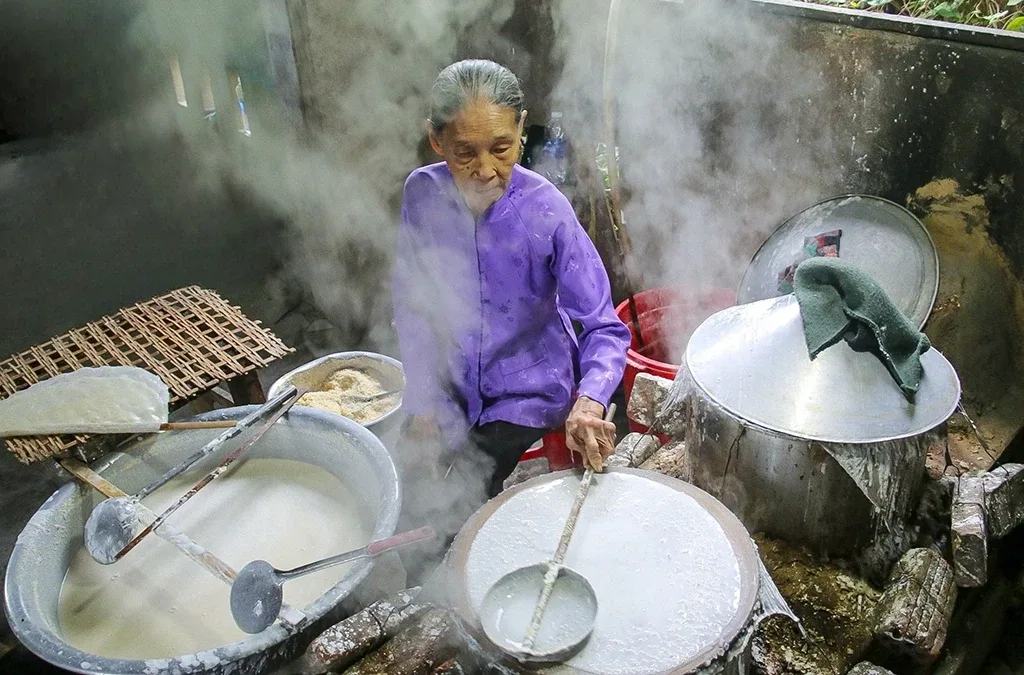
A measured amount of batter is spread into a thin layer over the steaming surface.
Reporting from Thuận Hưng describes the coordination needed to steam the sheet and remove it while it is still delicate. The transfer to the rack requires controlled, gentle handling.
Watching this step makes the maker’s skill visible: an even sheet depends on repeated movements performed consistently.
3. Transfer and Dry
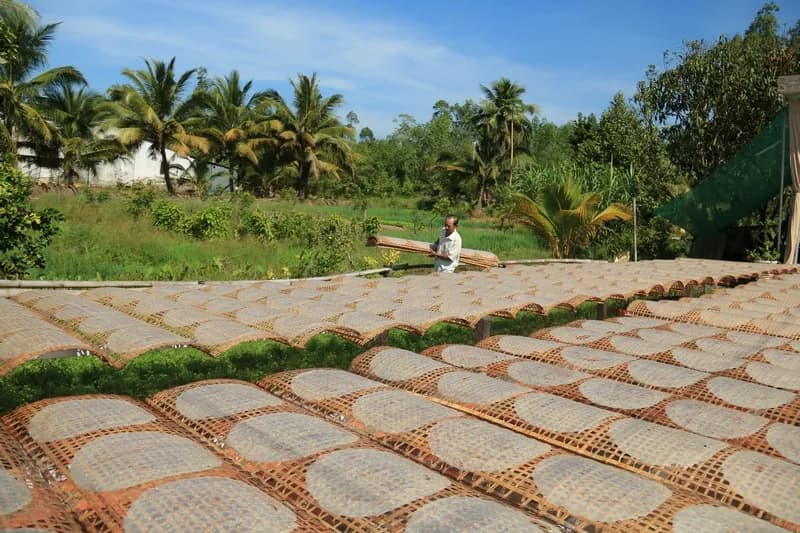
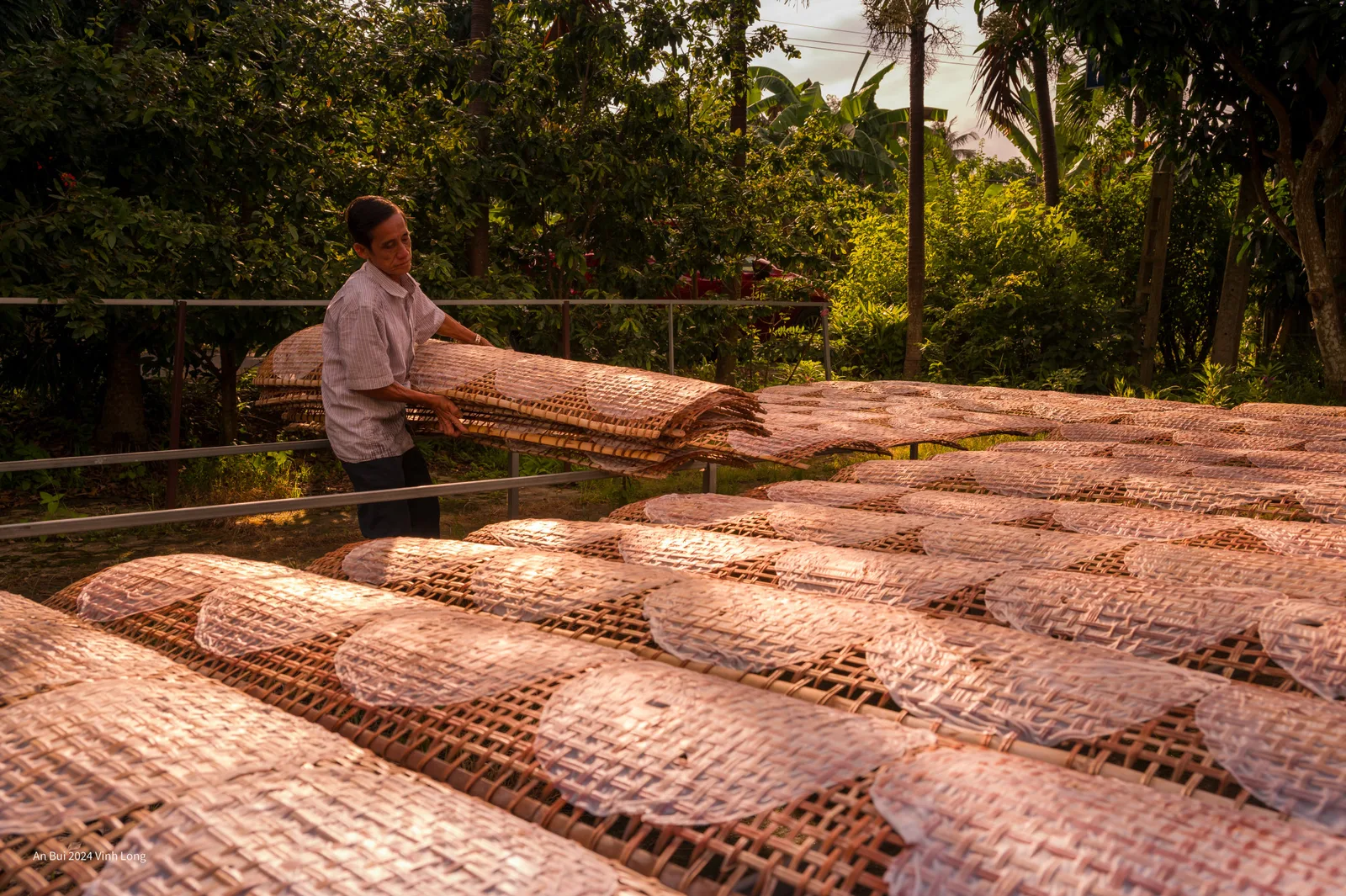
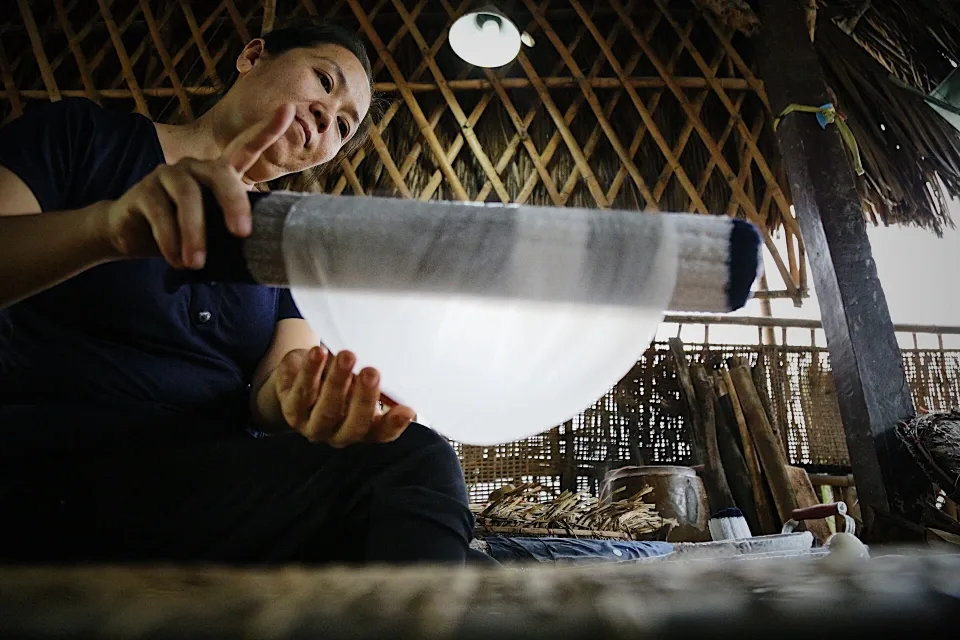
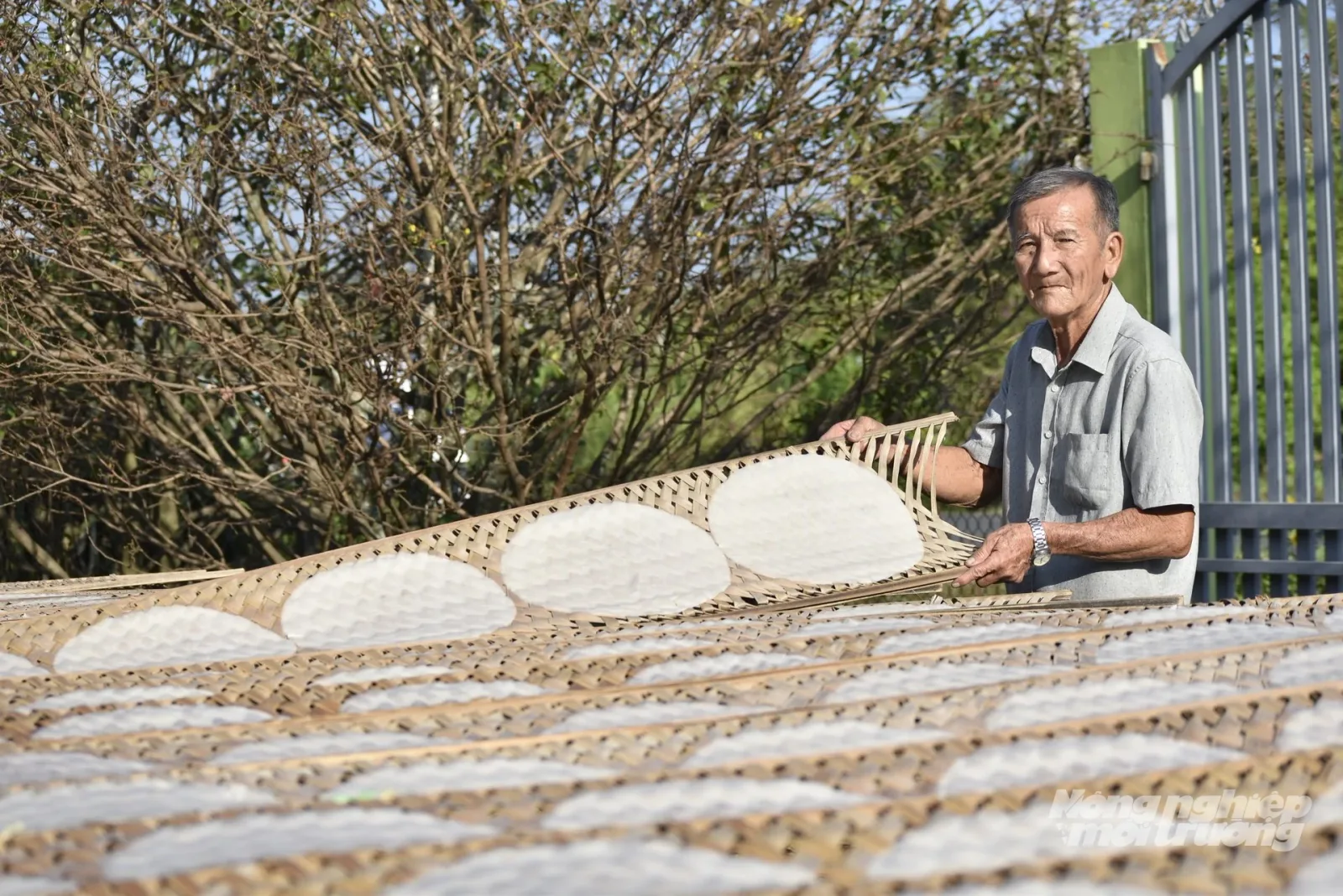
The cooked sheet is placed on a rack to dry.
At Thuận Hưng, drying depends on the weather and needs attention to prevent damage. Published accounts describe sheets becoming brittle if exposed to strong sun for too long.
Rather than expecting rows of racks on every visit, ask which production stages will be happening that day.
4. Finish According to the Local Style
Some rice paper traditions include additional treatments.
Trảng Bàng’s bánh tráng phơi sương is distinguished by exposure to dew, which contributes to its supple texture. Other regional products follow different finishing methods and are intended for different dishes.
These differences are a reason to explore the craft across regions.
Three Rice Paper Traditions to Explore
Place | Distinctive focus | What to ask about |
Trảng Bàng, Tây Ninh | Dew-exposed rice paper | How the finishing stage changes texture |
Thuận Hưng, Cần Thơ | Several rice paper styles | Ingredients, intended uses and production stages |
Túy Loan, Đà Nẵng | Seasoned rice paper associated with grilling | Recipe, preparation and serving suggestions |
Trảng Bàng: Discover Dew-Exposed Rice Paper
Trảng Bàng is closely associated with bánh tráng phơi sương. Its traditional production craft received national intangible cultural heritage recognition in 2016.
The distinctive finishing stage makes it a useful starting point for understanding how local technique changes the product.
Tourism authorities describe some producers receiving visitors and offering production-related experiences. Availability should be checked with the specific workshop.
Ask whether your visit involves observing production, trying a supervised step or tasting finished products. Dew exposure happens separately from daytime activities, so a short visit may cover only part of the process.
Thuận Hưng: Explore a Mekong Delta Craft
Thuận Hưng, in Cần Thơ, is known for a range of rice paper products. The local tourism portal lists varieties including salted rice paper, spring-roll rice paper and coconut rice paper.
It also recommends approximately 6:00–9:30 a.m. for visiting. Use that as a planning reference and confirm the schedule with your host before travelling.
The craft received national intangible cultural heritage recognition in 2023. Reporting from that year documented both manual production and machine use, showing that a traditional craft can evolve while retaining specialised knowledge.
This makes Thuận Hưng an interesting place to ask how workshops balance workload, consistency and inherited techniques.
Túy Loan: Taste a Central Vietnamese Variation
Near Đà Nẵng, Túy Loan offers another perspective on bánh tráng.
Đà Nẵng’s tourism portal describes a seasoned recipe that can include sesame, ginger, garlic, fish sauce, salt and sugar. The craft received national intangible cultural heritage recognition in 2024.
This is a reminder to check ingredients if you have dietary requirements. Rice paper should not automatically be assumed to contain only rice and water.
Ask a local host or tourism contact which producers currently accept visitors. A village’s recognised craft status does not establish a daily workshop programme.
How to Arrange a Rice Paper Village Visit
Choose a specific host rather than arriving with only a village name.
Before setting out, confirm:
The workshop’s location and contact person.
Which production stages you can observe.
Whether hands-on participation is available.
Visit duration and any fees.
Language support.
Photography permission.
Whether weather may change the programme.
A useful question is: “What will the workshop be making during our visit?”
It helps establish realistic expectations and respects the producer’s working schedule.
For ideas on combining a workshop with food shopping and regional dishes, explore ExoTrails’.
Supporting the People Behind the Craft
A thoughtful visit starts with treating the workshop as a workplace. Keep paths and drying areas clear. Ask before touching products or equipment, and follow the host’s instructions during any demonstration. Seek permission before photographing people.
Buying directly can create an opportunity to understand the product and its maker. Ask how to store it, prepare it and choose the right type for the dish you want to make.
Traditional production should not automatically be labelled environmentally sustainable. For businesses considering sourcing partnerships, practical questions about energy use, working conditions, packaging and payment are more useful than relying on the word “artisan.”
FAQs About Vietnamese Rice Paper
Is all Vietnamese rice paper handmade?
No. Reporting from Thuận Hưng documents both manual production and machinery. Ask which stages are performed by hand at the workshop you visit.
Is rice paper always a thin spring-roll wrapper?
No. Regional traditions include products with different textures, recipes and intended uses. Ask whether a particular type is for wrapping, grilling or another preparation.
What makes Trảng Bàng rice paper different?
Its dew-exposed style includes a finishing stage associated with a softer, more flexible texture.
Can travellers try making rice paper?
Some organised experiences offer participation. Confirm this with the host rather than assuming it is included in a workshop visit.
Should I visit in the morning?
Morning can suit production schedules; Cần Thơ’s tourism portal specifically recommends an early visit to Thuận Hưng. Confirm timing locally.
Follow the Story Beyond the Table
Understanding Vietnamese rice paper changes what you notice: the evenness of a sheet, its texture and the skill required to make it.
Leave time to meet a producer, ask about the recipe and taste how the finished product belongs to its region.
Download ExoTrails to discover places and gather ideas for your next journey through Vietnam.
Continue exploring with Vietnam Local Food Trails, where regional food adds another dimension to the journey.