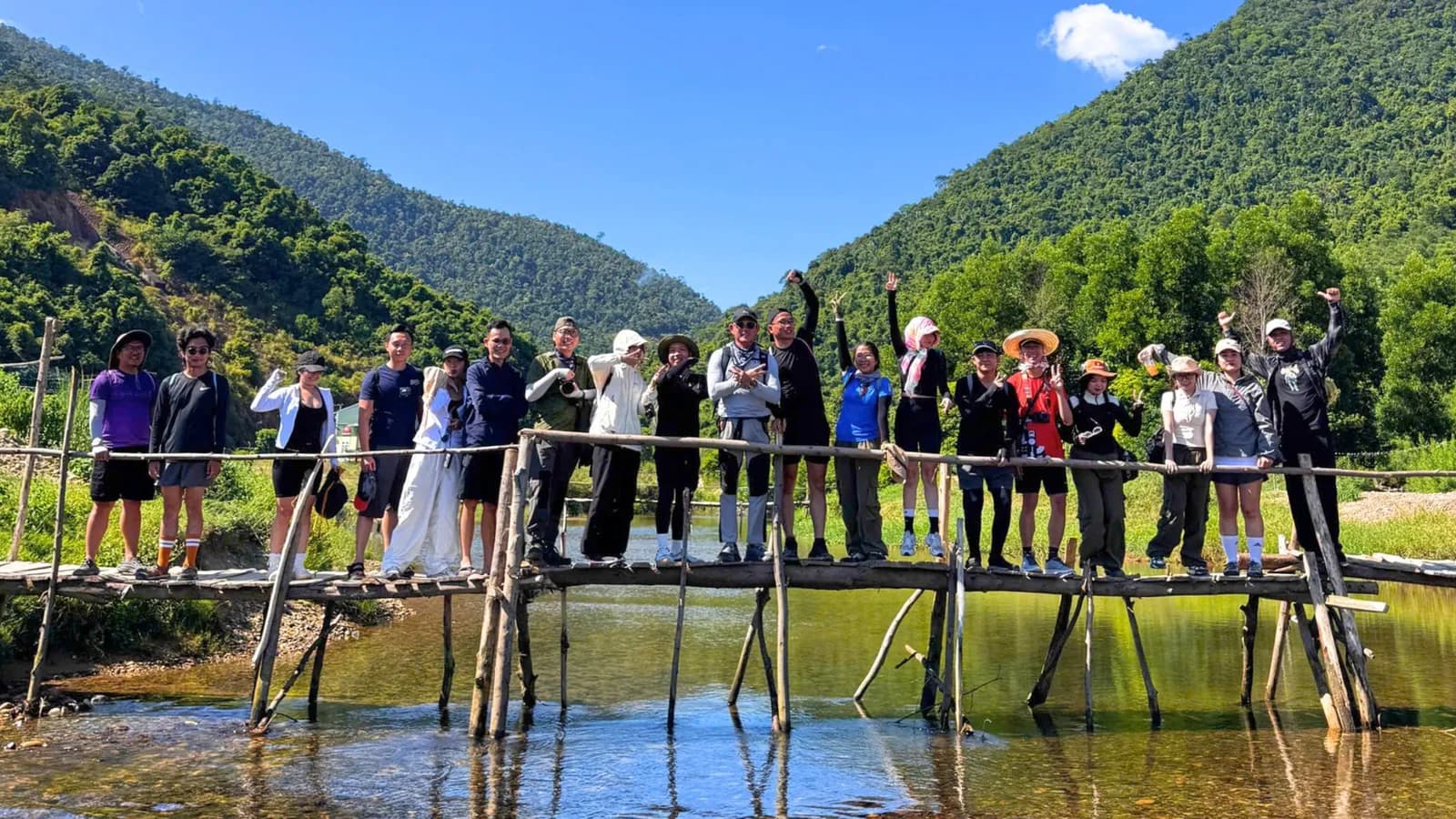


Planning an activity across departments brings several questions for HR. How can beginners feel comfortable joining? How can employees in different locations participate together? And how can the organizing team manage the program without spending hours collecting screenshots?
An employee walking challenge is one option to consider. Participants complete eligible activity within an agreed period and contribute toward personal, team, or company-wide goals.
To support workplace culture, the program needs clear objectives, recording rules, fair scoring, and opportunities for interaction. A leaderboard can attract attention, but the participation experience needs attention throughout the campaign.
1. What Is an Employee Walking Challenge?

An employee walking challenge is a time-limited program in which participants record walking activity toward a published goal. Goals may apply to individuals, teams, or the whole organization.
A company might create a shared distance target across offices, recognize employees who complete personal goals, or organize optional walks where colleagues can spend time together.
Step counts and walking distance are different
Decide which data the challenge needs before choosing a platform or writing the rules.
Format | Data used | What to verify |
Step challenge | Steps recorded by accepted sources during a day or campaign period | Data sources, permissions, aggregation, and duplicate handling |
Walking-distance challenge | Distance from recorded walking activities | Starting and saving activities, accepted sources, and eligibility |
Task-based challenge | Completion of defined goals or activities | Evidence, verification, and scoring |
An app that records walking distance may not aggregate every step taken throughout the day. Similarly, a daily step total does not automatically provide a route or details of individual walking sessions.
If the company wants daily step tracking, ask the provider to demonstrate that exact workflow. If the program measures distance, use kilometers or miles consistently in the communications.
Where does it fit in an internal program?
A walking challenge can form part of an employee wellness program, an initiative connecting different offices, or a company milestone campaign.
For broader planning, explore ExoTrails’ guide to corporate wellness programs and consider how a movement initiative fits alongside other forms of employee support.
2. Start With a Workplace Culture Objective

Before choosing prizes or naming the event, agree on what the company wants employees to have an opportunity to do.
Create opportunities to connect across departments
If the objective is interaction, consider mixed teams and activities that encourage conversation. Shared tasks or optional walks can add social opportunities alongside activity tracking.
Adding together the results of people in the same department does not establish whether they interacted more. Ask about that experience afterward.
Encourage continued participation
If the priority is participation over time, recognize involvement across the campaign. An award based only on the highest total may not reflect that objective.
WHO emphasizes that some physical activity is better than none and that activity can take place in different parts of everyday life. However, an internal challenge target still needs to suit its participants; one number should not become a health requirement for everyone. who.int
Demonstrate care through the experience
Care is reflected in practical decisions: convenient arrangements, understandable instructions, help with technical issues, and respect for employees who choose not to participate.
If employees spend excessive time submitting evidence or worry about being named for low participation, the experience may move away from the original purpose.
Priority | Design options to consider |
Welcome beginners | Clear instructions, suitable goals, and several forms of recognition |
Connect departments | Mixed teams, collaborative tasks, and optional shared activities |
Maintain participation | Weekly review, milestones, and timely support |
Create a company-wide goal | Shared progress and visible team contributions |
Support a community initiative | A clear contribution formula, funding source, and verification |
These are program design options, rather than promises that every challenge will produce the same outcomes.
3. Choose a Format Employees Can Access

Individual goals
Participants select or join a goal category under the published rules. Recognition focuses on completion rather than only the highest total.
If several goal levels are offered, explain registration, changes, and reward eligibility. Employees should not need to disclose medical information publicly to justify their choice.
Team challenges
Teams can follow departments, offices, or mixed groups. Decide whether the priority is cross-department interaction or competition between existing units, because these objectives may require different team structures.
A team contact can help members understand the process. Their role should not involve monitoring colleagues’ personal performance or pressuring them to do more.
A shared virtual journey
Eligible contributions can support one collective target or themed journey. Milestones might introduce teams, share campaign stories, or recognize contributions.
Explain that a virtual route represents progress. Participants do not necessarily need to walk along that geographical route.
Individual participation with optional group walks
Companies can add voluntary walks at individual offices. These gatherings need their own arrangements for location, timing, and support.
For shift workers and remote employees, provide a participation method that does not depend on one scheduled gathering. If walking is unsuitable for someone, discuss an equivalent option rather than automatically assigning them event administration.
4. How to Organize an Employee Walking Challenge

Step 1: Ask about interest and barriers
An initial survey can explore:
Whether employees are interested.
Whether they prefer personal goals, team goals, or social activities.
Convenient times and formats.
Available recording methods.
Potential participation barriers.
If the purpose is to choose the program format, medical histories, weight, and detailed health measurements should not be the default information requested.
Step 2: Confirm the objective, scope, and dates
Record the audience, expected participation, team structure, accepted data, and program owner.
Choose a duration that fits work schedules, support capacity, and communications. A four-week challenge is one possible format, not a universal optimum or a promise of habit formation.
Step 3: Select tools around the required data
Forms and spreadsheets may be sufficient for a simple program if HR can manage reconciliation. As team numbers and scoring conditions increase, evaluate a dedicated platform.
Check:
Which step or activity sources are accepted.
Whether connections are direct or through another service.
Whether data is aggregated by day, session, or campaign period.
Whether the system supports the proposed scoring.
How duplicate, missing, or delayed records are handled.
Who can view, correct, and export information.
What support and additional charges apply.
ExoTrails’ guide to a corporate running app provides related context on managing employee activity campaigns. Confirm specific capabilities against the proposed configuration and service scope.
Step 4: Write the rules and run a pilot
Ask a test group to register, join teams, record activity, and check results. Include exceptions such as incorrect team assignment, disconnected accounts, missing data, and activity near the deadline.
Launch only when the instructions match the configuration. If test activity takes place before the campaign, explain whether it counts.
Step 5: Open registration with practical guidance
The invitation should explain the purpose, audience, schedule, participation method, rules, and support contact.
Employees need a way to confirm that they have joined correctly and that their data is being recorded.
Step 6: Monitor activation and continued participation
Separate registrations from participants with eligible records. An account with no activity may indicate a technical issue.
During the challenge, combine progress updates with useful information and optional opportunities to connect. Avoid messages that only ask people to increase their totals.
Step 7: Reconcile results and collect feedback
Communicate the activity cutoff, syncing deadline, and correction period separately. Resolve outstanding cases before confirming awards.
Then gather feedback and document what should change next time.
5. How to Score Teams Fairly

Scoring needs to be agreed before launch because it influences how participants approach the challenge.
Compare the options
Method | What it recognizes | Main consideration |
Total steps or distance | Overall contribution | Larger teams may have an advantage |
Average per member | Contribution relative to team size | Define the roster and denominator |
Goal completion rate | Members reaching their registered goal | Set clear goals and registration rules |
Eligible participation days | Involvement across the period | Define eligibility without discouraging necessary rest |
Task points | Published forms of contribution | Explain evidence, verification, and weighting |
Consider this hypothetical example: Team A has eight members and records 800,000 steps. Team B has 20 members and records 1,600,000 steps.
Team B leads on total steps. Using the full confirmed roster, Team A averages 100,000 steps per member, while Team B averages 80,000.
These calculations describe different results. Do not change the method midway simply because the provisional rankings are unexpected.
Averages do not resolve every difference
Employees whose jobs involve substantial movement may have different opportunities from desk-based employees. Equal team sizes do not necessarily mean equivalent recording conditions.
If broad participation is the objective, consider registered goals or contribution milestones alongside total rankings. Goal selection and reward criteria still need to be transparent.
Define roster changes and exceptions
The rules should cover:
Joining and team-change deadlines.
Treatment of members with no recorded activity.
Withdrawal from the challenge.
Tie-breaking.
Eligible data.
Corrections and appeals.
Contribution caps may be used as a game-design choice, but they must be disclosed. A scoring cap is not a medical recommendation or an activity threshold suitable for everyone.
6. Keep Tracking Clear and Respect Privacy

Agree on sources and aggregation
State whether the challenge counts all daily steps or only deliberately recorded sessions. Explain whether indoor walking, treadmill sessions, and manual entries are eligible.
If several sources are accepted, test aggregation and duplicate handling.
Do not convert distance to steps using a fixed ratio and present the result as measured steps. If conversions are used for scoring, label them as converted data or points and publish the formula.
Separate activity dates from syncing deadlines
Participants should know which time zone applies and when data must reach the system. Avoid promising instant updates without confirmation of the actual recording workflow.
Use one support channel and an agreed correction period. Unusual data warrants review; it does not automatically establish cheating.
Collect and display only what is needed
Before registration, explain what is collected, who can access it, what appears in results, and what happens after the campaign.
A step-total challenge should not automatically require public routes, personal photographs, or medical information. Relevant data arrangements should be reviewed for the actual implementation.
Do not use challenge standings to assess job performance or publicly identify employees with low participation.
7. Keep the Challenge Social and Useful

A culture-focused program needs opportunities for people to interact, beyond checking rankings.
Five walking challenge ideas
Idea | Suggested approach |
Walk with a colleague from another team | Offer voluntary pairings or small groups without requiring photographs |
Company-wide milestones | Share progress and recognize contributions from several teams |
Stories from the challenge | Invite optional experiences, with clear publication choices |
A getting-started week | Help beginners complete the recording process successfully |
Community contributions | Publish funding, conversion rules, limits, and transfer verification |
These are organizer-led ideas, not a list of default platform features.
If activity is linked to charitable giving, distinguish recorded contributions from money actually transferred. A planned donation should not be described as completed impact.
Match rewards to the objective
Recognition can include goal completion, team participation, or contributions to the shared experience. Publish criteria in advance and ensure they can be verified.
If the objective is to welcome more people, avoid rewarding only the highest total. Similarly, a consistency award should not create pressure to participate every day regardless of individual circumstances.
A communications schedule
Stage | Main message | Intended action |
Before registration | Purpose, format, and voluntary participation | Learn about the challenge and decide whether to join |
Before the start | Instructions, team checks, and data sources | Complete testing |
Opening days | Common issues and support | Record the first eligible activity |
During the campaign | Progress, stories, and optional activities | Continue in a suitable way |
Closing period | Deadlines and reconciliation | Check results |
Afterward | Recognition, feedback, and next steps | Share suggestions |
For additional ideas involving shared activities, see ExoTrails’ guide to tech-enabled team building.
8. A Sample Four-Week Walking Challenge
This is an illustrative design framework, rather than a standard duration or promise of health outcomes.
Phase | Focus | HR responsibilities |
Preparation | Needs, rules, and tools | Survey, confirm configuration, and test |
Week 1 | A straightforward start | Resolve account, team, and recording issues |
Week 2 | Opportunities to connect | Offer optional activities and progress updates |
Week 3 | Continued participation | Review feedback and address barriers |
Week 4 | Completion and reconciliation | Communicate deadlines and review requests |
After the campaign | Learning and decisions | Report, survey, and recommend changes |
If earlier activity is used as a baseline for personal goals, define the measurement period, treatment of missing data, and verification process. Do not label a difference as improvement when the baseline is unreliable.
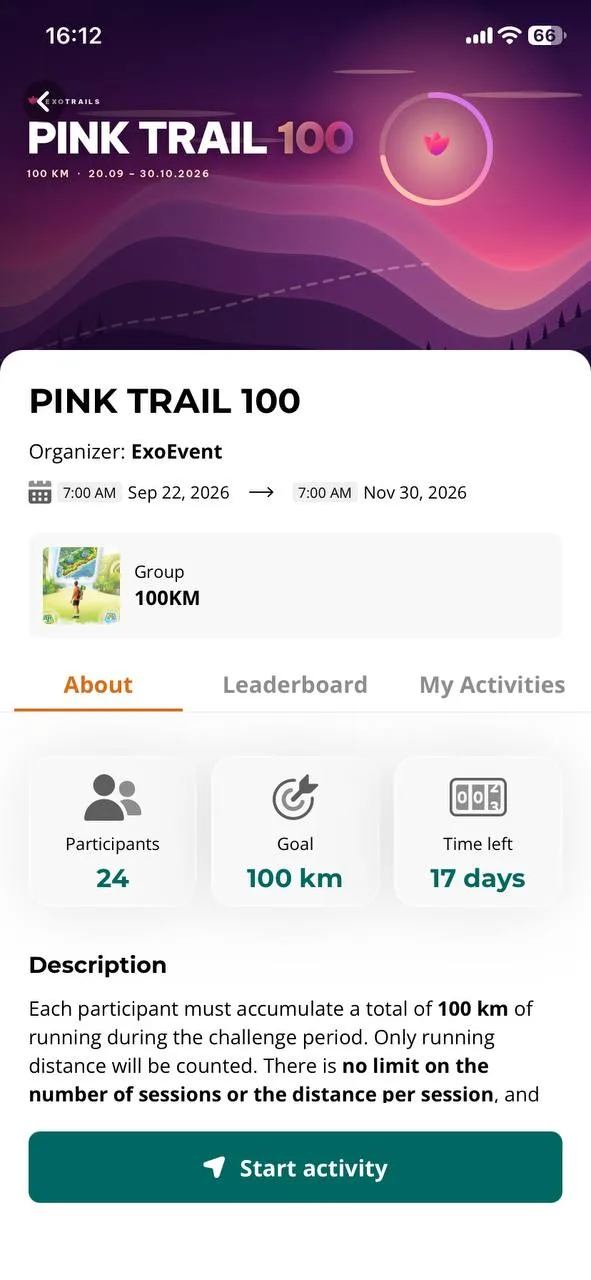
Demo of an employee walking activity organized by ExoTrails
9. Budget and Resource Planning
Costs depend on the format, scale, duration, and support required. Include internal administration as well as supplier charges.
Category | What to confirm |
Platform | Data sources, participant allowance, duration, and configuration |
Delivery and support | Onboarding, issue ownership, and support hours |
Communications | Instructions, design, and campaign updates |
Rewards | Eligibility, quantities, and fulfillment |
Shared activities | Location, responsible staff, and logistics |
Reporting | Fields, export options, and delivery dates |
Compare quotes against the same scope. A low software fee does not describe the full cost if HR still spends substantial time entering data, reconciling results, or answering questions.
10. Report Results to Leadership
Follow the participation journey
Metric | Suggested definition |
Registration rate | Valid registrations divided by employees invited within scope |
Activation rate | Participants with eligible data divided by registrations |
Weekly active rate | Participants with eligible data that week divided by registrations |
Completion rate | Participants meeting published criteria divided by registrations |
Cost per active participant | Total cost within the reporting scope divided by participants with eligible data |
Connection experience | Survey results with response count and response rate |
Agree on denominators and eligibility before reporting. These definitions are suggestions, not universal standards.
Ask questions about workplace culture
Ask whether the program created opportunities to speak with colleagues outside the usual team, whether participation was convenient, and whether employees felt comfortable taking part.
Include people who never started or stopped participating. Surveying only finishers may miss important barriers.
Step counts and distance describe recorded activity. They do not independently establish lasting improvements in connection, health, retention, or productivity.
A useful report identifies the next decisions: simplify instructions, change team assignments, revise goals, or improve support.
11. Plan an Activity Challenge With ExoTrails
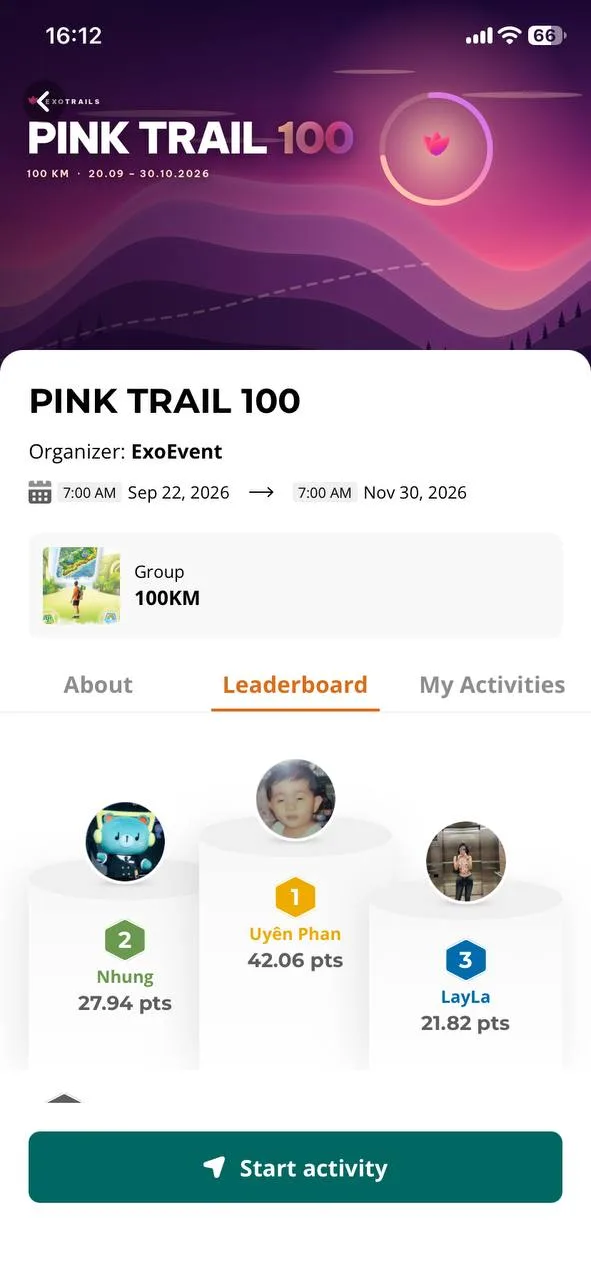
Demo of an employee walking activity organized by ExoTrails
ExoTrails presents ExoActive Engage for challenges that accumulate progress over time, with published capabilities including virtual routes, tasks, milestones, rewards, individual or team rankings, and brand integration. business.exotrails.com
Use the objective and draft rules to discuss a suitable configuration. Confirm whether the proposed program records daily steps or activity distance, and test accepted sources, update timing, and reporting before announcing the details.
Prepare expected participation, office locations, dates, team structure, budget, and reporting requirements.
Talk to ExoTrails about an activity challenge suited to your workforce and workplace culture objectives.
12. Frequently Asked Questions
Should every employee have a 10,000-step daily target?
Do not automatically apply one target to everyone. Consider participation needs, individual circumstances, and the program objective. A competition milestone is an event-design choice, not individualized health guidance.
Do employees need a smartwatch?
That depends on the accepted sources and rules. Test phone-based or other recording options before launch so equipment does not become an unnecessary barrier.
Can the challenge count only outdoor walking sessions?
Yes, if the recording method supports that format and the condition is clearly published. This would measure recorded walking activities rather than every step taken throughout the day.
Are smaller departments at a disadvantage?
They may be when rankings use total contributions. Consider averages, completion rates, or collective goals, while also accounting for differences in job roles and participation opportunities.
Can employees choose not to appear on an individual leaderboard?
Decide what visibility is necessary and confirm the platform’s options before implementation. Explain who can see the data and which participation formats accommodate privacy choices.
What should participants do when results have not updated?
Check the account, source connection, eligibility, and confirmed update interval. Submit issues through the agreed contact within the correction period. Avoid applying different informal fixes to different teams.
How do we know whether the challenge supported workplace culture?
Combine participation data with feedback about interaction, convenience, and comfort. Do not rely only on total activity or the experiences of the most active employees.
Planning your next running event? Talk to ExoTrails about participant management and coordination that fit your event.