
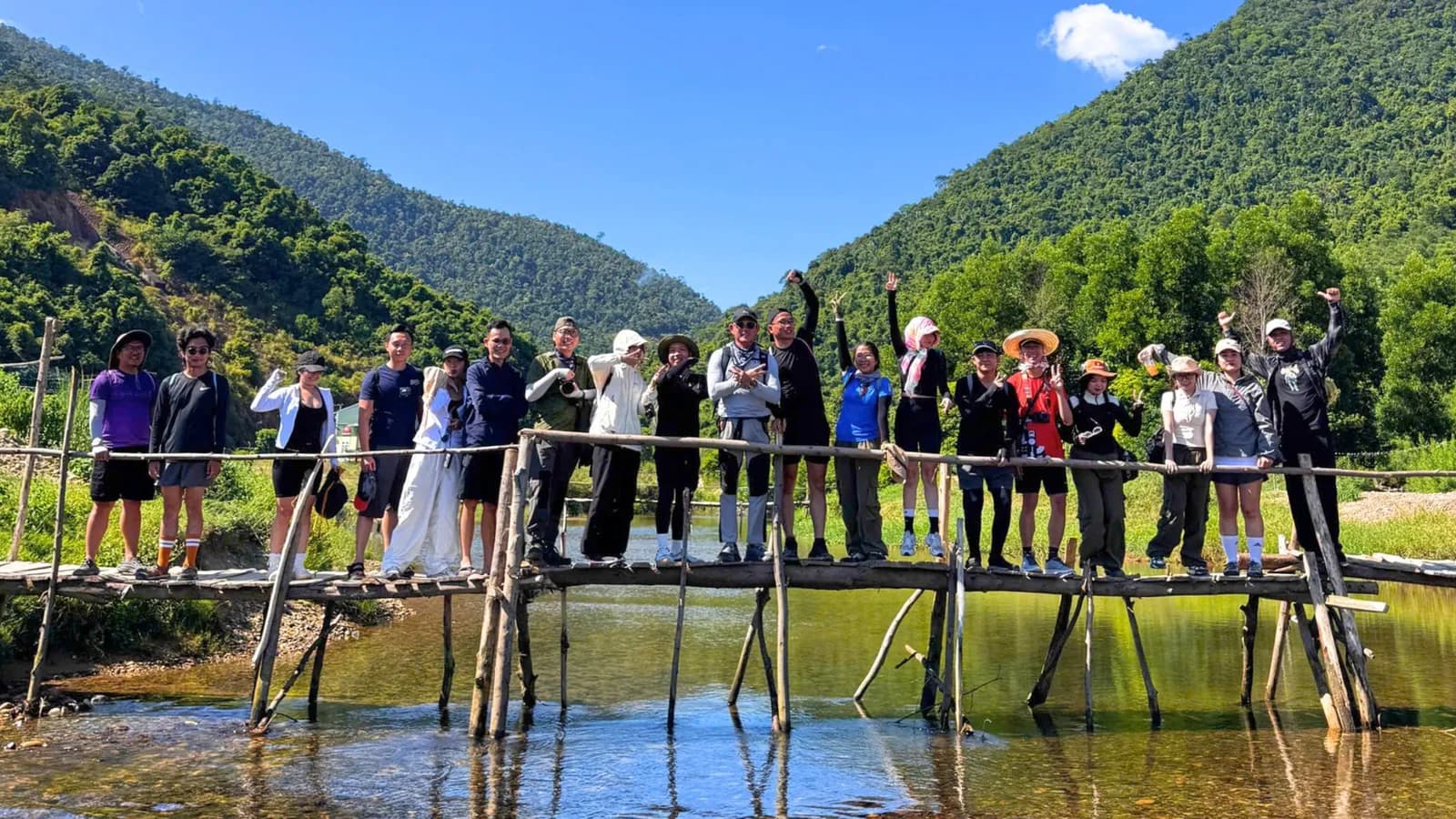

A walk through nature can give colleagues opportunities to talk, solve problems together, and support one another. Turning that experience into a corporate event takes preparation, from choosing an appropriate route to designing activities and arranging on-the-ground support.
Hiking team building should start with your team’s participation needs and a clear event objective. An appealing trail matters, but the experience also needs a realistic schedule, suitable tasks, and clear responsibilities.
This guide helps HR teams, internal communications departments, and event organizers plan a hiking or trekking program, including how to select technology that supports delivery.
1. What Is Hiking Team Building?
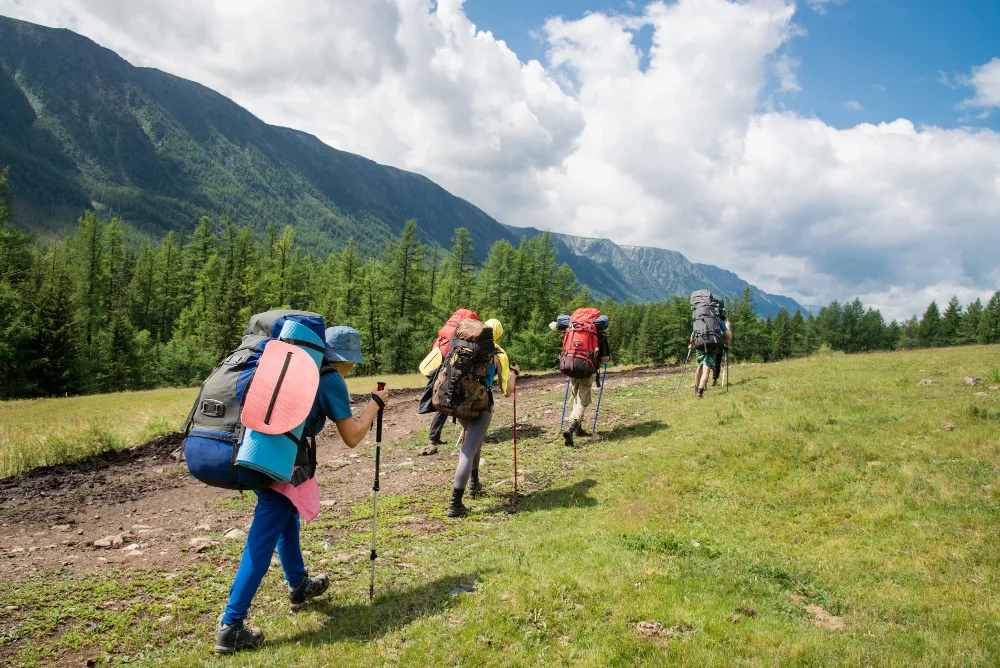
Hiking team building combines a walk along a natural route with structured group activities. Depending on the participants and location, it may involve a short day hike or a longer trekking itinerary.
Activities can take place at approved stopping points. Teams might solve a question, observe their surroundings, discuss a scenario, or contribute to a shared objective.
Each activity should serve a purpose. If the company wants colleagues from different departments to interact, team assignments and participant roles should create opportunities for people who rarely work together to communicate.
How does it differ from a regular hiking trip?
A recreational hike may focus on the route, scenery, or personal goals. A team-building hike adds planned interaction and time to reflect on the experience.
Area | Recreational hike | Hiking team building |
|---|---|---|
Main purpose | Explore a route and enjoy the experience | Combine an outdoor experience with a team objective |
Organization | Itinerary and trail arrangements | Additional team assignments, roles, and activities |
Stops | Rest, observation, or sightseeing | May include collaborative tasks |
Closing discussion | Reflections on the trip | Discussion of how the group worked together |
Evaluation | Experience and route suitability | Participation, interaction, and feedback |
Competition is optional. A cooperative format, where teams contribute to one shared outcome, can also suit the event.
2. When Should a Company Choose a Hiking Event?
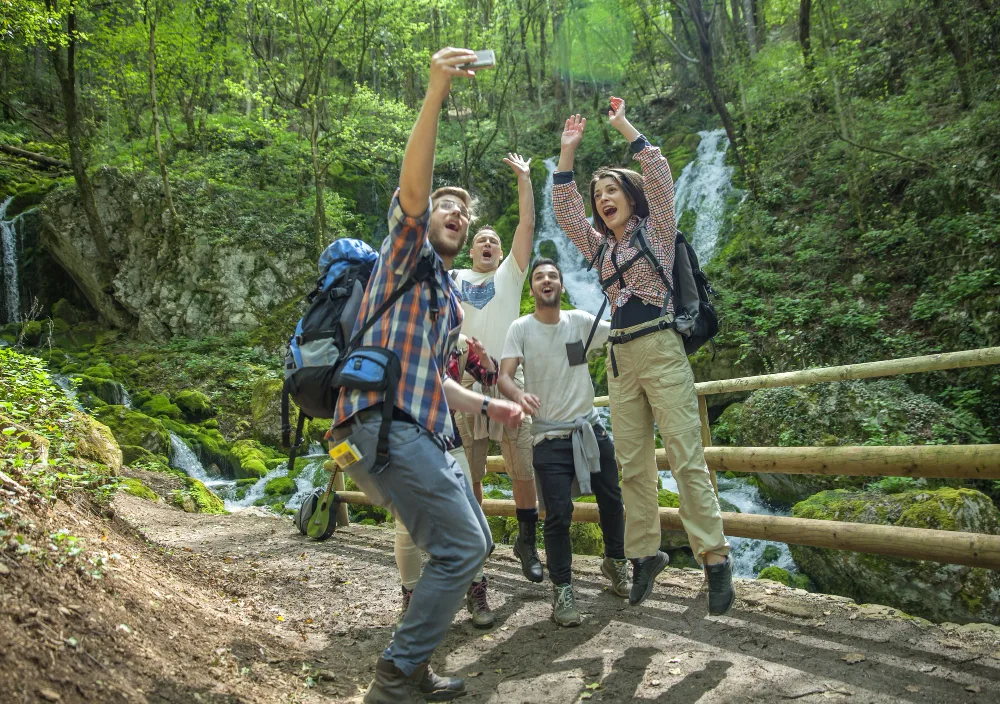
Consider this format when the company wants an outdoor setting for interaction and can provide an appropriate experience for its workforce.
Connecting employees across departments
For an event focused on meeting colleagues, HR can create mixed teams rather than keeping existing departments together. Activities should provide different ways to contribute.
Task completion alone does not show whether people felt more connected. Post-event feedback can help establish whether employees had meaningful opportunities to talk and get to know one another.
Practicing coordination
Activities can involve dividing responsibilities, comparing information, and agreeing on a response. A facilitator can then help the group review how it made decisions.
Keep these exercises within controlled conditions. Do not create pressure by deliberately separating participants, withholding safety information, or introducing terrain beyond their capabilities.
Adding an activity to a wellness program
A hike can form part of a company’s broader activity program. However, a one-day experience is not sufficient evidence of lasting improvements in health, stress, or everyday habits.
If continued participation is a goal, consider optional follow-up activities with their own objectives and evaluation methods.
When should the format change?
Consider a shorter route or another activity if travel arrangements are too demanding, participation barriers remain unresolved, the route cannot be assessed adequately, or support capacity is insufficient.
Discuss meaningful alternatives with employees who cannot take part. They should not automatically be assigned responsibility for everyone else’s logistics.
3. How to Choose a Route for Corporate Hiking
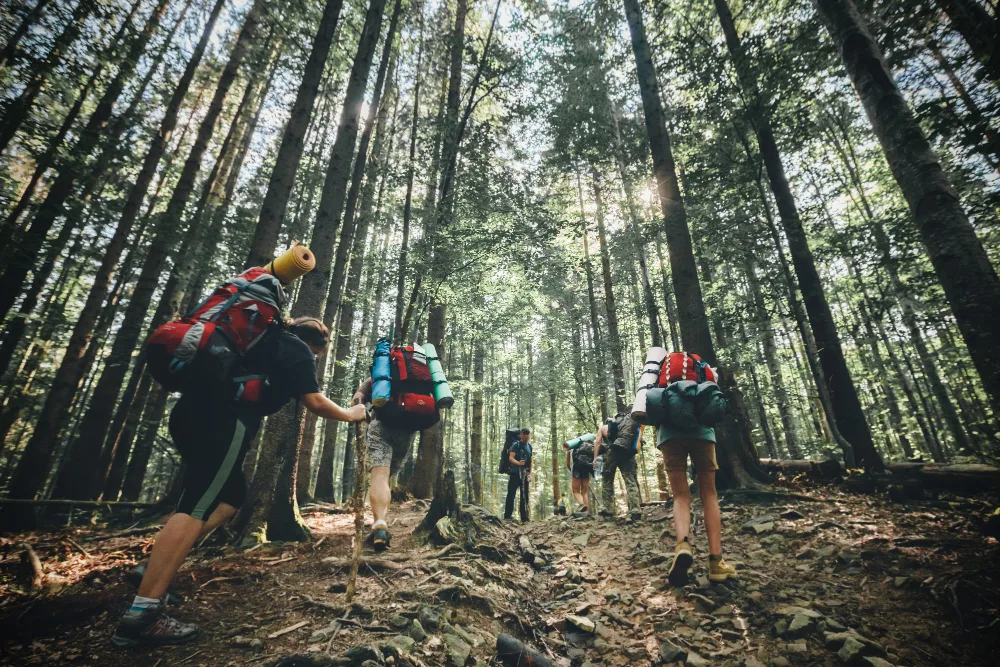
Assess the whole journey
Distance does not describe the full difficulty of a route. Review elevation changes, surfaces, slippery sections, crossings, access points, and expected weather.
The US National Park Service recommends researching terrain, weather, closures, and participant capabilities before a trip. Its guidance is a planning reference; local requirements must be checked with the relevant authorities or land managers.
For a corporate group, a route assessment should cover the following areas:
Area | What to check |
|---|---|
Route | Start and finish, distance, elevation, and surfaces |
Timing | Walking, breaks, activities, and contingency time |
Stopping points | Capacity, standing areas, access, and effects on other visitors |
Support | Access points, early-exit options, and assistance arrangements |
Communications | Coverage and procedures when contact is unavailable |
Logistics | Water, meals, toilets, transport, and accommodation if needed |
Permission | Authorized routes and permitted activities |
Alternatives | Shortened routes, replacement activities, and cancellation conditions |
Match the route to the participants
Ask about relevant experience, readiness, and support needs. Collect only necessary information, explain its purpose, and limit access appropriately.
The responsible provider or competent personnel should assess suitability using relevant information. A label such as “easy” or “beginner-friendly” should be supported by a clear description of the terrain and itinerary.
Where could companies begin researching routes in Vietnam?
Managed walking routes in national parks or nature-based visitor areas can provide starting points for investigation. However, permission to visit does not automatically include permission to run games, install equipment, or bring a large group.
Cuc Phuong’s tourism website describes forest walks with different durations and features. Organizers can use that information to discuss route options before developing the event schedule.
Cat Tien’s published Bau Sau itinerary illustrates why individual routes need separate assessment: the document describes a substantial walking requirement. Current access, conditions, and service arrangements should be reconfirmed before booking.
Choose a specific route based on the group and delivery arrangements, rather than assuming every trail within a destination has the same difficulty.
4. Design Team Building Hiking Activities

Activities should be understandable, manageable, and appropriate for the stopping point. Participants need to know what to do, how completion is recorded, and when to continue.
Five activity ideas to adapt
Activity | How it works | Interaction objective |
|---|---|---|
Shared-information puzzle | Each member receives part of the information needed to answer a question at a designated stop | Sharing and checking information |
Observation task | The team records specified details visible from the permitted route | Discussion and agreement |
Collaboration scenario | The group discusses a hypothetical workplace problem unrelated to real trail safety decisions | Assigning roles and making decisions |
Journey story | Members create a short account or group photograph against published criteria | Creativity and coordination |
Shared event goal | Each team completes a contribution toward one combined result | Cooperation between teams |
These are activity concepts, not automatic platform capabilities. Before using them, confirm site permission, recording methods, and facilitation requirements.
Give people different ways to contribute
Roles might include reading instructions, recording answers, presenting, or summarizing the discussion. Rotate them where practical so that a few confident participants do not take over every task.
Route leadership and safety responsibilities must remain with designated, competent personnel. Navigating unfamiliar terrain should not become an improvised game.
Score according to the event objective
If the program includes competition, publish the criteria in advance. Scoring could reflect task results and adherence to the instructions at an activity station.
For an event intended to encourage interaction, finishing time should not be the only measure. Otherwise, teams may focus on speed at the expense of the shared experience.
Make clear that following an authorized decision to stop, shorten the route, or assist a participant will not attract penalties intended to pressure people into continuing.
Allow time for reflection
After the hike, a facilitator can ask:
How did the team divide responsibilities?
How were different opinions handled?
What made participation easier?
What would the group change next time?
This provides specific feedback without imposing the same lesson on every participant.
5. A Sample One-Day Hiking Team Building Schedule
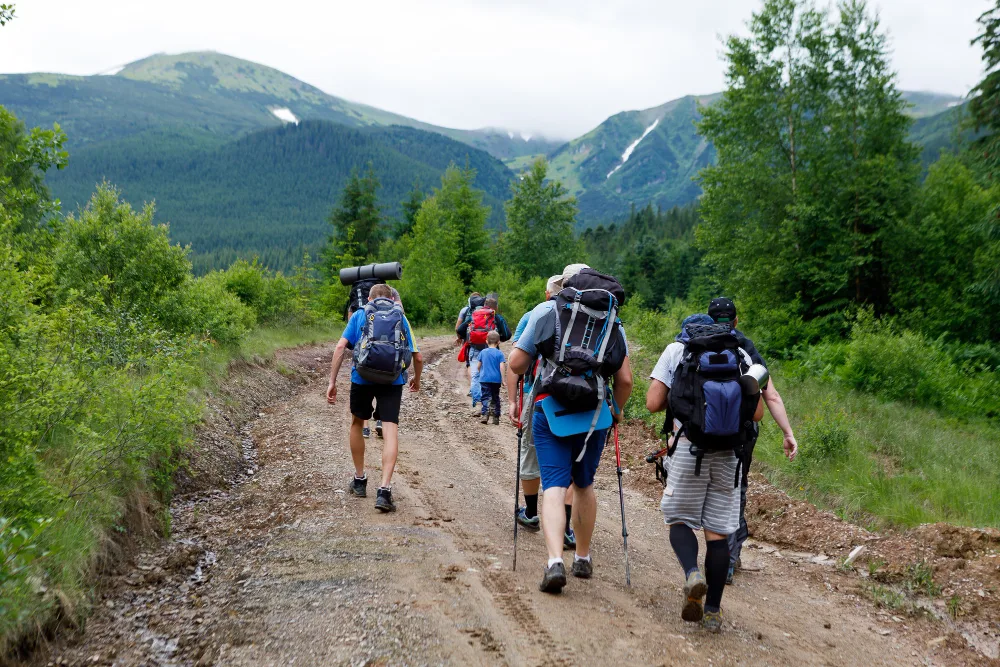
The following is an illustrative planning framework. Actual timing must follow route assessment, participant needs, and delivery conditions.
Phase | Activity | What needs confirmation |
|---|---|---|
Before departure | Check information, equipment, and operating conditions | Participant list, instructions, contacts, and departure decision |
Group briefing | Attendance, team assignments, and event instructions | Guides, designated group leaders, and movement procedures |
Start of the route | Follow the approved plan | Pace, group spacing, and communications |
First stop | Rest and complete a short task | Participant check, adequate space, and clear trail access |
Following sections | Walking, breaks, and appropriate activities | Timing and group condition |
End of the route | Reconcile participants | Finishers, early departures, and people receiving assistance |
Closing session | Reflection and recognition | Feedback, equipment collection, and site handover |
Return journey | Travel according to plan | Passenger checks and responsible contacts |
Schedule more than walking time
Include briefings, toilet breaks, waiting, activities, and adjustments. A short task for one team can create a long queue when several groups arrive together.
Group sizes and departure intervals should reflect the route’s capacity and the available support. Splitting a large event into smaller teams does not automatically make it manageable.
Prepare a shorter option
Identify where the itinerary can end early or change. Participants and staff should know who can authorize that decision and how it will reach each group.
A prepared task or prize is not a reason to continue when the operating plan needs to change.
6. Prepare Safety and Support Arrangements

Check conditions before the event
The organizer needs to assess the route, relevant hazards, and support access for the planned date. Images or route records from a previous trip do not establish current conditions.
Confirm the land manager’s requirements for group registration, guides, stopping points, camping, sound equipment, or installations where relevant.
Assign people and communications responsibilities
Identify the overall event lead, group contacts, support personnel, and the process for escalating information.
Staffing should follow an assessment of the route, participants, and activities. Avoid treating one guide-to-participant ratio as a universal standard.
If coverage is unreliable, establish alternative communication and reconciliation procedures. Everyone responsible for monitoring should understand that a displayed location may reflect an earlier update.
Define when to continue, change, or stop
Conditions need to be reviewed throughout the event. Weather, trail conditions, time, and participant readiness may affect the decision.
The National Park Service advises groups to stay together, follow their plan, and consider turning back when safety concerns arise. Organizers can use these principles when preparing arrangements for their own event.
Give participants practical preparation instructions
Pre-event information should cover:
Route characteristics and expected duration.
Footwear, clothing, and equipment appropriate to assessed conditions.
Water and food arrangements.
Phone, battery, and pre-download requirements if technology is used.
Procedures for staying with the group, requesting help, and leaving the route.
Contacts before and during the event.
For insurance, check the specific policy’s activity coverage, conditions, and exclusions. Do not assume that every policy covers the same hiking or trekking activities.
7. What Does a Corporate Hiking Event Cost?
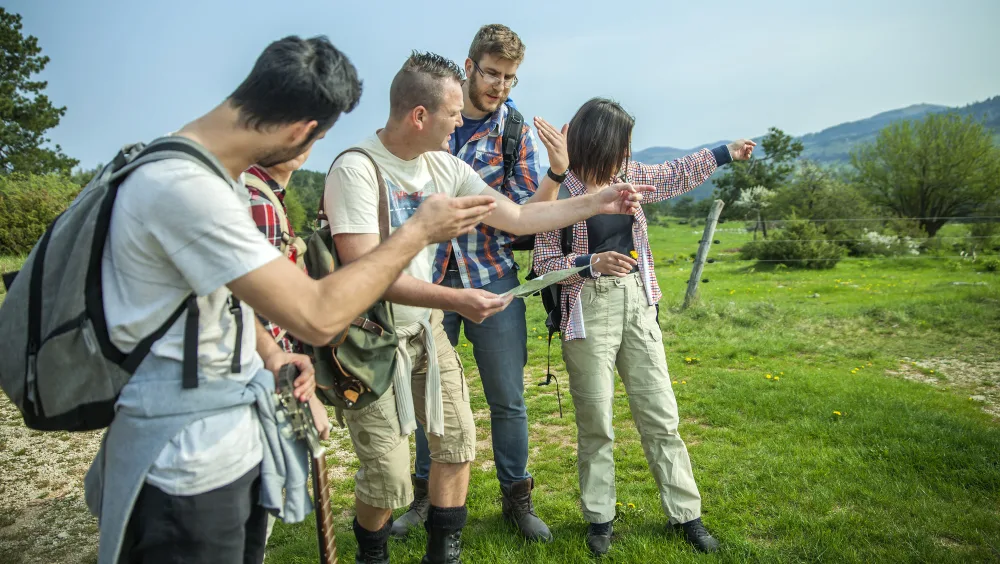
There is no single price for every group. Costs depend on departure location, route, participant numbers, duration, and service scope.
Category | What to include |
|---|---|
Assessment and design | Route checks, event design, and operating plans |
Transport | Pickup points, transfers, and vehicle schedule |
Location services | Confirmed entry, guiding, and site-use charges |
Staffing | Coordination, route leadership, and support |
Food and water | Meals, supplies, and distribution |
Equipment | Shared items, communications, and required materials |
Activities | Content, props, setup, and removal |
Technology | Configuration, devices where needed, testing, and support |
Insurance | Confirmed scope and conditions |
Communications | Design, photography, materials, and usage permissions |
Contingency | Changes to numbers, conditions, routes, or services |
Compare quotes against the same requirements
Provide each supplier with the same brief. Check what is included, optional, or chargeable later.
Clarify arrangements for postponement, cancellation, changes in participant numbers, and route substitutions. Overnight programs also need accommodation, sanitation, and support arrangements beyond the walking itinerary.
Should the company organize everything internally?
Assess your ability to handle route assessment, group leadership, logistics, and field support. Experience organizing office events does not automatically provide the competence needed to manage a trek.
When appointing a provider, confirm the capabilities and responsibilities relevant to its work. Technology supports part of the operation; it does not replace the entire delivery service.
8. Respect Nature and Local Communities
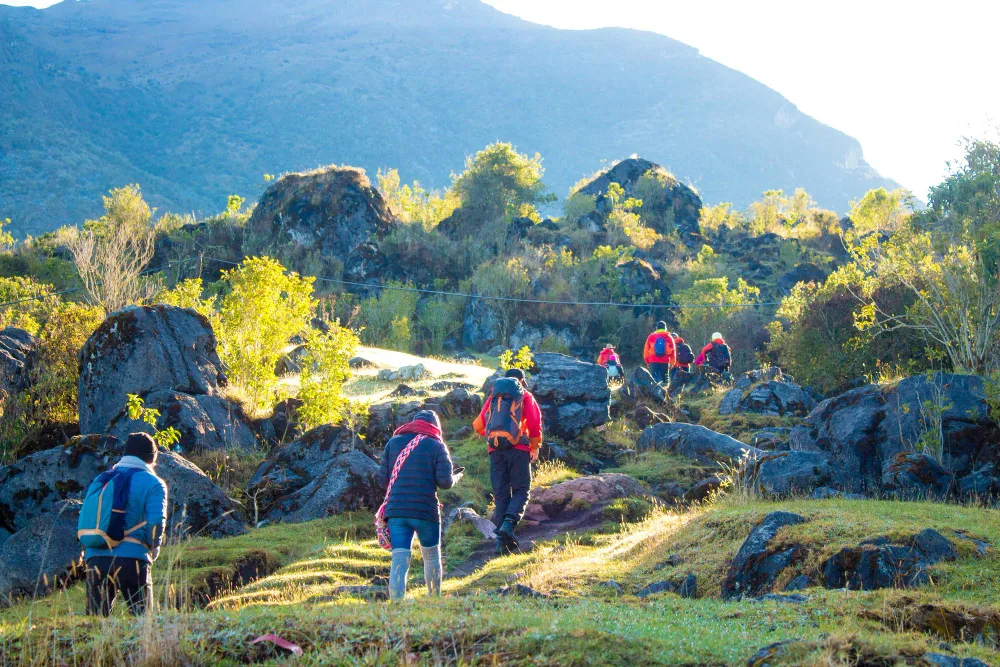
Before adding an activity, confirm that it is permitted at the location. Do not ask participants to create new paths, collect plants or natural objects, or hide props in sensitive areas.
Leave No Trace guidance addresses advance preparation, reducing trail impacts, waste management, wildlife, and consideration for other visitors.
Translate these considerations into practical event instructions:
Use approved routes and stopping points.
Remove all event materials, signs, and props.
Confirm permission before using amplified sound.
Do not feed wildlife or approach animals for photographs.
Ask permission before photographing residents or private spaces.
Follow instructions from land managers and local communities.
If the program includes tree planting or litter collection, agree the location, methods, and follow-up with the responsible organization. An activity should not be described as an ESG outcome without an appropriate basis for verifying its results.
9. Evaluate the Hiking Team Building Event

Measure what the company needs to understand
Attendance is useful, but HR can also examine accessibility, delivery, and participant experience.
Area | Information to review |
|---|---|
Participation | Registrations, attendance, route completion, and alternative participation |
Activities | Results under the published criteria |
Experience | Suitability, instructions, opportunities to interact, and suggestions |
Operations | Waiting times, support requests, and schedule changes |
Cost | Budget, actual spending, and reasons for differences |
Follow-up | Interest in similar activities and suggested improvements |
Separate completion data from conclusions about employee engagement. Finishing a route together does not establish lasting changes in working relationships.
Include people who experienced difficulties
Invite feedback from participants who completed the route, shortened their journey, or used an alternative option.
Ask whether instructions were clear, whether the route matched the advance description, and what should change. The final report should lead to practical improvements in route selection, activities, timing, or support.
10. How ExoTrails Can Support Hiking Team Building
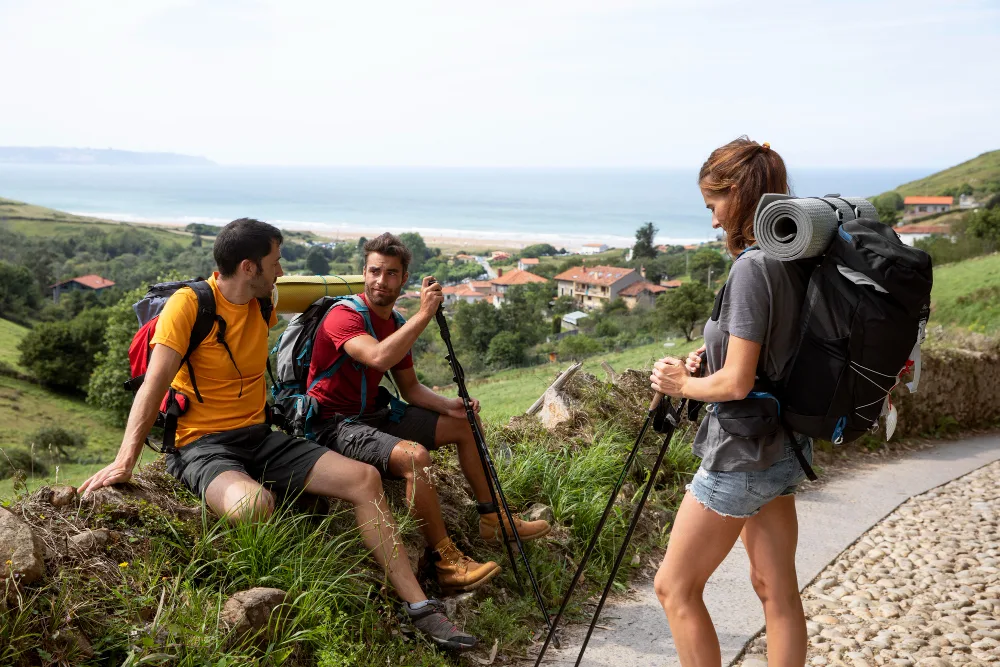
Start by identifying the management and interaction requirements that technology needs to support.
ExoTrails for Business presents ExoActive Command for live event operations, with published capabilities including location tracking, participant status updates, checkpoints, incident coordination, and role-based permissions. ExoActive Engage supports cumulative challenges with tasks, completion milestones, rewards, and rankings: business.exotrails.com
For a particular hiking event, confirm:
Which operational tasks the system will support.
Required devices, connectivity, and permissions.
How activities and participant information are recorded.
Who monitors information and makes field decisions.
What happens when data stops updating or a device fails.
For related ideas, explore ExoTrails’ guide to tech-enabled team building.
Prepare your objective, expected group size, location or route type, itinerary, and management requirements before a consultation. Talk to ExoTrails about technology suited to your event and the support scope required.
11. Frequently Asked Questions
Can employees with no hiking experience participate?
They may be able to participate when the route, itinerary, and support arrangements suit their needs. Provide specific advance information, discuss requirements, and assess suitability before confirming the program.
How long should the route be?
There is no universal distance. Consider elevation, surfaces, weather, activity time, participant capabilities, and exit options. Two routes of equal length can require very different levels of effort.
Does hiking team building need to be competitive?
No. A cooperative format or shared experience may suit the objective. If competition is included, the rules should not encourage participants to ignore safety instructions.
How should a large group be managed?
Assess route capacity, departure arrangements, staffing, stopping points, communications, and participant reconciliation. Dividing people into teams is only one part of the plan.
Can the event go ahead in rain?
The decision depends on the route, forecast, land manager’s information, and conditions at the time. Establish clear authority to adjust, postpone, or cancel when necessary.
Can an app replace a guide?
An app can support navigation and information access within its capabilities. The event still needs people and procedures appropriate to the terrain and group. Do not rely on phones alone to manage participants.
What information should a company provide when requesting advice?
Share the event objective, participant numbers, departure location, dates, experience levels, budget, and specific requirements. These details help establish a suitable approach and service scope.
Planning a field trip for your school or organization?
ExoTrails provides digital mapping, safety perimeter setup, and outdoor management software.
Website: business.exotrails.com/en
Solutions Hotline: (+84) 383 200 926
Email: hello@exotrails.com