


From a cruise deck, Ha Long Bay unfolds as a skyline of limestone islands. From a kayak, your attention shifts to smaller details: reflections beneath a cliff, vegetation growing from a rocky ledge and the sound of water against the hull.
Ha Long Bay kayaking offers a closer perspective on the landscape. On a suitable excursion, you can move through designated paddling areas and approach places larger vessels cannot enter.
The experience works best when curiosity is matched with preparation. Choose a trip suited to your abilities, understand where you will paddle and follow the guidance provided on the day.
What Makes Ha Long Bay Kayaking Worthwhile?
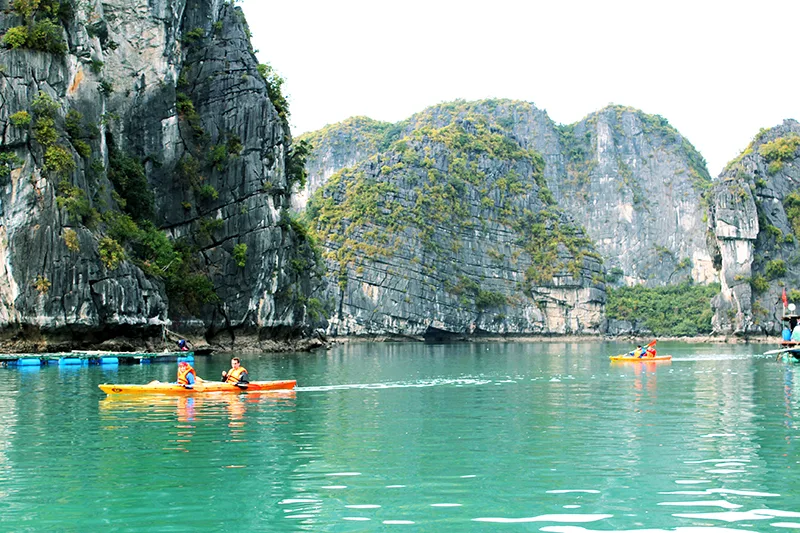
Kayaking changes your relationship with scale. Sitting close to the surface makes the limestone walls feel taller. Your pace also changes: there is time to notice a reflection, listen to the water or follow the shape of the shoreline within your permitted route.
The wider Ha Long Bay–Cat Ba Archipelago World Heritage property is recognised for its scenery and geological significance. Cat Ba was added through an extension in 2023.
You do not need to turn the outing into an endurance challenge. A well-organised introductory paddle can be a memorable part of a broader visit.
For help planning the rest of your journey, explore ExoTrails’ Ha Long Bay travel guide.
Luon Cave Kayaking: What to Expect
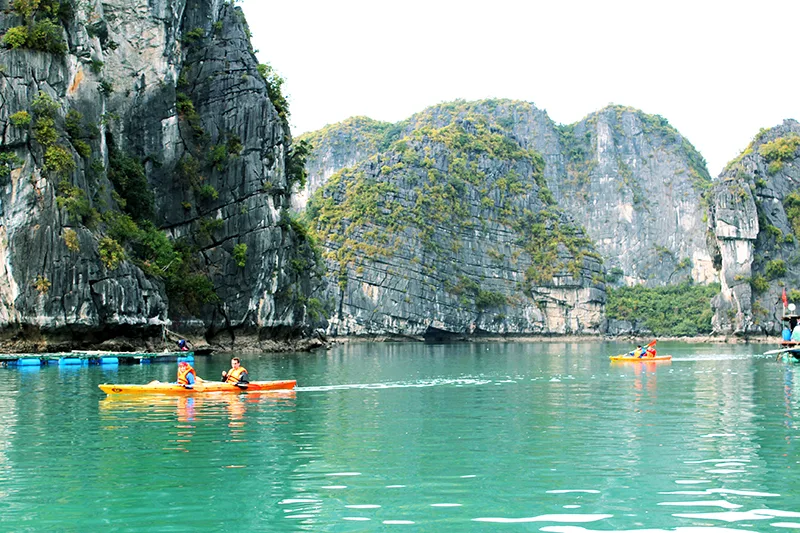
A Passage Between the Bay and an Enclosed Lake
The bay’s management authority describes Luon Cave as a tunnel-like passage connecting the sea with a small lake surrounded by steep cliffs. It is located on the northeastern side of Bo Hon Island and belongs to sightseeing Route 2.
Visitors enter by kayak or bamboo boat rather than a large sightseeing vessel.
The transition is part of the appeal. After approaching across open water, the surrounding rock changes the view as you move towards the enclosed space.
Why the Tide Matters
Water levels change the clearance beneath Luon Cave’s roof. The management authority specifically notes the lower headroom visitors encounter at high tide.
Your operator should assess conditions and explain how the passage will be approached. Do not decide that an opening is suitable simply because another kayak has entered it.
Follow instructions about spacing, positioning and turning back. Photographs can wait until you are clear of the entrance and able to stop appropriately.
Kayak or Bamboo Boat?
Both are documented visitor options at Luon Cave. A bamboo-boat excursion may suit travellers who prefer to observe without paddling, subject to availability and boarding requirements.
Ask your organiser about the alternatives before booking. Enjoying the bay does not require participating in every activity.
Where Else Can You Paddle?
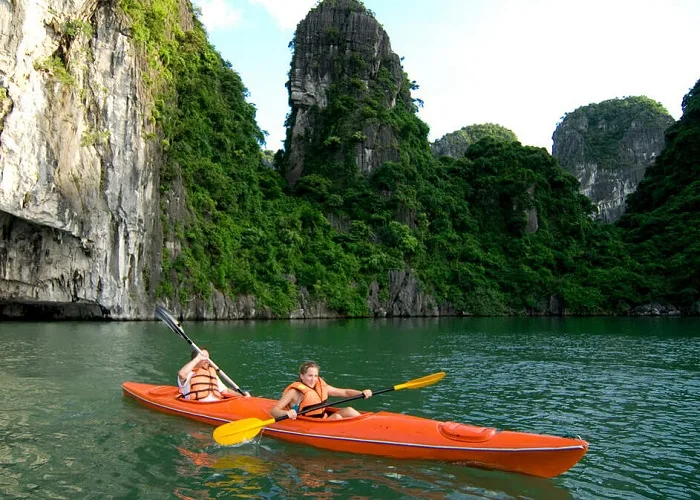
The management authority’s service directory lists organised paddling or rowing services in areas including Ba Hang, Cua Van and Vung Vieng, alongside Luon Cave.
Treat these as places to research rather than a promise that your cruise visits them all.
The exact experience depends on the itinerary, service arrangements and conditions. Confirm the launch point with your operator, especially when comparing trips marketed broadly as “Ha Long Bay” cruises.
A photograph of a lagoon is not enough to establish which route a booking includes.
Choosing a Ha Long Bay Kayak Tour
Trip format | What it offers | What to check |
Day cruise with kayaking | A paddling session within a sightseeing itinerary | Launch location, paddling duration and transfer time |
Overnight cruise with kayaking | Paddling alongside other activities over a longer stay | Number of sessions and whether equipment is included |
Paddling-focused excursion | More emphasis on time in the kayak | Route, skill requirements, supervision and support |
Bamboo-boat alternative | A locally rowed excursion at participating sites | Availability, boarding arrangements and any supplement |
The management authority’s published day-cruise information describes Route 2 as combining Ti Top Island, Sung Sot Cave and Luon Cave, where kayaking or bamboo boating is offered. Your booked programme determines the actual stops.
Before paying, clarify:
The exact paddling location.
Time allocated on the water.
Whether the kayak is single or tandem.
What briefing and supervision are provided.
Which charges are included.
What happens if conditions prevent kayaking.
Is Kayaking Suitable for Beginners?
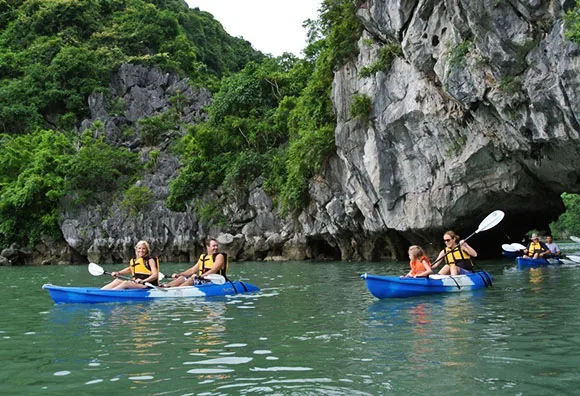
Some introductory excursions may suit beginners, but suitability depends on the conditions and level of support.
Tell the organiser about your experience and confidence around water. Ask for instruction on getting in and out, steering, stopping and what to do if you need assistance.
The RNLI recommends wearing a suitable lifejacket or buoyancy aid, checking weather and sea conditions, seeking local knowledge and paddling with others where possible.
Stay within the agreed group and activity area. A calm-looking photograph cannot tell you what conditions will be like during your session.
When Should You Go Kayaking?
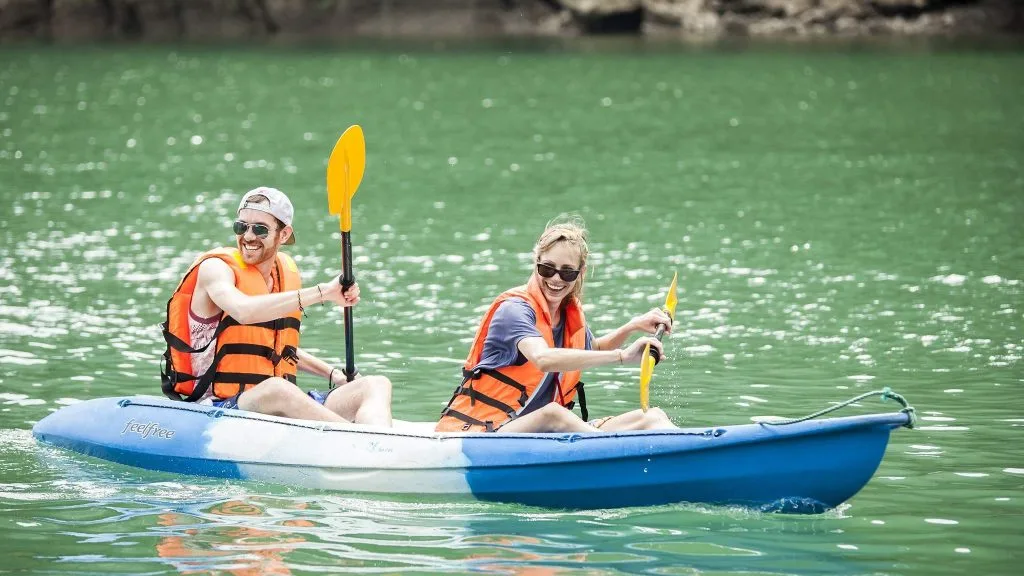
The right time is a permitted operating period with suitable conditions. Avoid choosing an excursion solely around promises of sunrise mist or perfectly still water. Wind, visibility, tides and local operating decisions all affect the experience.
For Luon Cave, the management authority’s published visiting schedule starts at 07:30, with seasonal closing times. That does not support treating a pre-dawn visit as a standard option. Confirm the latest arrangements with your operator.
Allow flexibility if the session is shortened, moved or cancelled.
What to Bring
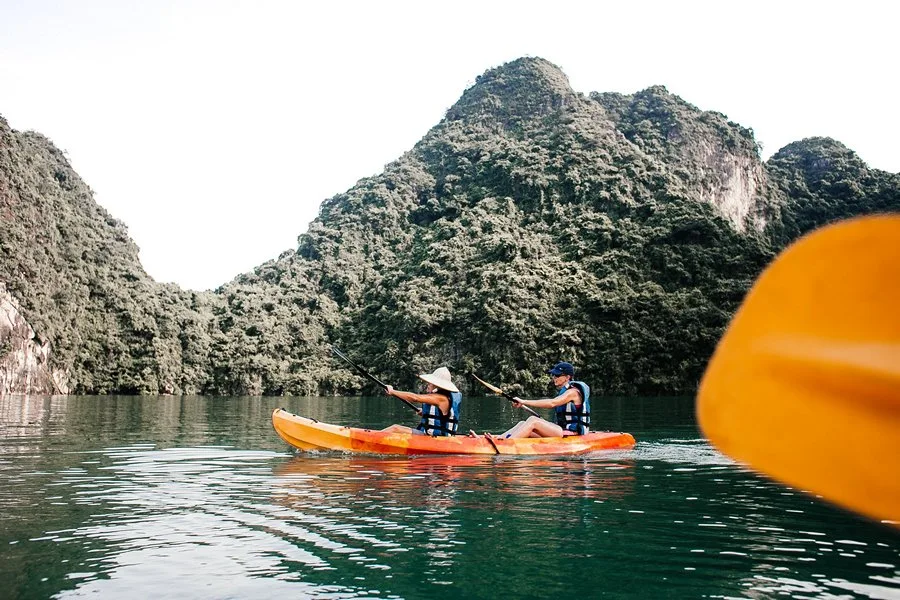
Keep belongings compact and appropriate for getting wet:
Clothing that allows comfortable movement.
Secure footwear suitable for boarding.
Sun protection and drinking water.
A dry bag for essential belongings.
A change of clothes for afterwards.
If carrying a phone, use a waterproof pouch and keep it accessible without interfering with paddling. Check the fit of your flotation equipment before launch and ask staff to address anything loose, damaged or uncomfortable.
Paddle Responsibly Through the Bay
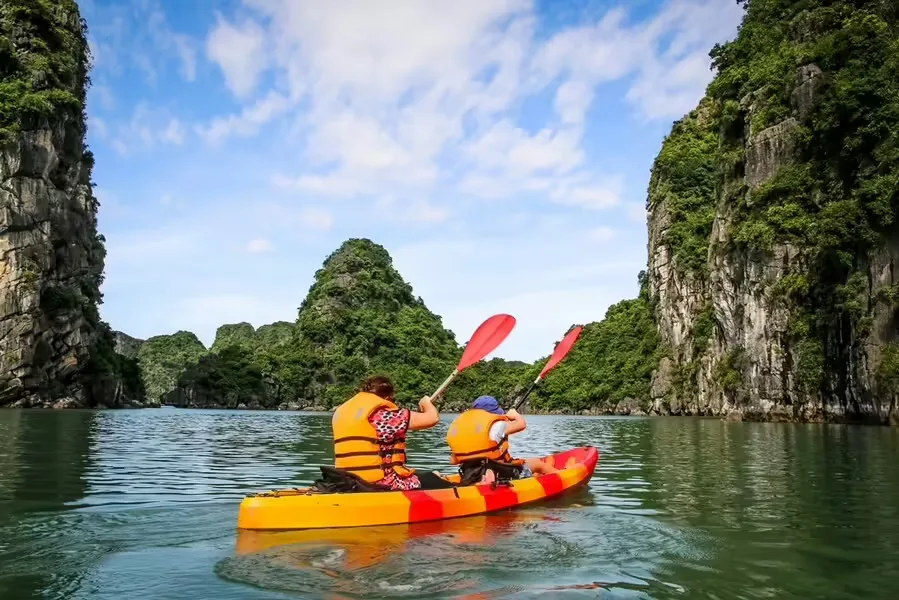
A kayak has no engine exhaust while being paddled and can reduce engine noise during that part of the excursion. It is more accurate to describe this as a benefit of human-powered travel than to call the entire trip “zero-footprint.”
Your choices still matter:
Keep an appropriate distance from wildlife.
Avoid touching formations or scraping against cliffs.
Remain within designated paddling areas.
Carry rubbish back to the collection point.
Land only where your organiser permits it.
Follow local guidance on reusable containers and waste.
If a tour claims to support conservation monitoring or restoration, ask which programme receives the contribution. Ordinary sightseeing should not be presented as a conservation expedition without evidence.
FAQs About Ha Long Bay Kayaking
Is kayaking included in every cruise?
No. Check the named activity, location and inclusions in your booking.
Can I independently explore any cave?
No. Follow the approved route and operator instructions. A visible opening is not permission to enter.
Will Luon Cave be quiet?
Not necessarily. It is an established visitor attraction, and crowd levels vary.
What if I do not want to kayak?
Ask about a bamboo-boat option or another activity available within your itinerary.
Discover the Bay at Paddle Pace
The reward can be simple: a different view of the limestone, a few moments watching reflections and the satisfaction of moving through the landscape under your own power.
Choose a suitable excursion and give yourself time to enjoy it.
Explore more water-based adventures with ExoTrails and find inspiration for your next journey through Vietnam.