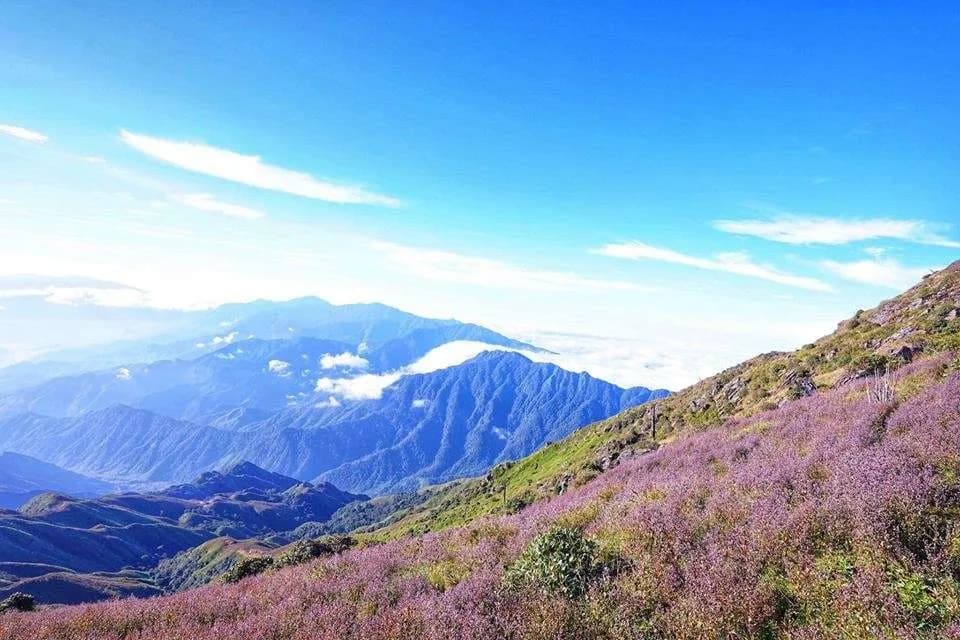


Most travellers who touch down on the Con Dao archipelago do so with a very specific, polished itinerary in mind: sun-bleached white sand beaches, a bit of somber colonial history at the old French prisons, and perhaps a high-end cocktail at a seafront resort.
But for those of us who prefer our coastlines with a side of jagged rock and salt-crusted sweat, the real magic isn't on the lounge chairs. It’s buried in the rugged, vertical interior of the main island, Con Son, where a network of prehistoric jungle trails remains virtually untouched by the flip-flop-wearing masses. If you’re looking for a Vietnam off the beaten path destination that combines deep-jungle grit with a "Lost World" coastal payoff, Dam Tre Bay trekking is your masterclass.
Read more interesting posts here:- Hidden Villages in Vietnam: 12 Breathtaking Routes into the Soul of an Ancient Empire
- Vietnam Eco-Resorts 2026: Spectacular Sanctuaries Echoing the Soul of an Ancient Land
- Pine forests in Vietnam: Breathtaking Alpine Sanctuaries Whispering Tales of a Forgotten Colonial Past
Why Dam Tre Bay Trekking is the Ultimate Con Dao Adventure
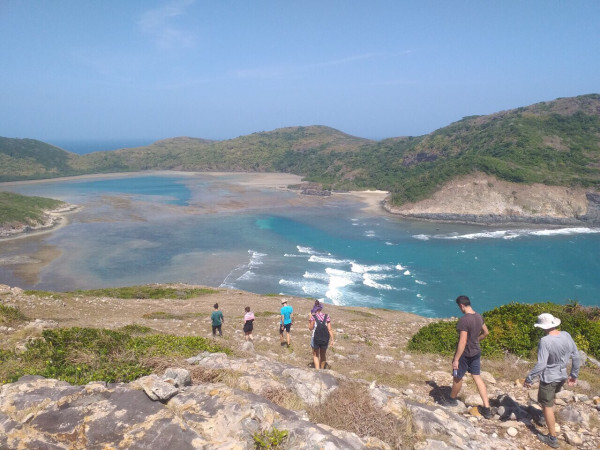 This isn't a casual stroll to a viewpoint. To reach the bay, you have to commit to a journey through the heart of Con Dao National Park, a protected sanctuary where the canopy is so dense and multi-layered that it can block out the midday sun entirely. The air here is a thick, tropical soup heavy with the scent of damp earth and salt spray.
The Dam Tre Bay trekking experience demands a certain level of physical respect; you’ll find yourself scrambling over the granite spine of "Horse Peak," navigating steep, slick rock faces and hauling yourself up by the massive, prehistoric-looking banyan roots that lace the forest floor like a wooden nervous system.
This isn't a casual stroll to a viewpoint. To reach the bay, you have to commit to a journey through the heart of Con Dao National Park, a protected sanctuary where the canopy is so dense and multi-layered that it can block out the midday sun entirely. The air here is a thick, tropical soup heavy with the scent of damp earth and salt spray.
The Dam Tre Bay trekking experience demands a certain level of physical respect; you’ll find yourself scrambling over the granite spine of "Horse Peak," navigating steep, slick rock faces and hauling yourself up by the massive, prehistoric-looking banyan roots that lace the forest floor like a wooden nervous system.
Navigating the Rugged Jungle Trail to Dam Tre Bay
 The humidity is intense, a constant companion that will have your shirt plastered to your back within the first twenty minutes. But this is exactly what filters out the casual tourists. The path is a rhythmic cycle of steep ascents and sudden, breathtaking glimpses of the East Sea through the foliage.
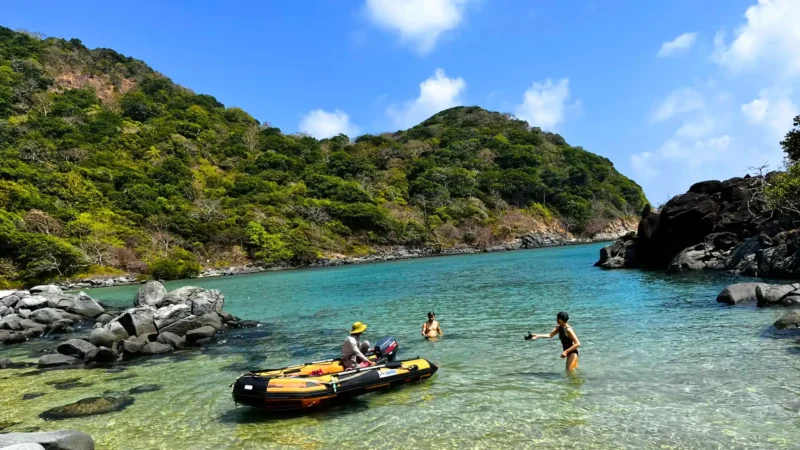
Just when you think your knees have had enough, the jungle peels away, and the terrain drops down toward a hidden, turquoise lagoon cradled by towering limestone cliffs. This is Dam Tre Bay, a horseshoe-shaped sanctuary that feels like it belongs to another century.
The humidity is intense, a constant companion that will have your shirt plastered to your back within the first twenty minutes. But this is exactly what filters out the casual tourists. The path is a rhythmic cycle of steep ascents and sudden, breathtaking glimpses of the East Sea through the foliage.
Just when you think your knees have had enough, the jungle peels away, and the terrain drops down toward a hidden, turquoise lagoon cradled by towering limestone cliffs. This is Dam Tre Bay, a horseshoe-shaped sanctuary that feels like it belongs to another century.
The Reward: Snorkeling and Serenity in a Prehistoric Sanctuary
 In Dam Tre, the "residents" aren't hotel staff or tour guides. The bay belongs to the giant clams that anchor themselves in the shallows and the endangered sea turtles that return to these shores to nest in the moonlight. There is a profound, prehistoric stillness here that you won't find on the mainland.
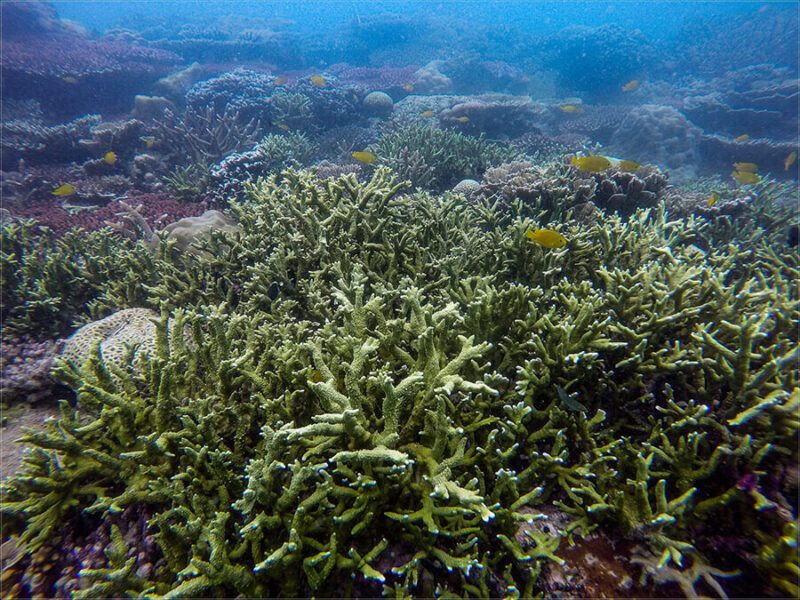
The water is a startling shade of emerald, so clear that you don't even need a boat to see the life beneath the surface. After completing your Dam Tre Bay trekking, you can snorkel directly from the shore, kicking out into a pristine coral garden that is vibrant, healthy, and most importantly completely free of the plastic and noise pollution that plagues so many other Southeast Asian reefs.
Standing on the edge of this bay, with the jungle at your back and the sea at your feet, you’re seeing the Vietnamese coast as it looked centuries ago. It is wild, vibrant, and fiercely beautiful. It’s a place that reminds you why we go through the trouble of the long flights and the muddy Dam Tre Bay trekking trails in the first place: to find those rare, quiet corners where the world hasn't been edited for the general public. It’s a coastal frontier in the truest sense of the word.
In Dam Tre, the "residents" aren't hotel staff or tour guides. The bay belongs to the giant clams that anchor themselves in the shallows and the endangered sea turtles that return to these shores to nest in the moonlight. There is a profound, prehistoric stillness here that you won't find on the mainland.
The water is a startling shade of emerald, so clear that you don't even need a boat to see the life beneath the surface. After completing your Dam Tre Bay trekking, you can snorkel directly from the shore, kicking out into a pristine coral garden that is vibrant, healthy, and most importantly completely free of the plastic and noise pollution that plagues so many other Southeast Asian reefs.
Standing on the edge of this bay, with the jungle at your back and the sea at your feet, you’re seeing the Vietnamese coast as it looked centuries ago. It is wild, vibrant, and fiercely beautiful. It’s a place that reminds you why we go through the trouble of the long flights and the muddy Dam Tre Bay trekking trails in the first place: to find those rare, quiet corners where the world hasn't been edited for the general public. It’s a coastal frontier in the truest sense of the word.