
Table of Contents Show
Every mountain in Vietnam has a soul. Locals will tell you this not as legend, but as truth — that the land itself is alive, watching, and whispering to those who climb with reverence. From mist-covered pagodas perched above the Red River Delta to the high peaks of Ha Giang where wind and clouds collide, Vietnam’s sacred mountains Vietnam are more than scenic summits; they are places where heaven and earth meet, where culture and faith entwine in silence and sky.
For generations, mountain worship has shaped the rhythm of Vietnam’s spiritual life. And today, as a new wave of adventurers lace up their boots to explore these ancient heights, they’re rediscovering the same sense of awe that defines the experience of climbing the sacred mountains Vietnam.
Read more interesting posts here:
- The Ultimate Guide to Vietnam Biking Camping Adventures
- Edge of the Border: A Guide to Hà Giang Frontier Trekking
- A Guide to Chư Đăng Ya camping: The Volcano that Sleeps
Fansipan: The roof of Indochina, one of the most sacred mountains Vietnam
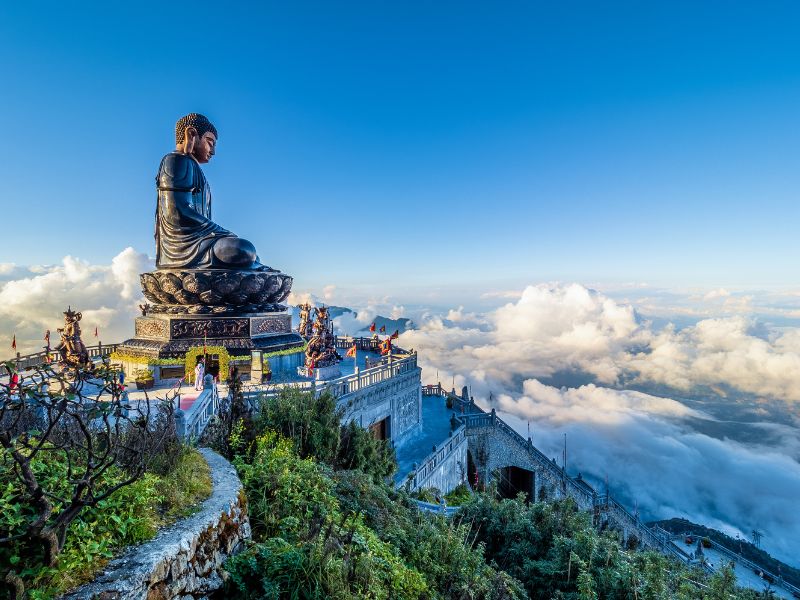
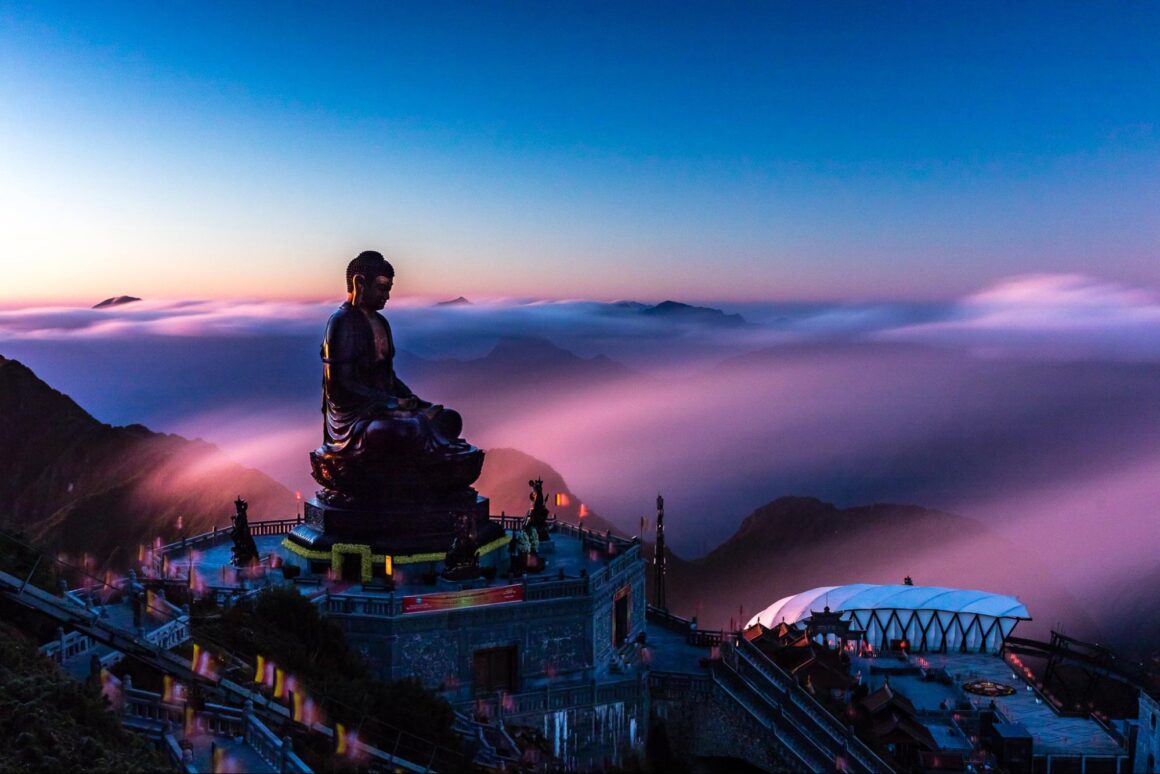
Rising 3,147 meters above sea level, Fansipan isn’t just Vietnam’s highest peak — it’s a pilgrimage.
For centuries, locals have called it Hua Si Pan, “the tottering giant rock,” a place inhabited by mountain gods who guard the mist and rain. Long before cable cars made it accessible to tourists, monks and pilgrims made their way up steep jungle trails, stopping to pray at shrines hidden among rhododendrons.
Today, the summit still carries that sacred energy. Even modern trekkers pause at Thanh Van Dac Lo, a temple near the top, to offer incense to the mountain spirits before taking in the view that stretches across the borders of China and Laos. Standing there, above the clouds, it’s impossible not to feel that Vietnam’s soul — vast, enduring, and untamed — lives in its mountains, the ultimate sacred mountains Vietnam.
Ba den: Exploring the Black Virgin’s mountain, a sacred mountain Vietnam
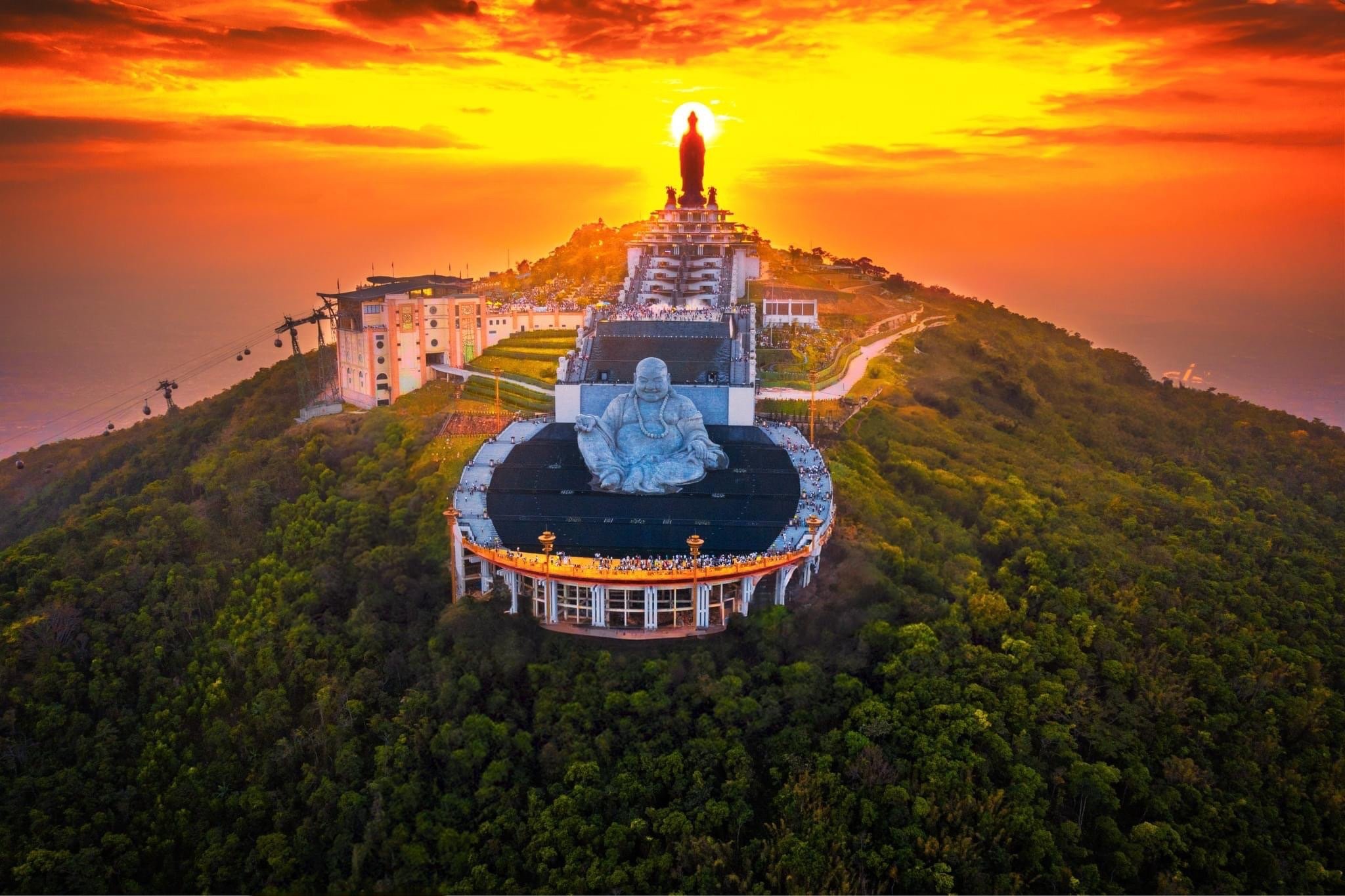
In the south, near Tay Ninh, another mountain rises from the flat plains — Ba Den Mountain. Steeped in myth and mystery, Ba Den is one of the most revered sacred mountains Vietnam. It is said to be home to Linh Son Thanh Mau, a protective goddess worshipped by generations of farmers, soldiers, and travelers.
Hike its 1,500-meter slope, and you’ll pass dozens of pagodas and caves, each glowing with lanterns and incense smoke. During the Ba Den Festival, thousands of pilgrims ascend by foot, chanting prayers that echo through the cliffs — a living connection between modern devotion and ancient belief.
It’s this harmony — between physical challenge and spiritual reward — that defines the Vietnamese approach to adventure: every journey is both an ascent of the body and of the soul.
Discovering the hidden sacred mountains Vietnam: Ha Giang and Pu Ta Leng
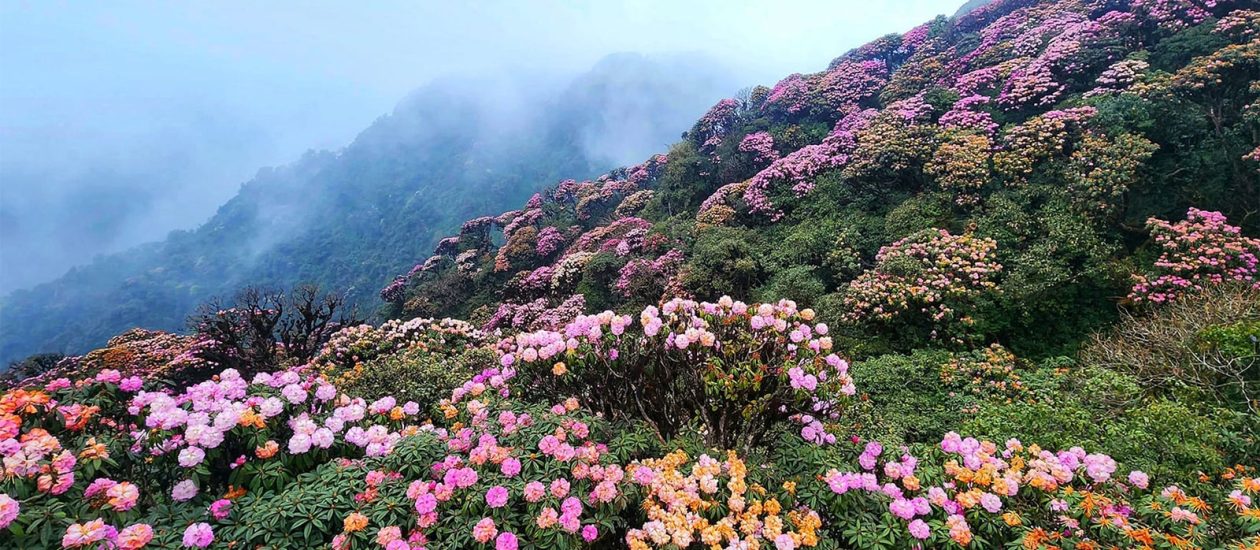
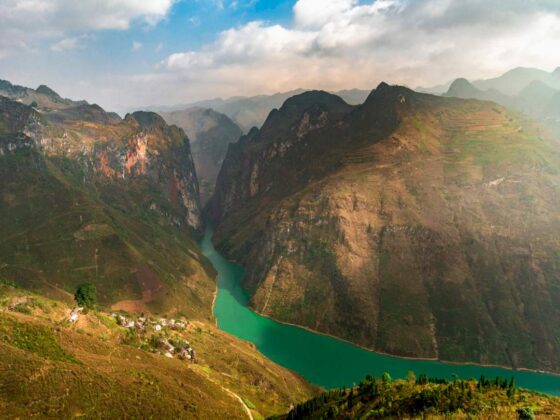
While Fansipan attracts the spotlight, the northern frontier holds quieter wonders among the sacred mountains Vietnam. In Ha Giang, limestone karsts tower like cathedrals, each with local legends tied to the H’mong, Dao, and Tay ethnic groups. Trails here wind past spirit altars and ancestral stones, where offerings of rice and wine are left to the mountain gods.
Further west, Pu Ta Leng, the second-highest mountain in Vietnam, offers one of the country’s most challenging treks — a three-day expedition through bamboo forests, roaring rivers, and clouds so thick they swallow the world whole. For those who reach its summit, the view isn’t just spectacular; it feels sacred.
Sacred mountains Vietnam: Where adventure meets ancestry
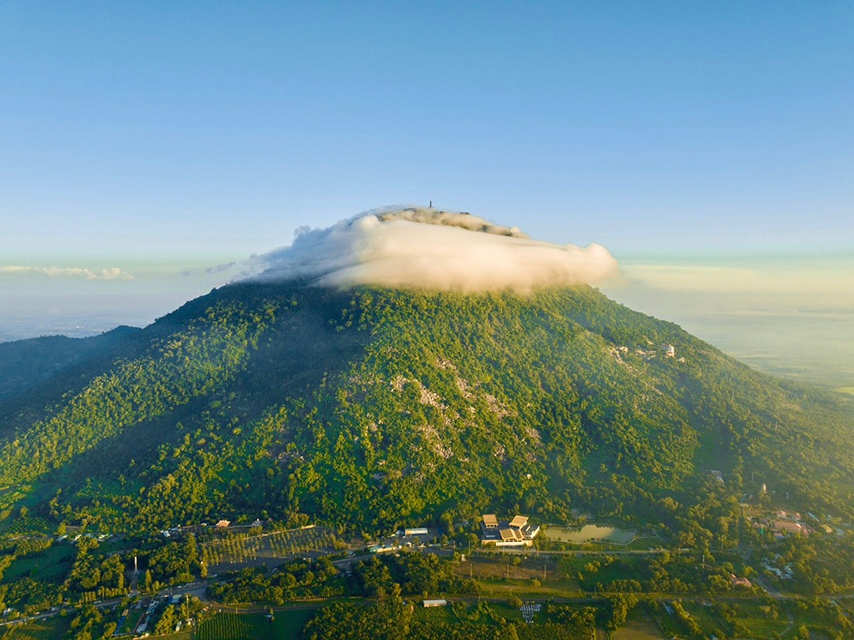
For travelers drawn to Vietnam’s summits, these peaks are more than Instagram moments — they are living temples among the sacred mountains Vietnam. Each climb becomes a dialogue between past and present, between human endurance and the quiet wisdom of nature.
Platforms like ExoTrails now play a vital role in connecting explorers with these destinations responsibly — mapping safe routes, verifying guides, and sharing stories of the people who have long called these mountains home.
Because here, in the high places of Vietnam, adventure isn’t about conquering nature — it’s about honoring it.
Conclusion
The journey through Vietnam’s high peaks is a profound experience that transcends mere trekking. From the pilgrimage site of Fansipan to the historical reverence of Ba Den and the wild isolation of Pu Ta Leng, the sacred mountains Vietnam serve as powerful cultural anchors. They connect the modern adventurer to ancient beliefs, offering both a physical challenge and a spiritual awakening. Honoring these peaks means engaging with the very soul of the country.
Join our vibrant community on Facebook to share your trekking stories and tips, and don’t forget to like the ExoTrails fanpage for the latest updates and exclusive offers!
Frequently Asked Questions (FAQs)
Q: Which is the most famous of the sacred mountains Vietnam?
A: Fansipan, often called the Roof of Indochina, is the most famous for its height and spiritual importance, making it a key pilgrimage site in the North.
Q: What makes these mountains sacred?
A: They are considered sacred because they are believed to be home to local mountain gods and protective spirits, such as Linh Son Thanh Mau on Ba Den Mountain.
Q: Are all sacred mountains Vietnam accessible to tourists?
A: While many, like Fansipan and Ba Den, are highly accessible, others like Pu Ta Leng require challenging multi-day treks and experienced guides.
Q: Where can I find ancient shrines on these sacred mountains Vietnam?
A: You can find pagodas, temples, and small shrines scattered along the slopes of peaks like Ba Den and near the summit of Fansipan, often maintained by local monks.
Klook.com