





Table of Contents Show
There’s a specific kind of clarity that only comes when you’re three days deep into the Vietnamese backcountry. It’s the moment the noise of the city is replaced by the drip of canopy rain and the distant, rhythmic call of a barking deer. I’ve spent my life crossing these ridges, and I can tell you: Vietnam is a masterpiece of vertical landscapes that very few people truly see. It’s not just a country; it’s a living, breathing challenge for those seeking the most authentic northern Vietnam mountain expeditions.
If you’re ready to trade the “must-see” lists for a journey that will leave a permanent mark on your soul, here are 6 unique trekking chapters that represent the true spirit of exploration.
Read more interesting posts here:
- The Ultimate Culinary Tourism Vietnam Guide: Essential Secrets of Authentic Local Markets
- 7 Essential Secrets for Using Offline Maps for Hiking Vietnam Mountains Successfully
- The Amazing Guide to Sustainable Travel in Central Vietnam: Unlocking Secret Grottoes
1. The mossy cathedral: Trekking Pu Ta Leng
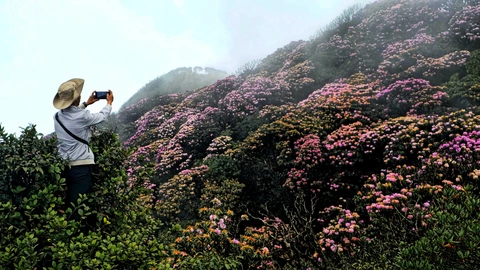
If you want to experience a forest that feels like it belongs in a pre-human era, Pu Ta Leng (3,049m) is your premier destination for northern Vietnam mountain expeditions. This is a journey into a literal “cloud forest.” Ancient, twisted rhododendron trees are draped in thick, emerald moss, and the trail is often carpeted in fallen red petals. It’s a gruelling, cold, and hauntingly beautiful climb that feels more like an initiation than a hike.
2. Explore hidden steps and border ridges during northern Vietnam mountain expeditions in Cao Bang

Beyond the famous waterfalls of the north lies a network of trails used for centuries by border patrols and local traders. Trekking the limestone ridges around Trung Khanh takes you through “hidden valleys” where the karst towers rise like shark teeth from the mist. It’s a landscape of sharp edges and deep silences, offering a raw look at the frontier life that remains unchanged by time.
3. The bamboo sea: Trekking Nam Bung

Deep in the heart of Yen Bai, the trek to Nam Bung leads you through some of the most impressive bamboo forests in Southeast Asia. This is a must-include route for serious northern Vietnam mountain expeditions. The stalks grow so thick they blot out the sun, creating a natural green cathedral. It’s a rhythmic, uphill slog that eventually opens up to remote Hmong villages where the traditional “Indigo” dyeing vats are still found in every doorway.
4. The iron spine: Crossing Lao Than

Often called the “Cradle of the Clouds,” Lao Than is the ultimate high-altitude ridge walk for those on northern Vietnam mountain expeditions. The terrain is unique—dry, windswept, and punctuated by charred, silver trees that stand like sculptures against the sky. When you reach the summit at dawn, the world below is swallowed by a literal ocean of white clouds, making you feel like the last person on earth.
5. Experience vertical jungle challenges during northern Vietnam mountain expeditions in Bach Ma

While most tourists stay at the summit villas, the true challenge of northern Vietnam mountain expeditions and beyond involves dropping deep into the ravines of Bach Ma. The trail to the Five Lakes and the base of the Do Quyen Waterfall is a steep, slippery descent through primary jungle. It is a world of ferns, rare orchids, and hidden pools—a vertical garden that requires as much focus as it does fitness.
6. The spirit trail: Trekking to the top of Bidoup

In the Central Highlands, Bidoup (2,287m) offers a cooling contrast to typical northern Vietnam mountain expeditions. You move through pine savannas into a dense, broadleaf forest home to 1,300-year-old Heritage Trees. There is a sacred energy here; the K’Ho people believe the mountain is the “Mother of the Forest.” It’s a misty, atmospheric trek that captures the romantic soul of the highlands.
Are you ready to leave the tourist map behind and find your own path? The most rewarding paths in Vietnam aren’t found on a screen; they are found in the moments when you pause to breathe in the mountain air. But remember, the wilderness demands both respect and preparation.
The expert’s rule: walk with the locals

I’ve been mapping these trails for a long time, and I still never head into a new massif for northern Vietnam mountain expeditions without a local guide or porter from the Hmong, Dao, or Thai communities. These mountains are their home. They see the “unseen”—the hidden water source, the approaching storm, and the sacred history of every ridge. Hiring local isn’t just about safety; it’s about the soul of travel.
Even with a guide, staying safe in the wild requires the right tech. I always keep the ExoTrails App running to navigate northern Vietnam mountain expeditions with confidence. Its core strength lies in its robust safety features: the offline GPS tracking works deep in “dead zones” where cell signal vanishes, while the TrackMate feature lets you sync with your team. Most importantly, the Wrong Turn Alert gives you an instant nudge if you veer off-course, acting as the digital safety net every serious explorer needs. The trail is open, and the mountains are waiting to tell you their story. See you at the summit.
For a more grounded way to explore the rhythms of northern Vietnam, this guided trek through Muong Hoa Valley can be a practical starting point: Sapa Muong Hoa Valley Small Group Trekking Tour.
Conclusion
Northern Vietnam mountain expeditions represent the pinnacle of adventure in Southeast Asia, offering a raw connection to both nature and ancient cultures. Whether you are navigating the mossy heights of Pu Ta Leng or the windswept ridges of Lao Than, these journeys demand respect, preparation, and a spirit of discovery. By choosing to walk with local guides and utilizing modern safety tools, you ensure that your expedition is not just a climb, but a life-changing experience.
Ready to conquer the wild? Join our vibrant community in the ExoTrails Community Group and be sure to like the Facebook Page for the latest hidden gems, trail updates, and daily inspiration!
FAQs
What is the best time of year for northern Vietnam mountain expeditions?
The best window is typically from September to April, when the weather is cooler and drier, providing the best visibility and trail conditions.
Are northern Vietnam mountain expeditions suitable for beginner hikers?
While some trails are moderate, most elite expeditions require a good level of physical fitness and some experience with steep, technical terrain.
Do I need a permit for northern Vietnam mountain expeditions?
Yes, many routes near the border, such as those in Ha Giang or Lao Cai, require local permits which are usually arranged by your guide or tour operator.
What kind of gear is essential for northern Vietnam mountain expeditions?
You should prioritize high-quality waterproof hiking boots, moisture-wicking layers, a reliable headlamp, and a power bank for your GPS navigation tools.
How do northern Vietnam mountain expeditions support local communities?
By hiring local Hmong or Dao guides and staying in village homestays, your expedition provides direct, sustainable income to the families who protect these mountains.
Klook.com


