





Table of Contents Show
While Sapa is famous for its vibrant textiles, there is a quieter, metallic heartbeat found in the high-altitude villages: the tradition of silver-smithing. For the Hmong and Red Dao people, silver is not merely jewelry; it is a spiritual shield, a family’s portable wealth, and a sacred material that protects the soul from “poisonous winds” and malevolent spirits. To experience the niche tradition of Sapa traditional silver smithing, we must hike beyond the commercial stalls of Sapa town and into the mist-shrouded workshops of Lao Chải and Tả Phin.
Read more interesting posts here:
The Hiker’s Path to Sapa Traditional Silver Smithing

To reach the true masters of the craft, we embark on a trek that follows the old trade routes. These paths were once used to transport raw silver and salt across the rugged northern frontier. As your guide, I will take you on a trail that climbs through bamboo thickets and skips across mountain streams until we reach the secluded hamlets where the sound of rhythmic hammering echoes against the valley walls.
In these villages, the workshop for Sapa traditional silver smithing is often a simple corner of a traditional stilt house. There are no modern machines here. The tools are forged from scrap metal, and the heat comes from a charcoal fire fanned by a hand-operated bellows. Watching a master silversmith transform a simple coin or a silver bar into an intricate, butterfly-patterned necklace is a lesson in extreme patience and precision. It is a slow, meditative process that mirrors the steady pace required to summit our highest peaks.
The Spiritual Alchemy of the Mountains

Silver holds a unique place in our mountain heritage. From the moment a child is born, they are given a silver neck ring to “lock” the soul to the body. As we hike and visit these artisans to witness the art of Sapa traditional silver smithing, you will learn to read the stories etched into the metal.
- Batik in Metal: Many of the silver designs mirror the batik patterns found in Hmong textiles. Look for the “snail” spiral, which represents the cycle of life, or the stylized fern leaves that symbolize the forest’s protection.
- The Purity Test: Traditional smiths use a “blowpipe” method to melt silver, judging the purity by the colour of the flame and the molten metal. They often mix in local herbs during the cooling process, believing it imbues the silver with medicinal properties to ward off mountain sickness.
- The Weight of Tradition: A full ceremonial outfit for a Hmong woman can include several kilograms of silver. To hike in such regalia is a feat of strength, reflecting the resilience that is the hallmark of our people.
Preserving the Legacy of Sapa Traditional Silver Smithing

During our trek, I will introduce you to smiths who have inherited their tools and techniques through five or six generations. This isn’t just about making “souvenirs”; it is about preserving a cultural identity that has survived centuries of migration and change.
As an expert guide proud of my Vietnamese heritage, I find that travellers are often moved by the contrast between the delicate, lace-like silver and the rough, calloused hands of the men who create it. Sapa traditional silver smithing is a reminder that beauty in the mountains is often hard-won and deeply personal.
Pro-Tips for Visiting Sapa’s Master Silversmiths
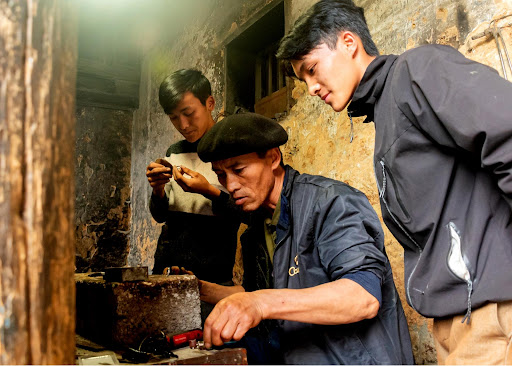
The best time to witness Sapa traditional silver smithing at its most active is in the weeks leading up to the Lunar New Year (Tết). This is when every family wants their silver polished or new pieces commissioned for the festival, and the mountain air is filled with the smell of charcoal and the music of clinking metal.
Want to meet these master artisans and see Sapa’s traditional silver smithing firsthand? Explore our heritage-focused trekking tours and book your cultural immersion today: From Sapa: Fansipan Cable, Cat Cat Village, Moana Instagram Day Tour
Conclusion
Sapa traditional silver smithing is the quiet, metallic heartbeat of the northern highlands. It is a craft that balances spiritual weight with artistic finesse, preserved by master artisans through generations. By trekking to these remote forges, you gain more than a piece of jewelry bạn sẽ thấu hiểu tâm hồn và sự kiên cường của con người vùng cao qua từng nhịp búa gõ trên bạc trắng.
FAQ
1. What is Sapa traditional silver smithing?
It is an ancient craft practiced by the Hmong and Red Dao ethnic groups, where silver is hand-forged into intricate jewelry and ceremonial pieces using traditional tools and charcoal fires.
2. Where can I see silversmiths in Sapa?
The most authentic workshops are located in the remote hamlets of Lao Chải and Tả Phin. A local guide is recommended to find these tucked-away home studios.
3. Is the silver used in Sapa authentic?
Traditional smiths pride themselves on the purity of their silver, often melting down old coins or bars. They judge purity using flame color and traditional blowpipe methods.
4. Why is silver so important to the ethnic minorities in Sapa?
Beyond being a form of portable wealth, silver is believed to have spiritual powers that protect the wearer from spirits, illnesses, and “poisonous winds.”
5. Can I buy silver directly from the artisans?
Yes. Buying directly from the smiths ensures that the profit goes directly to the family and helps preserve the tradition of Sapa traditional silver smithing.
Ready to track your cycling routes and connect with fellow riders? Join our vibrant community in the ExoTrails Community Group and be sure to like the Facebook Page for the latest trail updates, gear tips, and daily inspiration!
Klook.com


