




Table of Contents Show
Sapa is often sold as a dream. Endless rice terraces, misty mountains, and smiling locals in traditional dress make it one of Vietnam’s most photographed destinations—and for good reason. But what most travelers don’t hear before they arrive is the reality behind the Sapa trekking difficulty. Sapa is not just scenery; it’s a working landscape shaped every single day by farmers.
Read more interesting posts here:
- Solo Trekking in Sapa: Essential Tips for a Safe and Breathtaking Adventure
- Digital Detox in Vietnam: Amazing Places to Unplug and Find Peace
- Red River Delta Civilization: Fascinating Insights into Vietnam’s Ancient Water Culture
Why the landscape influences Sapa trekking difficulty more than you think

Arriving in Sa Pa, the terraces look almost too perfect—layered, curved, and flowing across the mountains. But those terraces aren’t natural; they are built, maintained, and repaired by hand by farmers. Every step you take through Sapa is across land that has been carved, leveled, and sustained over generations. The beauty you see is the result of constant effort, and this human-made terrain plays a major role in the overall Sapa trekking difficulty.
The trails are working paths

Unlike hiking destinations designed specifically for visitors, Sapa’s trails exist for a purpose. They connect homes to fields and carry tools, harvests, and people between villages like Lao Chai and Ta Van. That means when you trek here, you’re not on a “trail system”; you’re walking on someone’s daily route to work. You might pass a farmer carrying tools uphill or see someone tending rice just meters from where you stand, adding a layer of cultural complexity to the Sapa trekking difficulty.
The impact of changing seasons on your Sapa trekking difficulty level

To understand Sapa, you need to understand its farming cycle. Whether it is the planting season with terraces reflecting the sky, the growing season with vibrant green fields, or the harvest season with golden rice, each phase changes the entire landscape—and the Sapa trekking difficulty. More importantly, each phase represents months of labor that you witness firsthand as you navigate the ridges.
Navigating mud and water as part of the Sapa trekking difficulty
When it rains and trails turn muddy, it’s easy to see it as an inconvenience. But that same mud is what sustains the rice. Water retention is essential, and the terraces are designed to hold, control, and distribute it. What makes the Sapa trekking difficulty higher and the trails more slippery is also what makes farming possible. It’s all connected.
Farmers you’ll meet along the way
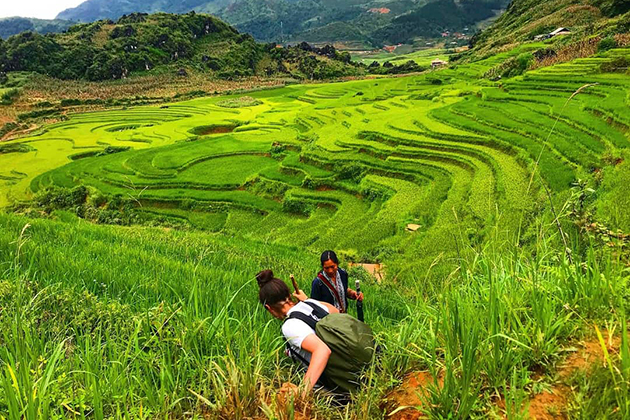
One of the most memorable parts of trekking in Sapa is the presence of local farmers—often from Hmong or Dao communities. They’re not there as performers; they’re working. You may see farmers planting rice by hand or carrying heavy baskets along steep paths. Sometimes, they walk alongside you for a stretch, offering guidance or simply moving in the same direction, helping you mentally manage the Sapa trekking difficulty.
Why a shared cultural environment changes your perspective on Sapa trekking difficulty
Trekking in Sapa isn’t about entering untouched nature; it’s about moving through a lived-in environment. Children pass by on their way home, and farmers pause briefly before continuing their work. Life doesn’t stop for visitors—it continues, and you become part of the background. This changes how you experience the Sapa trekking difficulty, making it feel less like a workout and more like a cultural immersion.
Respecting the working landscape during your Sapa trekking difficulty challenge

Because this is a working environment, small actions matter. Stay on established paths, avoid stepping into planted fields, and be mindful when taking photos. These aren’t just guidelines; they’re ways to respect the people who depend on this land while you undertake your Sapa trekking difficulty challenge.
For those who want a clearer sense of pace and terrain, joining a small group trek like this one through Muong Hoa Valley can help simplify the experience: Sapa Muong Hoa Valley Small Group Trekking Tour.
Conclusion
Understanding the Sapa trekking difficulty is about more than just physical fitness; it is about appreciating a living, breathing landscape where humans and nature coexist. While the steep, muddy paths can be challenging, the reward is a deep realization that every view is the result of immense human effort. By respecting the trails and the farmers who shape them, your journey becomes a meaningful exchange rather than just a hike.
Ready to see the real Sapa for yourself? Join our vibrant community in the ExoTrails Community Group and be sure to like the Facebook Page for the latest hidden gems, trail updates, and daily inspiration!
FAQs
How would you describe the average Sapa trekking difficulty?
The difficulty is generally moderate, but it can become strenuous during the rainy season when the clay-heavy paths become extremely slippery and difficult to navigate.
Does a higher Sapa trekking difficulty mean I need professional gear?
While you don’t need mountaineering equipment, high-quality hiking boots with excellent grip are essential to handle the steep and often muddy working paths safely.
Can children handle the Sapa trekking difficulty?
Yes, children with a basic level of fitness can manage shorter valley treks, though parents should be cautious of narrow ridge paths during wet weather.
How does the weather affect the Sapa trekking difficulty?
Heavy mist can reduce visibility to a few meters and rain makes the inclines very slick, significantly increasing the technical challenge of the trek.
Is the Sapa trekking difficulty lower if I hire a guide?
Hiring a local guide doesn’t change the physical terrain, but it makes the trek much easier as they know the safest footholds and alternative routes to avoid the worst mud.
Klook.com


