

Table of Contents Show
At first glance, the boats of the Mekong floating markets feel improvised weathered wood, patched engines, layers of use. But look closer, and you’re not seeing randomness. You’re looking at centuries of refinement in traditional Vietnamese wooden boats.
Long before modern roads reached the delta, the Mekong was the only highway that mattered. Historical records from the Nguyễn Dynasty describe dense networks of waterways used to transport rice, fruit, and goods across southern Vietnam. Boats weren’t optional they were infrastructure, and the quality of traditional Vietnamese wooden boats was essential to the region’s economy. Entire economies depended on how well they were built. And that necessity shaped a distinct boat-building tradition that still exists today.
Read more interesting posts here:
- Solo Trekking in Sapa: Essential Tips for a Safe and Breathtaking Adventure
- Digital Detox in Vietnam: Amazing Places to Unplug and Find Peace
- Red River Delta Civilization: Fascinating Insights into Vietnam’s Ancient Water Culture
The rare hardwoods used to build traditional Vietnamese wooden boats
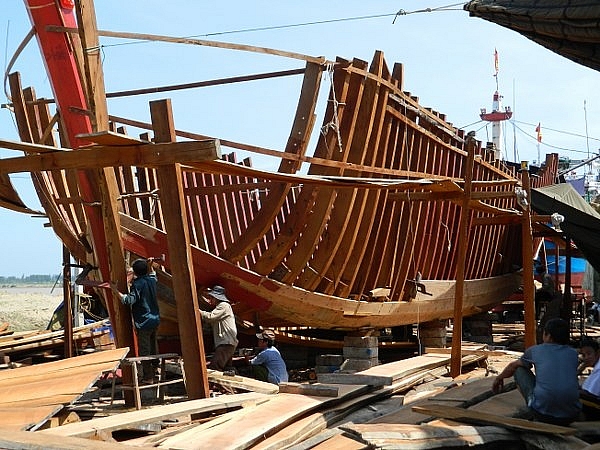
The choice of wood is not accidental. Traditional Vietnamese wooden boats are often built from local hardwoods such as sao, dầu, or gụ species native to southern Vietnam known for their durability and resistance to water. These woods are dense, slightly oily by nature, and able to withstand constant exposure to sun and river conditions without warping too quickly.
In areas closer to Bến Tre Province, where coconut trees dominate the landscape, parts of traditional Vietnamese wooden boats especially non-structural elements may incorporate coconut wood. While not as strong as hardwoods, it’s readily available and useful for lighter components. The goal is simple: longevity. A well-built wooden hull can last decades if properly maintained. And in a place where boats are both workplace and home, durability isn’t a luxury it’s survival.
Meet the master artisans preserving traditional Vietnamese wooden boats

Behind every boat is a craftsman, often from small, specialized villages that rarely appear on tourist maps. One of the most well-known is Long Hậu Boat Village, where generations of families have built traditional Vietnamese wooden boats by hand. There are no large factories here. No assembly lines. Just skilled artisans working with tools, memory, and inherited knowledge.
Boatbuilding in the Mekong is not taught formally; it’s passed down. A son learns from his father. An apprentice spends years observing before shaping his first plank. Measurements for these traditional Vietnamese wooden boats are often done by eye, proportions memorized rather than written. The curve of a hull, the balance of weight these are felt as much as calculated. Each boat is slightly different because each builder leaves a signature in the work.
The engineering secrets behind traditional Vietnamese wooden boats

Construction is a slow, deliberate process. Planks are shaped and fitted together to form a long, narrow hull ideal for both stability and maneuverability. The joints of these traditional Vietnamese wooden boats are sealed using traditional methods, sometimes reinforced with modern materials, but always with an understanding that the boat must flex slightly with the water rather than resist it completely.
This flexibility is key. The Mekong is not a calm, predictable environment. Water levels rise and fall. Currents shift. A rigid structure would crack under pressure. A well-built wooden boat absorbs movement, extending its lifespan. By the time a vessel is launched into the waterways near Cần Thơ, it’s already the product of weeks sometimes months of labor within the craft of traditional Vietnamese wooden boats. And once it’s in use, the real work begins.
How traditional Vietnamese wooden boats evolve with their owners

Unlike factory-built products, these vessels are never truly “finished.” They evolve. Engines are replaced or upgraded. Decks are reinforced. Sections are patched with new wood. Owners adapt their traditional Vietnamese wooden boats based on what they carry fruit, vegetables, bulk goods and how they operate within markets like Cái Răng Floating Market. This constant modification is part of the design philosophy. A boat must respond to its owner’s needs, not the other way around.
The modern challenges facing traditional Vietnamese wooden boats

Today, this craft faces quiet challenges. Modern materials fiber-glass, metal are becoming more common. They’re cheaper, faster to produce, and require less maintenance. Younger generations are less inclined to learn the secrets of traditional Vietnamese wooden boats, drawn instead to opportunities beyond the river. And yet, wooden boats persist because they work. They’re repairable, adaptable, and familiar. In many ways, they are inseparable from the identity of the Mekong itself.
So the next time you glide through a floating market, past rows of boats loaded with fruit and life, take a moment to look beyond the surface. You’re not just seeing vessels; you’re seeing the result of history, craftsmanship, and a deep understanding of water shaped plank by plank, generation after generation, to keep an entire way of life afloat.
Conclusion
Ultimately, traditional Vietnamese wooden boats are far more than mere transportation; they are symbols of cultural resilience and technical brilliance. From the dense hardwoods of the south to the specialized villages along the river, every plank tells a story of survival and heritage. As the Mekong continues to flow, these vessels remain the true soul of the delta, proving that modern materials can never replace the warmth and history of a handcrafted boat.
FAQs
What wood is used for traditional Vietnamese wooden boats?
Builders primarily use local hardwoods like sao and dầu, which are naturally oily and resistant to rot in water. These materials ensure the boat remains durable for decades.
Where are traditional Vietnamese wooden boats made?
Specialized villages like Long Hau are the centers of this craft, where knowledge is passed down through generations of families. You won’t find these boats in large factories.
Are traditional Vietnamese wooden boats still relevant?
Yes, they are highly preferred for their durability and ease of repair compared to modern fiberglass alternatives. Their flexible design allows them to handle the shifting currents of the Mekong much better.
Ready to hit the trails? Join our vibrant community in the ExoTrails Community Group and be sure to like the Facebook Page for the latest hidden gems, trail updates, and daily inspiration!
Klook.com