





Table of Contents Show
As a female explorer who has spent the last decade navigating Vietnam’s most rugged terrain from the monsoon-drenched ridges of the northern border to the hidden river caves of the centre I’ve learned that the true soul of a place is rarely found on a paved path.
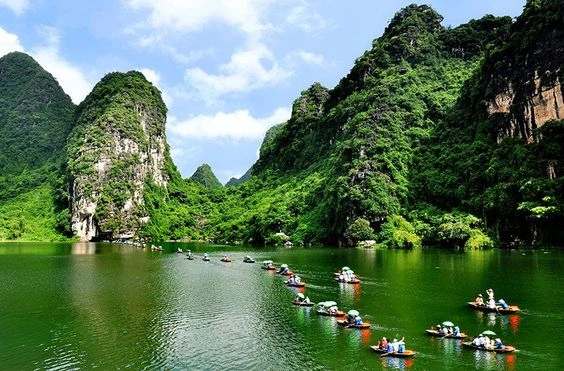
Most travellers visit Ninh Bình for the emerald rivers, but for those of us who live for the “burn” of a technical climb and the quiet stories of the ancients, the real magic happens in the Trang An hidden shrines those high-altitude sanctuaries tucked away in the “Third Heaven” tier of the karst. This is where you find the “Singing Stones” a super-niche acoustic phenomenon that the tour buses couldn’t find even if they tried.
Read more interesting posts here:
- Bau Truc Pottery Village: The Ancient Cham Art of Shaping Earth by Hand
- Sapa Traditional Silver Smithing: A Journey into the Heart of the Highlands
- Xin Man Ha Giang Travel Guide: Discovering the Hidden Stone-Ear Village
The Scramble to Access Trang An Hidden Shrines

These shrines aren’t for the faint of heart. They are tucked into “Dead-End” valleys, accessible only via a vertical scramble over loose limestone scree and through narrow chimneys of grey rock.
As a trekker, I find the journey to these Trang An hidden shrines to be a beautiful, physical meditation. You aren’t just walking; you’re engaging with the mountain’s anatomy. You have to trust your “mountain feet,” feeling for the solid grip of the stone. But as you climb, something remarkable happens: the modern world is physically blocked out by 200-meter walls of limestone. The air grows cooler, the noise of the valley floor vanishes, and you enter a profound, crushing silence that only these ancient mountain retreats can provide.
The Lithophone: Acoustic Magic Inside Hidden Karst Sanctuaries
Inside these Trang An hidden shrines, the resident monks don’t always rely on traditional bronze bells. Instead, they use the mountain itself as a musical instrument.
- The Stalactite Bells: Over centuries, caretakers of these shrines have identified specific stalactites with unique resonant properties. When struck lightly with a wooden mallet, these “stone bells” produce a tone so deep and pure it vibrates through your entire chest.
- The Natural Cathedral: Because of the unique shape of these hidden valleys, the sound doesn’t dissipate it layers. When the “mountain bell” is struck, the tone bounces off the limestone walls, creating a shimmering, ghostly reverb. It is the mountain’s own “Vertical Symphony,” and hearing it in total solitude is a spiritual experience that defies words.
Why You Need a Guide to Navigate Trang An Hidden Shrines

Attempting to find these Trang An hidden shrines on your own is not only difficult it’s a breach of mountain etiquette. Here is why I always emphasize the importance of a local guide:
- The “Invisible” Trail: The paths to these hermitages are often intentionally disguised or overgrown to preserve the peace of the resident hermits. A local guide reads the “signs of the stone” to navigate the labyrinth.
- The Protocol of Respect: These are active places of meditation. A guide acts as your cultural bridge, ensuring you follow the “silent protocol” knowing when to be still and how to offer respect.
- Safety in the Vertical: The limestone in Ninh Bình can be razor-sharp. A guide knows exactly which footholds are stable, allowing you to focus on the experience of discovering Trang An hidden shrines rather than the risk.
Ready to hear the mountain sing and find your own sanctuary? Explore our exclusive mountain trekking tours and book your journey to Ninh Binh’s hidden heights today: Best of Ninh Binh Day Tour: Hoa Lu, Trang An, Tam Coc, Hang Mua
Conclusion
Seeking out Trang An hidden shrines is an invitation to discover the music within the silence of the karst. These vertical sanctuaries offer a rare perspective of Ninh Binh one that is earned through sweat, focus, and a deep respect for the ancient traditions of the mountain. If the mountain allows it, you will hear the stone bell toll, and you’ll realize that the most spectacular things in Vietnam are the ones you have to climb to find.
FAQ
1. Are Trang An hidden shrines difficult to reach?
Yes, most are located at high altitudes and require a vertical scramble over limestone rocks. They are best suited for fit hikers with good balance and a head for heights.
2. Do I need a permit to visit these shrines?
While most don’t require a formal government permit, some are located on private or protected land. Hiring a local guide ensures you have permission and are following local regulations.
3. What are the “Singing Stones”?
They are natural stalactites within the Trang An hidden shrines that produce melodic, bell-like tones when struck, used by monks for meditation and rituals.
4. When is the best time for a mountain climb in Trang An?
The dry season from October to April is ideal. Avoid the rainy season as limestone becomes incredibly slick and dangerous for vertical scrambles.
5. What should I wear for a trek to these shrines?
Professional trail shoes with high grip are essential. Wear breathable, moisture-wicking clothing and long pants to protect your legs from sharp limestone edges.
Ready to uncover more ancient legends and connect with fellow cultural explorers? Follow our Facebook Page and join our ExoTrails Community Group to connect with fellow explorers and stay updated on the latest trails!
Klook.com


