


While many travellers seek the emerald peaks of the North or the glittering bays of the East, I often find myself guiding the most curious souls toward the sun-drenched plains of Ninh Thuan. Here, nestled among the cacti and the whispering neem trees, lies Bau Truc pottery village one of the oldest pottery villages in Southeast Asia.
This is not a village of machines. It is a village of rhythm, history, and the primal touch of the Cham people. In Bau Truc, the earth does not just support the people; it speaks through them.
Read more interesting posts here:
The Human Wheel: Shaping Clay at Bau Truc Pottery Village
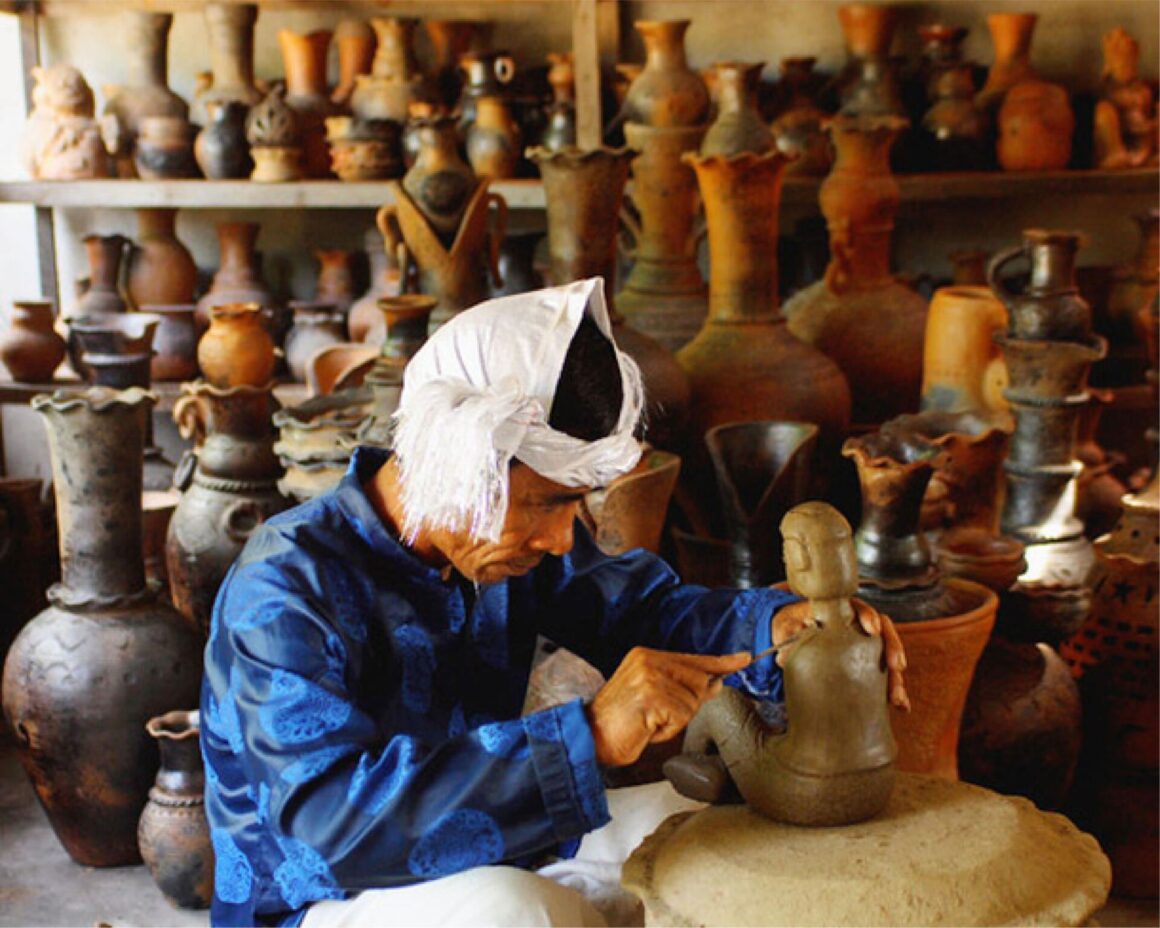
Most pottery traditions in the world rely on the spinning wheel. But in Bau Truc pottery village, the "wheel" is the human body. As your guide, I will take you into the shaded courtyards where the women the primary keepers of this ancient craft perform a mesmerizing dance.
Instead of a rotating table, the artisan herself moves. She walks backward, circling a stationary pedestal of clay, shaping the vessel with her hands while her feet trace a perfect radius on the ground. It is a literal "dance with the earth." To watch a grandmother, her hands stained the colour of deep ochre, transform a lump of river clay into a graceful water jar is to witness a lineage stretching back over a thousand years to the Kingdom of Champa.
Fire and Smoke: The Open-Air Kilns of Ninh Thuan
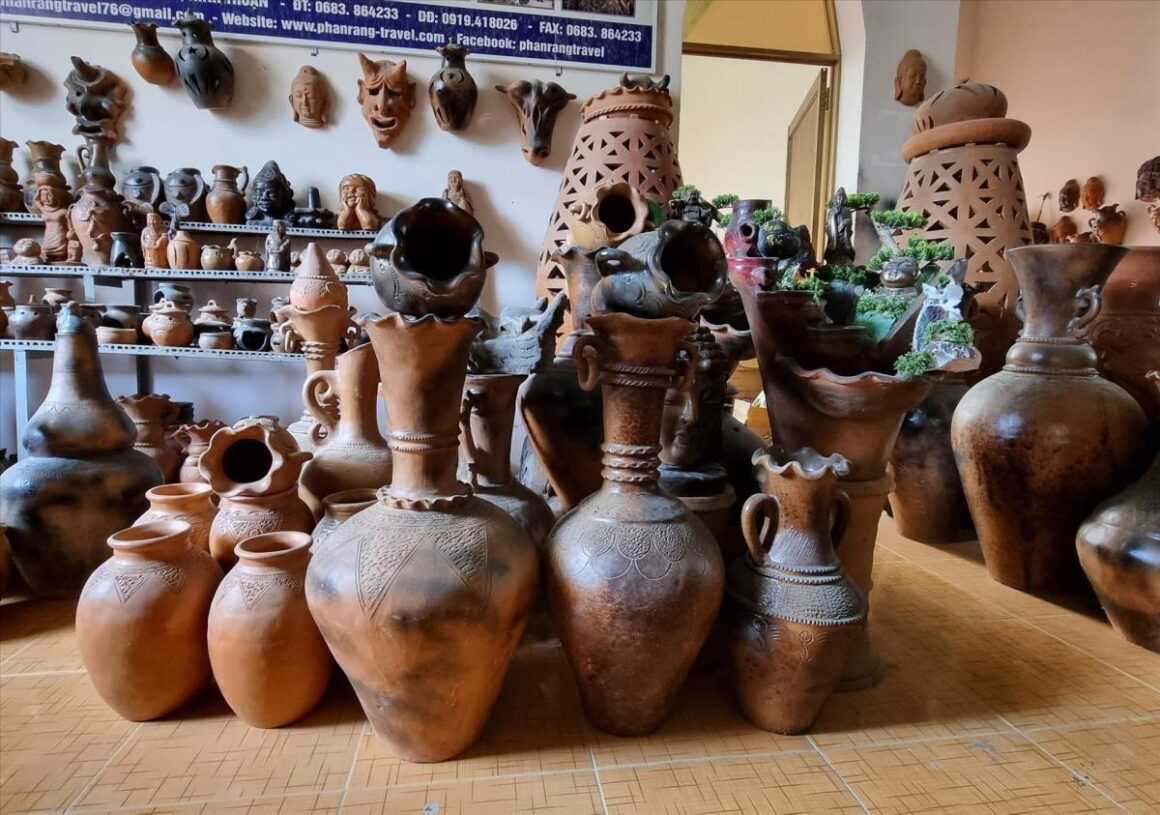
The uniqueness of Bau Truc pottery village extends to the "firing" process. There are no brick kilns here. Following a tradition that defies modern industrial logic, the pottery is fired in the open air.
We gather at dawn to see the pots piled high, covered in layers of straw and wood. The fire is intense and brief. But the true magic happens during the cooling phase. The artisans splash the red-hot ceramics with a "dye" made from the fruit of the forest or Mac Nua seeds. The resulting steam and smoke create unpredictable, clouded patterns of black and scorched orange on the surface. No two pieces are ever identical; each carries the unique signature of the wind and the flame of that specific day.
The Living Heritage of the Cham People
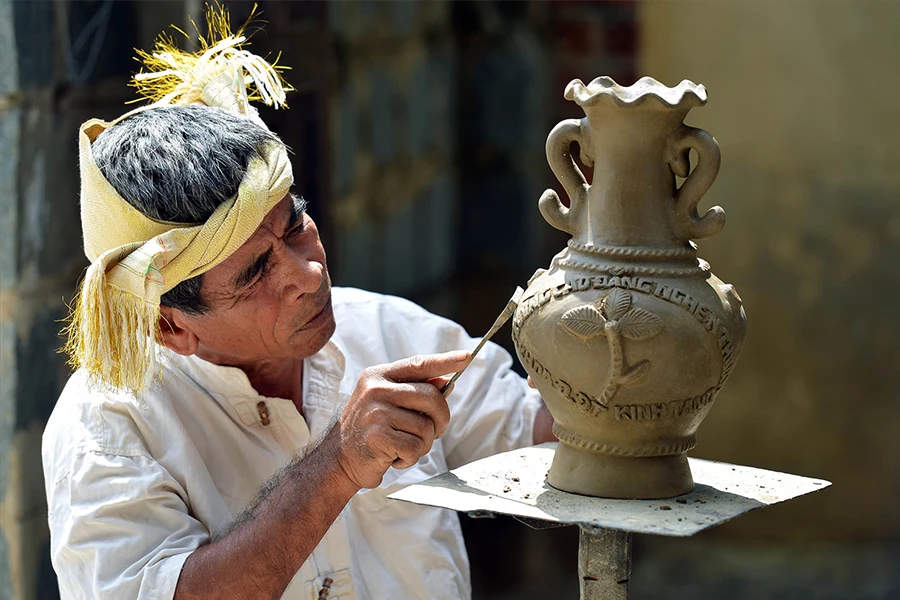
The Cham people are the soul of this landscape. Their culture is a bridge between the Hindu influences of the past and the resilient spirit of the present. Beyond the pottery, the village is a gateway to the Po Klong Garai towers that loom on the horizon majestic red-brick sentinels that have survived centuries of sun and storm.
In Bau Truc pottery village, the wisdom shared over a glass of herbal tea is simple: respect the material. They take only what the Quao River provides, and they return the fragments back to the soil. There is a profound stillness here, a rejection of the "fast-fashion" mentality of the modern world.
Plan Your Visit to Bau Truc Pottery Village
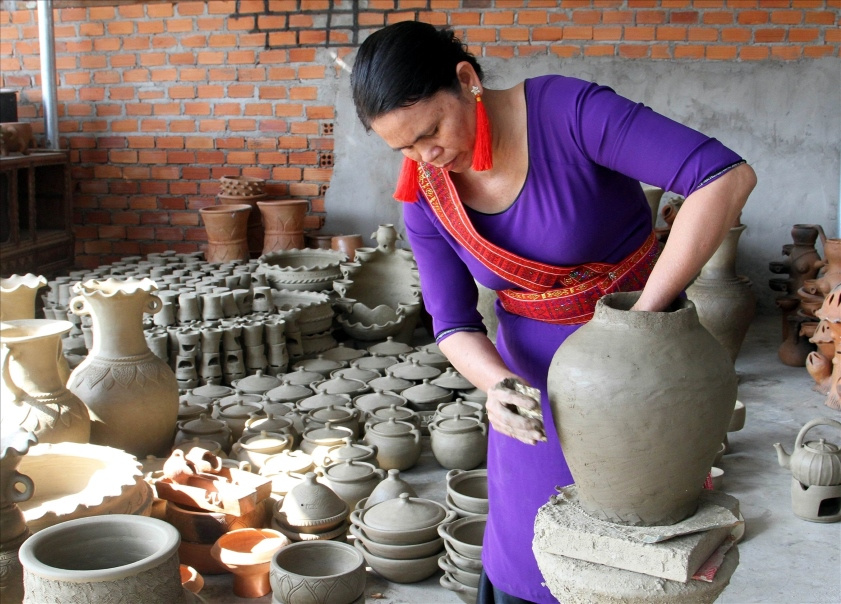
I recommend visiting the village in the late afternoon. As the harsh sun of the Ninh Thuan desert begins to soften, the village glows with a warm, terrestrial light. You will walk away not just with a piece of earthenware, but with a deeper understanding of how humans can live in a continuous, unbroken dialogue with the land beneath their feet.
In a world that is ngày càng digitized and fleeting, Bau Truc pottery village is a reminder that the most beautiful things are often made of earth, water, and a great deal of patience.
Ready to witness the ancient rhythms of the Cham people for yourself? Explore our curated heritage journeys to discover the hidden gems of Ninh Thuan today:
Conclusion
Visiting Bau Truc pottery village is more than just a cultural stop; it is an encounter with a thousand-year-old rhythm. This living museum of the Cham people reminds us that true artistry requires no machines only a deep connection to the earth and the patience to let the flames tell their story.
FAQ
1. Where is Bau Truc pottery village located?
The village is situated in Ninh Phuoc district, Ninh Thuan province, approximately 10 kilometers south of Phan Rang - Thap Cham city.
2. What makes Bau Truc pottery unique?
Unlike most pottery traditions, artisans at Bau Truc pottery village do not use a potter's wheel. They shape the clay by walking backwards around the vessel. Additionally, the pottery is fired in the open air rather than in closed kilns.
3. Can I try making pottery when I visit?
Yes, many workshops in the village allow visitors to try their hand at the unique "walking" technique under the guidance of local Cham masters.
4. What is the best time to visit Bau Truc?
The late afternoon (around 3:00 PM - 5:00 PM) is ideal, as the temperature is cooler and you can often witness the artisans finishing their daily work in the soft sunlight.
5. Are there other attractions near the village?
Yes, you can easily combine your trip with a visit to the Po Klong Garai Cham Towers or the My Nghiep weaving village, which is just a short drive away.
Ready to hit the trails? Join our vibrant community in the ExoTrails Community Group and be sure to like the Facebook Page for the latest hidden gems, trail updates, and daily inspiration!


