
Table of Contents Show
When you first set foot on a trail in Vietnam, it’s easy to think adventure is about distance, how high you climb, how far you go, how fast you reach the summit. But spend a little time walking with local guides, and you realize that adventure here is something else entirely. It’s about rhythm, respect, and a quiet conversation between you and the land. This mindset is the foundation of proper trekking etiquette in Vietnam, where exploration meets responsibility.
Over years of trekking across Vietnam, from the limestone cliffs of Ninh Binh to the clouded peaks of Ha Giang, I’ve had the privilege of learning from guides who don’t just navigate nature; they belong to it. Their lessons changed how I travel, how I see the world, and most importantly, how I practice trekking etiquette in Vietnam.
Read more interesting posts here:
- Beyond the Crowds: The Ultimate Guide to Wild Camping Vietnam’s Coastline
- Where Jungle Meets Sea: The Ultimate Guide to Coastal Trekking Vietnam
- Exploring the Diversity of Vietnam Climate Zones: From Tropical Palms to Misty Peaks
Learning nature’s language as part of trekking etiquette in Vietnam
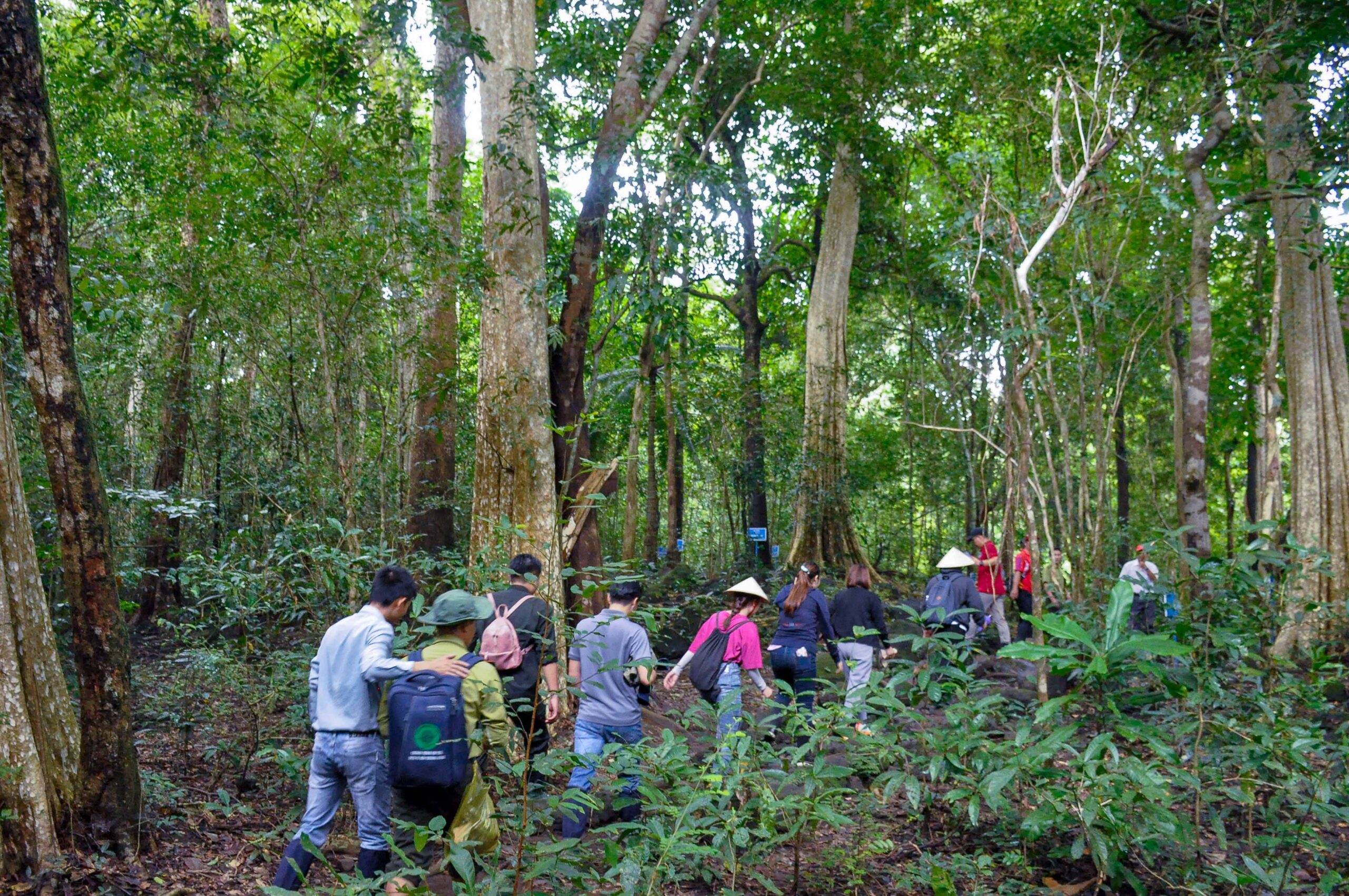
To most travelers, the jungle looks wild and an endless tangle of green. But to a Vietnamese guide, it’s a living library. I once trekked through Cat Tien National Park with a local named Huy. Every few steps, he’d point out something I’d missed, a faint track in the mud, a change in birdsong, a new scent in the air. “Listen,” he’d whisper, “the forest talks before it moves.”
That day I realized that navigation isn’t just about tools, it’s about awareness. While my GPS app showed waypoints, Huy’s instincts read the land’s subtle language: the direction of water flow, the pattern of leaves, and the silence before rain. Understanding these signs is a vital part of trekking etiquette in Vietnam. Local guides carry centuries of inherited knowledge not from maps, but from memory. They remind us that nature isn’t just to be traveled through; it’s to be understood and respected.
The art of silent communication and trekking etiquette in Vietnam
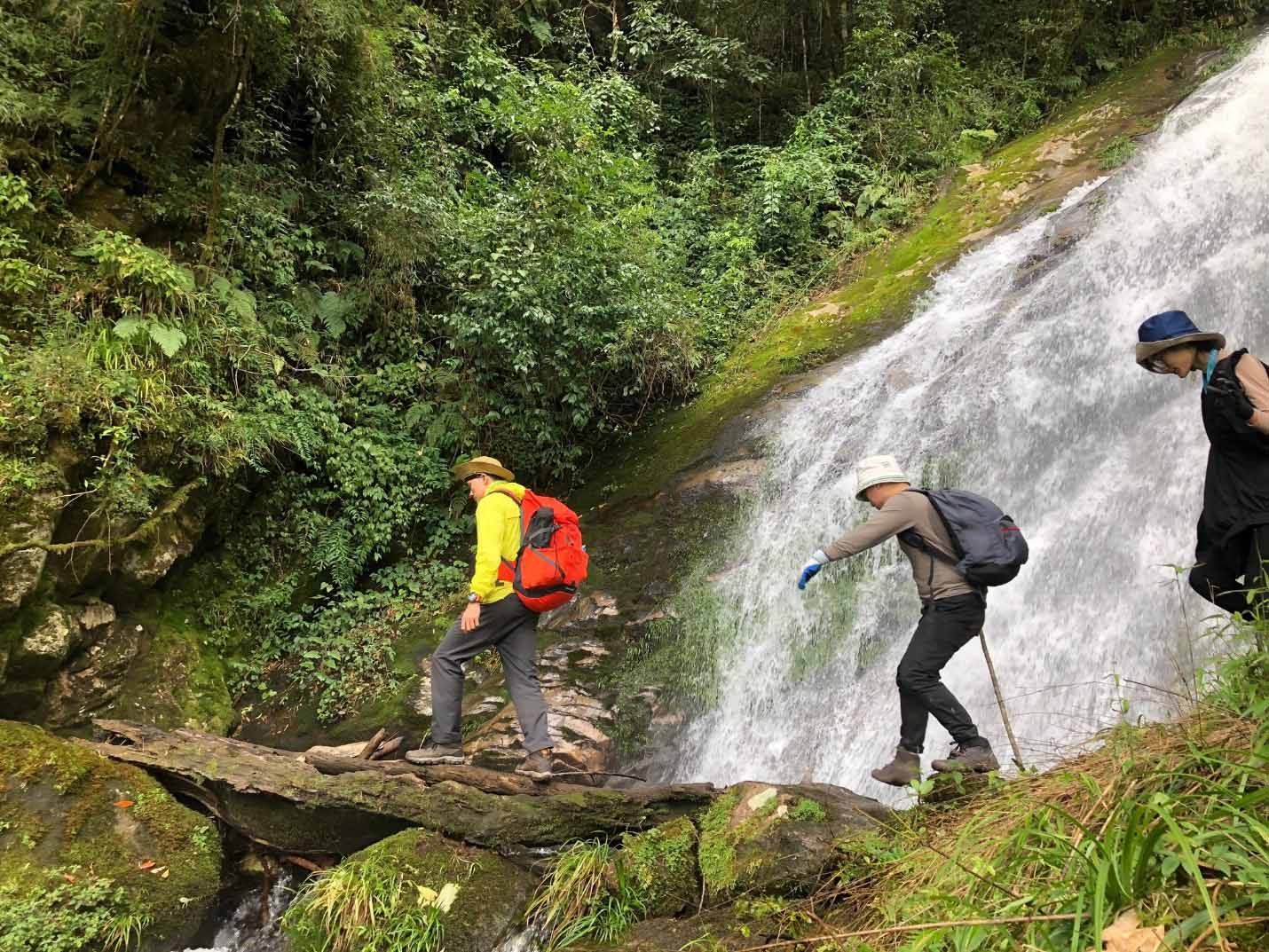
On the trail, not everything needs translation. There’s a kind of language that exists between hikers a shared look, a gesture, a laugh after a long climb. In the remote hills of Mu Cang Chai, my guide Dung and I often walked for hours in silence. But somehow, everything was said. This shared silence is a beautiful form of trekking etiquette in Vietnam, allowing the environment to take center stage.
When he handed me a cup of tea made from wild leaves, when he slowed his pace to match mine, when we shared a rain shelter under a tarp I understood: respect on the trail doesn’t come from conversation. It comes from presence. Vietnamese guides move with quiet generosity watching without hovering, helping without asking. They teach that communication isn’t always verbal; it’s often a silent form of care and mutual respect.
Practicing cultural trekking etiquette in Vietnam through small acts of respect
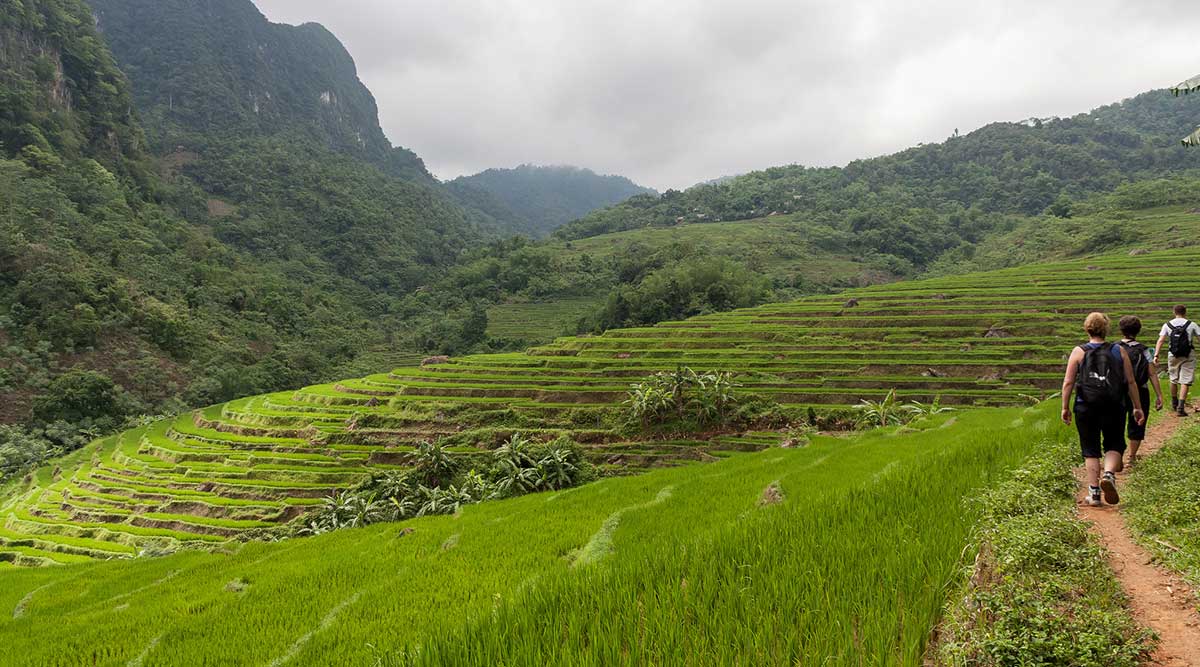
Adventure is often romanticized as a test of will, but here it’s also a test of grace. The best guides in Vietnam remind you that the land deserves courtesy. In Pu Luong, a guide named Tam showed me how to step lightly through rice terraces, careful not to crush young shoots. “Every step has a cost,” he said simply. Following his lead showed me how deeply the local community values trekking etiquette in Vietnam.
Later, at a small shrine near the trail, he paused, placed his hands together, and bowed. Not to a deity, but to the mountain itself. These small rituals — leaving no trash, greeting locals, and thanking the land — are more than manners. They are the core pillars of trekking etiquette in Vietnam and are part of what it means to truly belong to the trail rather than just passing through it.
The real meaning of adventure
The more time I spend with Vietnam’s local guides, the more I realize adventure isn’t about conquering peaks, it’s about surrendering to the experience. It’s patience when the rain comes early. It’s humility when a 60-year-old farmer outpaces you uphill. It’s curious when the map ends but the guide keeps walking. Proper trekking etiquette in Vietnam means moving with the land, not against it.
The greatest explorers here are not those who move fastest, but those who move with the land. So, when you hike in Vietnam, remember: the forest doesn’t just need to be seen, it needs to be listened to. Adhering to trekking etiquette in Vietnam ensures that the people who’ve lived in its rhythm for generations remain your best teachers, and the trails remain preserved for those who follow. Because sometimes, the deepest wisdom on the trail doesn’t come from what you carry but from who walks beside you.
Conclusion
Mastering trekking etiquette in Vietnam is about more than just following a set of rules; it is about adopting a spirit of humility and deep-rooted respect for both the environment and the local communities. By listening to the wisdom of local guides, we learn that our presence on the trail should be a harmonious exchange rather than an intrusion. Ultimately, traveling with grace and awareness ensures that Vietnam’s wild landscapes and vibrant cultures continue to thrive for generations to come.
Ready to explore Vietnam responsibly? Follow our Facebook Page and join our ExoTrails Community Group to connect with fellow explorers and stay updated on the latest trails!
FAQs
What is the most important rule of trekking etiquette in Vietnam?
The most important rule is to show respect for local customs and the natural environment by practicing “Leave No Trace” and greeting villagers with a smile.
How should I behave when passing through ethnic minority villages?
Always ask for permission before taking photos of people or their homes, and dress modestly to show respect for local traditions.
Is it necessary to hire a local guide for trekking in Vietnam?
While not always mandatory, hiring a local guide is highly recommended as they provide cultural context, ensure your safety, and help you navigate the nuances of local etiquette.
How do I manage my waste while trekking in remote areas?
Proper etiquette requires you to carry all your trash out with you until you find a designated disposal area in a town or city.
Klook.com