


The real culinary magic of Vietnam happens not in gleaming restaurants, but on low plastic stools tucked along crowded sidewalks. This is where ingredients sing, recipes endure, and community thrives. Crucially, it is a feast accessible to all: a full, complex meal rarely exceeds a few U.S. dollars. Welcome to the ultimate Vietnamese street food guide.
Read more interesting posts here:
- The Health Benefits of Fermented Foods in Vietnamese Cuisine
- More Than a Meal: The Cultural Heart of Traditional Vietnamese Fermented Foods
- A Food Lover's Guide to Vietnam Outdoor Cuisine: From Market to Trail
The Midday Rush: Lunch in the Vietnamese Street Food Guide
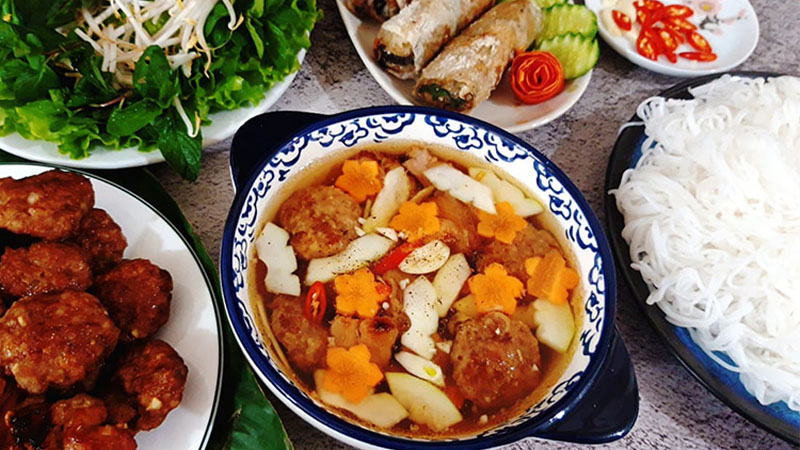
While many cultures view lunch as a rushed necessity, in Vietnam, it is the zenith of the day’s street food theater—a communal, bustling affair where simple ingredients reach profound heights. This is a crucial time in the Vietnamese street food guide.
The moment the clock ticks toward noon, the streets transform. The sheer variety is astonishing, but the common thread is hyper-specialization. A vendor might sell only one dish, perfected over decades, like the famous bún chả stalls in Hanoi. Watch them grill the small, seasoned pork patties over hot charcoal, the smoke carrying the irresistible aroma of caramelizing meat and fish sauce. A hearty serving of bún chả generally costs between $1.20 and $2.50 USD, a true bargain for such fresh, aromatic flavors.
For a unique midday experience, venture to Quảng Nam province and seek out mì Quảng. Unlike the ubiquitous phở, this dish is a deeply Central Vietnamese ritual. It’s served with a basket of fresh herbs, peanuts, sesame rice crackers, and just enough broth to "kiss" the thick, turmeric-yellow noodles. This flavorful regional specialty typically falls within the $1.00 to $2.00 USD range.
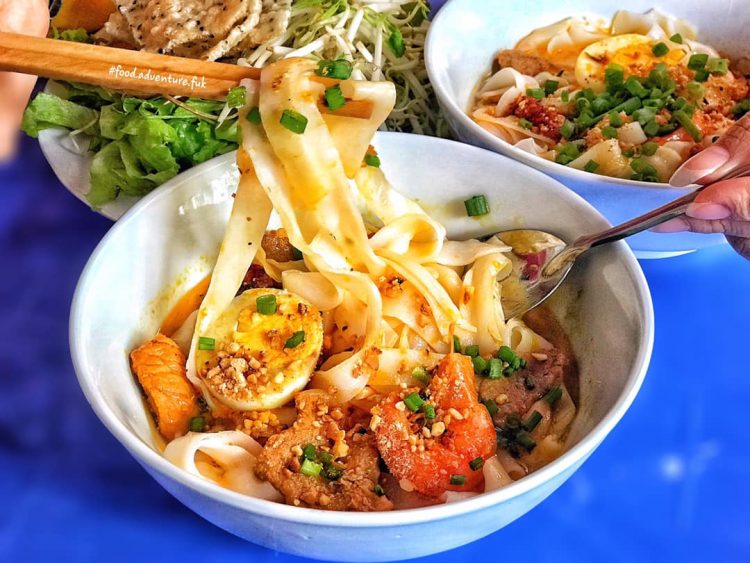
Noon is also the prime time for the globally famous Bánh Mì. This legacy of French colonialism is a masterpiece of fusion: a crispy, light baguette stuffed with pork pâté, cold cuts, fresh cilantro, chili, and a medley of crunchy pickled vegetables. A staple in any Vietnamese street food guide, it’s the ultimate grab-and-go meal, costing a stunningly affordable $0.75 to $2.00 USD, depending on the filling and location.
The Twilight Ritual: Dinner and Dessert in the Vietnamese Street Food Guide
As the harsh sun fades and the city lights begin to glow, the street food scene shifts its focus from quick sustenance to lingering, communal dining—the twilight ritual.
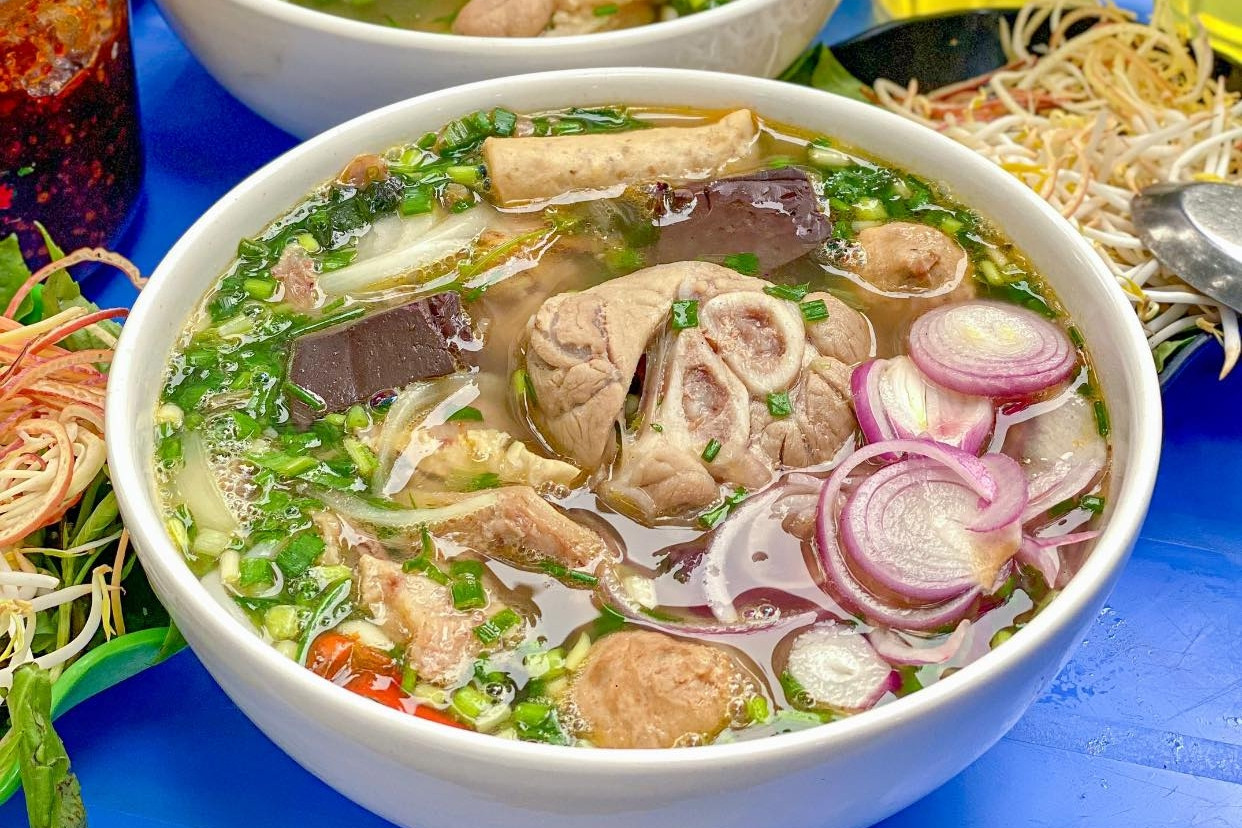
Dinner is often a continuation of the day's fresh bounty, but with a different atmosphere. For those seeking bold, regional flavor, the Central Vietnamese specialty Bún Bò Huế offers a striking contrast to phở. Hailing from the former Imperial capital of Huế, this soup is known for its spicy, complex, and intensely savory lemongrass and beef bone broth, served with thick vermicelli noodles, beef slices, and often cubes of pork blood. A standout in any Vietnamese street food guide, this rich, deeply satisfying bowl is a must-try for spice lovers and generally costs between $1.50 and $3.00 USD.
In cities like Ho Chi Minh City, areas known for barbecue (đồ nướng) come alive. Small grills are set up directly on the pavement, where locals char everything from succulent chicken wings to fresh seafood and okra. While specialty seafood can be higher, a satisfying, meaty street dinner plate often costs around $2.00 to $4.00 USD, perfect when paired with a fresh glass of bia hơi (draft beer), which can be had for as little as $0.20 to $0.60 USD.
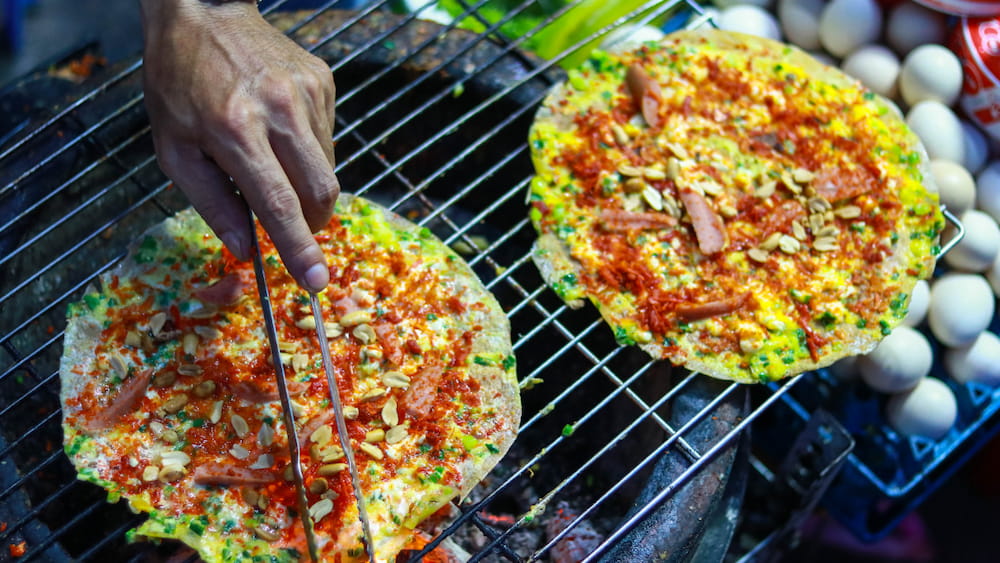
For a truly lesser-known evening treat, travel to the Central Highlands city of Đà Lạt and experience the evening street food. Seek out the small carts selling bánh tráng nướng, often dubbed “Vietnamese pizza.” A beloved stop in any Vietnamese street food guide, this delicious, savory snack costs a mere $0.50 to $1.50 USD per serving.
And no Vietnamese evening is complete without dessert. From the sweet soup vendors (chè) that line the sidewalks, which typically cost between $0.40 and $1.00 USD, the street food ritual offers a sweet send-off.
The Vietnamese street kitchen operating from the crack of noon until the close of night—is the country's ultimate cultural classroom. With a budget of less than $10 USD for three meals, to eat on the street is to participate in the daily feast and, in doing so, truly learn the language of Vietnam, a lesson beautifully captured in any Vietnamese street food guide.
Conclusion
This Vietnamese street food guide confirms that eating on a plastic stool is the most authentic, affordable, and culturally immersive way to experience Vietnam. The hyper-specialization of vendors, the incredible diversity of regional dishes like Bún Bò Huế and Mì Quảng, and the communal atmosphere of the sidewalk scene are the true languages of the country's profound culinary tradition.
Ready to pull up a plastic stool? Join our vibrant community on Facebook to share your trekking stories and tips, and don't forget to like the ExoTrails fanpage for the latest updates and exclusive offers!
Frequently Asked Questions (FAQs)
Q: Is it safe to eat Vietnamese street food?
A: Yes, it is generally very safe, especially at busy stalls with high turnover, as the food is cooked fresh and often right in front of you.
Q: What is the average cost of a full meal from Vietnamese street food vendors?
A: A full, satisfying meal of major dishes like Phở or Bún Chả typically costs between $1.50 and $3.00 USD per person.
Q: What is the difference between Phở and Bún Bò Huế?
A: Phở is a Northern-style soup with a clearer, subtle broth, while Bún Bò Huế is a Central-style soup with a spicy, intensely savory, and complex lemongrass-based broth.
Q: What is the one must-try item in this Vietnamese street food guide?
A: The Bánh Mì is globally recognized and a cultural masterpiece of fusion, offering incredible flavor and value for typically less than $2.00 USD.


