


While Phở remains the iconic face of Vietnamese cuisine, the country is home to a variety of regional noodle dishes that offer their own unique flavors and cultural significance. This central Vietnam food guide pits three beloved noodle dishes against each other: Mì Quảng from Quảng Nam, Bún bò Huế from Huế, and Bún chả cá from Nha Trang. Each dish showcases the diverse culinary landscape of Vietnam and invites you to experience a wider palette of flavors beyond the traditional Phở.
Read more interesting posts here:
- Mindful Movement Trails: Powerful Ways to Breathe, Move, and Explore Nature
- Best Value Travel Destination 2026: Incredible Reasons Travelers Are Choosing Vietnam
- Vietnam City Life Guide: Incredible Ways Hanoi’s Past Meets Ho Chi Minh City’s Future
1. Mì Quảng: The taste of Quảng Nam in our central Vietnam food guide
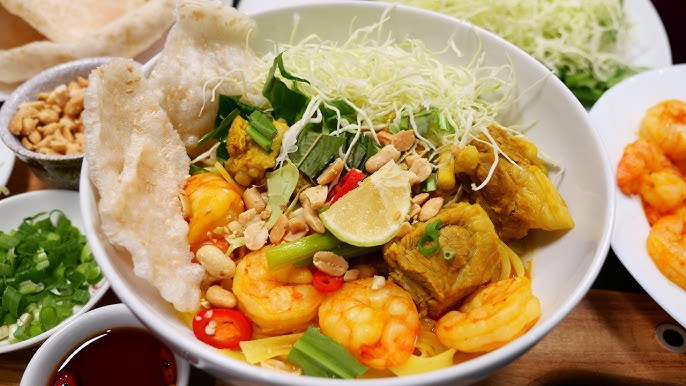
Mì Quảng is a vibrant noodle dish that originates from Quảng Nam Province, making it an absolute staple in any authentic central Vietnam food guide. It features wide rice noodles that are typically served with a small amount of broth, garnished with an array of fresh herbs and seasonal toppings.
Key Ingredients:
- Noodles: Made from rice flour, these noodles are thick and have a chewy texture.
- Protein Options: Commonly paired with shrimp, pork, or chicken, sometimes including boiled eggs or tofu.
- Garnishes: Typically topped with roasted peanuts, fresh herbs, banana flower, cucumber, and sometimes fried shallots, enhancing both flavor and presentation.
- Flavor Profile: Mì Quảng is known for its savory and slightly nutty flavor. The use of turmeric in the noodles gives them a distinct yellow hue, and the broth is often infused with a blend of spices, contributing to its unique taste.
- Must-Try in Quảng Nam: Head to Mì Quảng Đà Nẵng for an authentic experience and to savor the dish in its home region.
2. Bún bò Huế: A spicy delight featured in this central Vietnam food guide
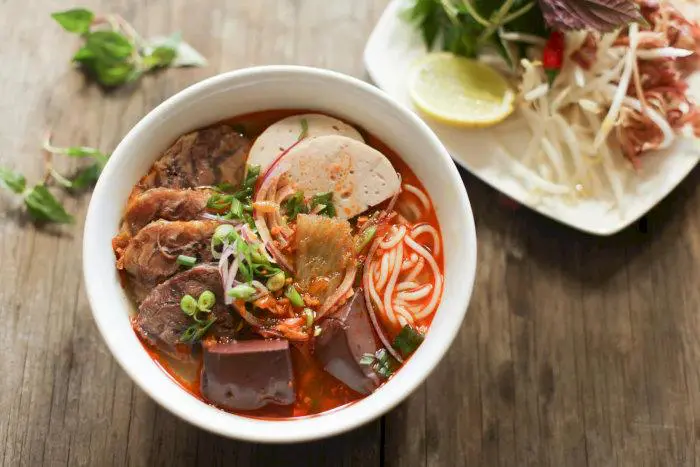
Originating from the ancient imperial capital of Huế, Bún bò Huế is a rich and hearty soup that combines rice vermicelli with beef, making it distinct from the clearer broth of Phở and an essential stop on your central Vietnam food guide journey.
Key Ingredients:
- Noodles: Flat rice vermicelli (bún) that is soft and slippery.
- Broth: A spicy and aromatic broth, usually made from beef bones and flavored with lemongrass, chili, and herbs.
- Protein: Typically features beef shank, brisket, and sometimes pork, along with a side of congealed pork blood pudding.
- Flavor Profile: Bún bò Huế is characterized by its bold flavors and spicy notes, making it a warming dish perfect for those who enjoy a kick in their meals. The combination of herbs and spices creates a complex and satisfying broth.
- Must-Try in Huế: Visit Bún Bò Huế Huế for a spoonful of authenticity and to experience this dish in the city that birthed it.
3. Bún chả cá: Nha Trang’s coastal charm for your Vietnam food guide
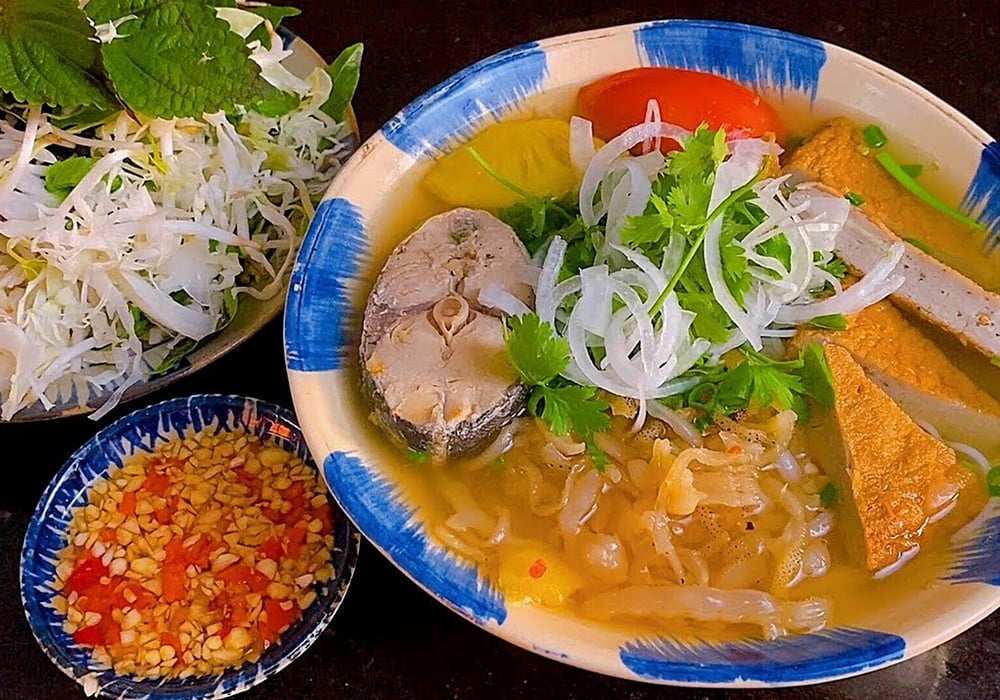
Bún chả cá hails from Nha Trang and is a seafood noodle dish that celebrates the flavors of the sea, earning its rightful place in our comprehensive central Vietnam food guide. It’s renowned for its fragrant fish broth and is often enjoyed as a refreshing meal.
Key Ingredients:
- Noodles: Soft rice vermicelli (bún) that pairs perfectly with the broth.
- Fish Broth: Made from simmered fish bones and often enriched with other seafood flavors, offering a light yet flavorful base.
- Fish Cake: The star of the dish, made from minced fish and a blend of spices, then molded into cakes and fried or grilled.
- Flavor Profile: Bún chả cá is light and fragrant, with a slightly tangy broth that showcases the ocean’s freshness. The fish cakes provide a satisfying texture that complements the noodles and broth.
- Must-Try in Nha Trang: Head to Bún Chả Cá Hàng Dương for a hearty bowl that captures the coastal essence of this delightful dish.
One of the most exciting ways to discover Saigon’s food scene is riding on the back of a motorbike with a local guide. You can check out this Ho Chi Minh City street food & sightseeing motorbike tour for a deeper taste of the city here: https://bit.ly/4us1LZm
Conclusion
While Phở may hold a special place in the hearts of many, relying on a trusted central Vietnam food guide invites you to step outside the box and explore the culinary richness of the country's middle regions. Each incredible dish like Mì Quảng, Bún bò Huế, and Bún chả cá, offers a unique flavor profile and nutritional benefits that tell a beautiful story of its specific region and its people.
So whether you’re wandering the heritage streets of Quảng Nam, indulging in Huế’s royal culinary traditions, or savoring coastal flavors in Nha Trang, make it a mission to taste these delicious noodles and truly enjoy the vibrant culinary journey that Vietnam has to offer!
Ready to share your delicious culinary discoveries and connect with fellow explorers? Follow our Facebook Page and join our ExoTrails Community Group to connect with fellow explorers and stay updated on the latest trails!
FAQs
What makes these regional noodles different from traditional Pho?
Regional noodles use vastly different broths, herbs, and proteins to directly reflect their unique local geography. For example, coastal towns rely heavily on fresh seafood broths, while royal cities like Hue prefer bold, spicy beef bone bases.
Is it safe to eat these noodle dishes at local street food stalls?
Yes, eating at busy, local street food stalls is generally very safe and is often where you will find the most authentic flavors. Just make sure to choose vendors with high turnover rates where the broth is kept constantly boiling.
Are there vegetarian options available for these regional dishes?
Many vendors offer delicious vegetarian versions of these famous noodle soups using tofu, mushrooms, and rich vegetable-based broths. You can easily find these plant-based alternatives by looking for the word "chay" on the restaurant's menu or storefront sign.


