

The south of Vietnam moves differently. It’s slower, deeper, a place where the rhythm of life follows the flow of the rivers and the call of the monsoon winds. For adventurers seeking to trade crowded coastlines for untamed beauty, exploring the Mekong Delta and the surrounding wild south is where Vietnam reveals its more soulful side.
From the labyrinthine waterways of the Mekong Delta to the dense green canopy of Nam Cat Tien and the mangrove sanctuaries near Can Gio, this is the Vietnam of whispering palms, hidden estuaries, and floating stories. It’s not just a destination — it’s an ecosystem of movement, culture, and survival.
Read more interesting posts here:
- Embrace the Monsoon: A Guide to Vietnam Rainy Season Travel and Adventure
- Empowering Women: The Heart of Community Based Tourism Vietnam
- Discover the Best Cultural Immersion Vietnam Experiences with ExoTrails
The authentic pulse of life when exploring the Mekong Delta
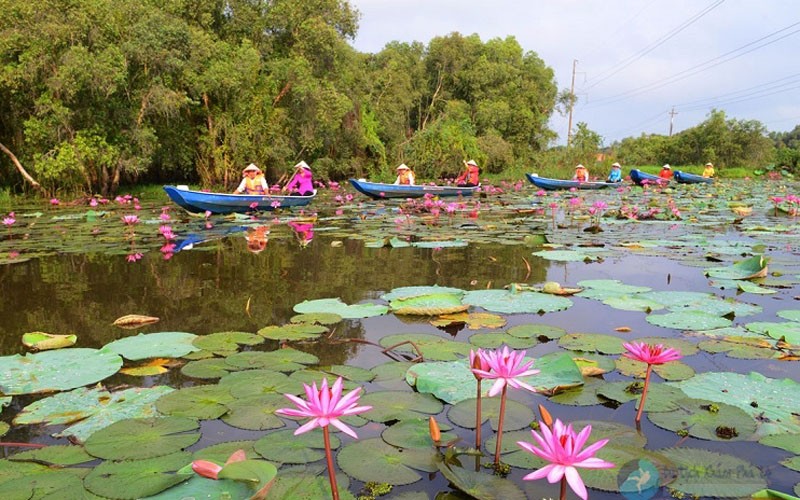
If the north is Vietnam’s spine, then the Mekong Delta is its beating heart. Here, land and water blur into one — a mosaic of rivers, canals, and rice paddies that stretch endlessly toward the horizon.
Whether you are exploring the Mekong Delta by kayak or bicycle, you’ll pass stilt houses, floating markets, and lush fruit orchards where life thrives on the water’s edge. At dawn, locals glide across the canals, balancing baskets of mangoes and pomelos on long wooden boats — a timeless choreography of trade and trust. The delta’s charm lies in its contradictions: tranquil yet alive, remote yet human. Every bend in the river leads to a new discovery — a pagoda wrapped in vines, a floating café serving coconut coffee, or a group of schoolchildren waving from a bamboo bridge.
Nam Cat Tien – The jungle that breathes
Three hours north of Ho Chi Minh City, Nam Cat Tien National Park is one of Vietnam’s last great rainforests — home to gibbons, elephants, and centuries-old trees that pierce the sky.
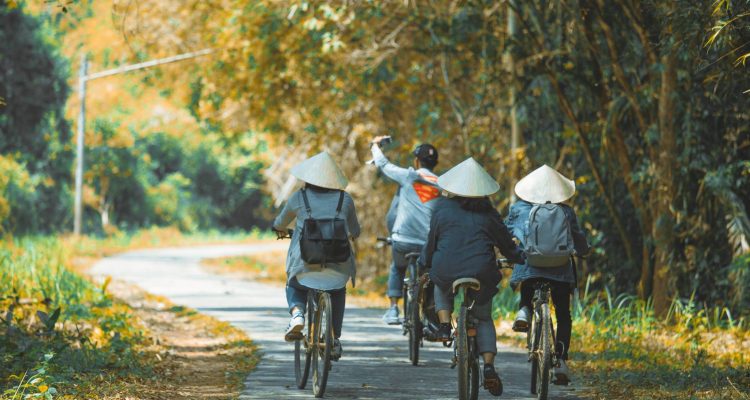
Trekking or cycling here isn’t just exercise; it’s immersion. The jungle hums with life — cicadas, hornbills, and the distant splash of a river otter. While you are exploring the Mekong Delta hinterlands, walk quietly in Nam Cat Tien, and you might spot the golden flash of a langur leaping through the canopy. Stay overnight in one of the park’s eco-lodges, and you’ll wake to birdsong and mist drifting over the Dong Nai River. Many explorers say it feels like stepping into an older world — one where nature still decides the pace of your day.
Mangrove sanctuaries and urban wilderness near exploring the Mekong Delta
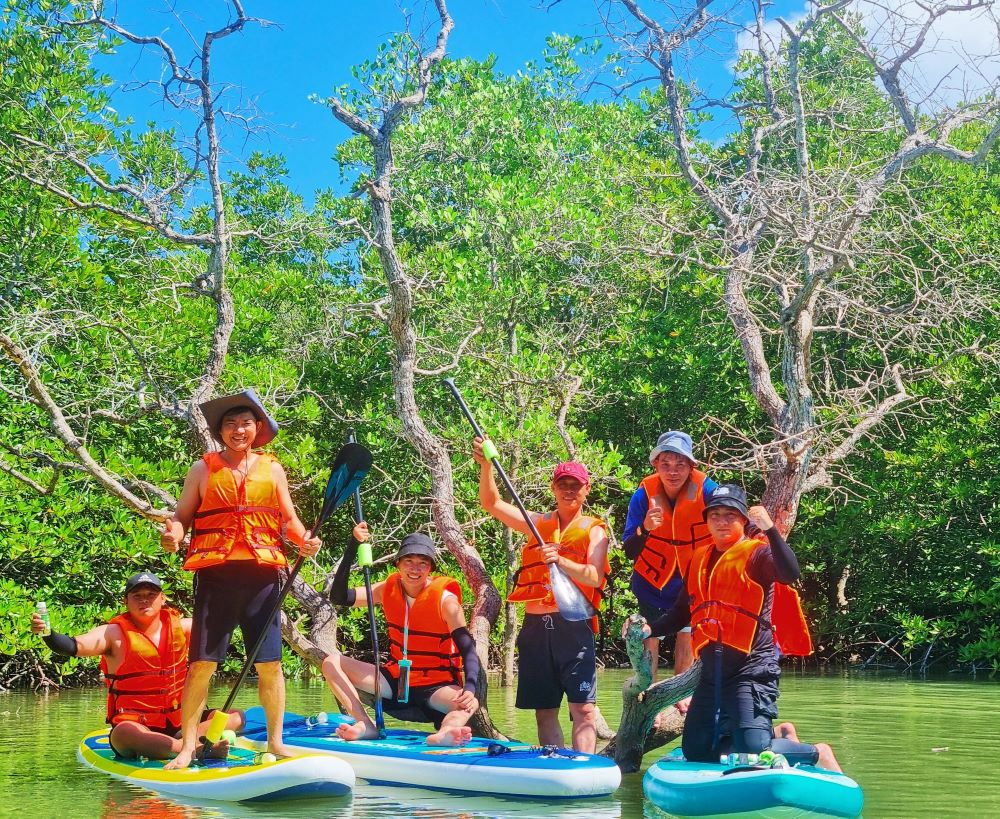
Closer to the city, the Can Gio Mangrove Biosphere Reserve offers a rare taste of wilderness within reach of Ho Chi Minh City. Dubbed “the green lungs” of the south, this UNESCO-recognized wetland is a labyrinth of tangled roots and tidal rivers.
Paddle through its mangrove forests, and you’ll find macaques lounging in branches, mudskippers darting beneath your kayak, and fishermen pulling in shrimp traps the way their ancestors did centuries ago. Can Gio reminds travelers that even when exploring the Mekong Delta regions near Vietnam’s bustling cities, nature finds a way to thrive.
The forgotten waterways
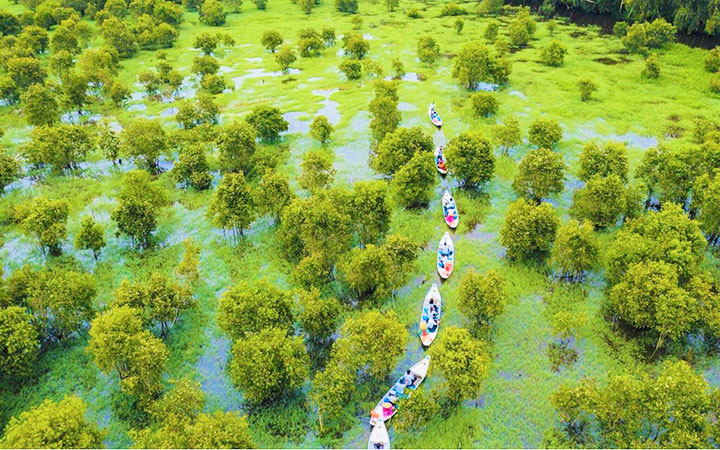
Beyond these protected areas, the true magic lies in the forgotten waterways — the narrow, unmapped trails of the south that connect small fishing villages, hidden mangrove sanctuaries, and riverside temples.
Here, life flows in quiet dignity. You’ll see elderly women drying rice paper in the sun, children diving off wooden piers, and men casting nets in the fading light. These moments, ordinary yet extraordinary, are what make exploring the Mekong Delta feel so alive and personal.
Adventure with a purpose while exploring the Mekong Delta
The rise of platforms like ExoTrails is helping explorers rediscover these routes responsibly — mapping kayaking paths, cycling tracks, and jungle hikes that respect local ecosystems and communities. Each trail logged, each story shared, becomes part of a larger mission: to make Vietnam’s adventure culture both accessible and sustainable. Because exploring the Mekong Delta isn’t about ticking off destinations. It’s about slowing down, listening, and letting the rivers lead you somewhere unexpected — maybe even back to yourself.
Conclusion
Exploring the Mekong Delta and the wild landscapes of Southern Vietnam offers more than just a scenic escape; it provides a profound connection to the rhythm of nature and local heritage. Whether you are paddling through the mangroves of Can Gio or cycling past the rice paddies of the Delta, the experience invites you to embrace a slower, more meaningful way of traveling. By choosing sustainable paths and engaging with the community, you ensure that these vibrant waterways remain a sanctuary for generations to come.
Ready to dive deeper into the wild South? Join our community of adventurers in the ExoTrails Facebook group and like our Fanpage to stay updated on weather-ready trails and local trekking tips!
FAQs
What is the best time of year for exploring the Mekong Delta?
The best time to visit is during the dry season from November to April, when the weather is stable and ideal for outdoor activities like cycling and kayaking.
Can I visit the floating markets while exploring the Mekong Delta?
Yes, markets like Cai Rang in Can Tho are most active in the early morning, offering a vibrant look at traditional water-based commerce.
Is it possible to go trekking while exploring the Mekong Delta region?
While the Delta is mostly flat, nearby areas like Nam Cat Tien National Park offer excellent jungle trekking opportunities for nature lovers.
How do I find authentic routes for exploring the Mekong Delta?
Using the ExoTrails can help you find mapped cycling and kayaking paths that go beyond the typical tourist routes and into the heart of local villages.


