

Deep within Vietnam’s forests, far beyond the marked trails and tourist paths, lie the remnants of ancient civilizations, temples swallowed by vines, moss-covered altars, and sanctuaries guarded by towering trees that have reclaimed their territory. These hidden jungle temples in Vietnam remain some of the country’s most hauntingly beautiful archaeological secrets, waiting quietly for travellers who are willing to step deeper into the wild.
Unlike famous sites such as Mỹ Sơn or the Imperial City of Huế, these hidden jungle temples in Vietnam do not announce themselves with grand entrances or restored walls. They appear suddenly and quietly, a carved stone peeking through orchids, a fallen lintel draped in ferns, a forgotten stairway disappearing beneath a thick coat of moss. Visiting them feels less like sightseeing and more like discovering a lost chapter of history.
Read more interesting posts here:
- Sky Trails and Rice Paddies: The Best Hiking Routes in Sapa for Cultural Immersion
- Adventure Awaits: Exploring Vietnam Beyond Beaches
- Finding Yourself: The Transformative Journey to Pilgrimage Sites Vietnam Offers
Exploring Nui Ba Den and the hidden jungle temples in Vietnam
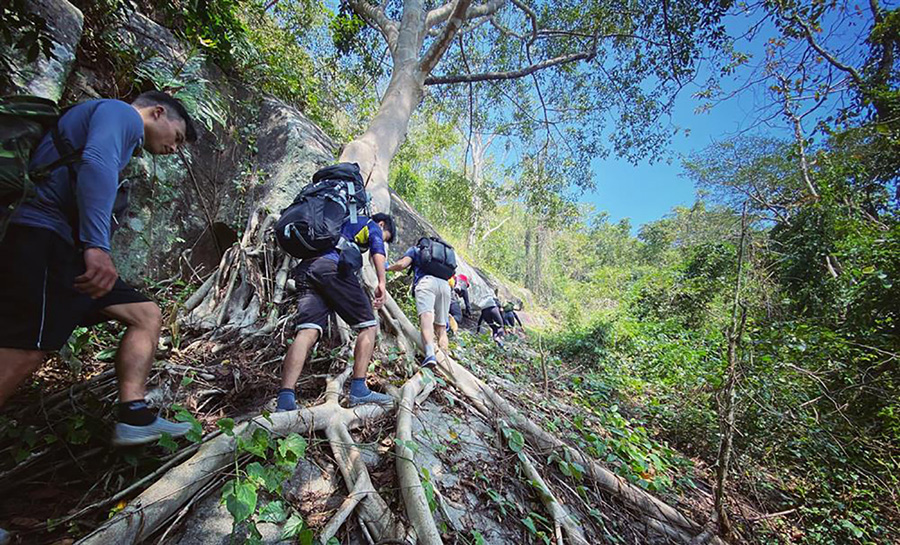
One of the most intriguing examples of hidden jungle temples in Vietnam lies in Núi Bà Đen (Black Virgin Mountain) in Tây Ninh, where overgrown footpaths lead explorers toward forgotten shrines hidden beneath dense jungle canopies. These structures, believed to be centuries old, sit quietly along cliffsides and narrow ridges, offering sweeping views that contrast sharply with their cloaked, secretive presence. During early morning treks, travellers sometimes find these altars bathed in golden light, a surreal moment where nature and ancient belief meet.
The Cham sanctuaries: Uncovering hidden jungle temples in Vietnam
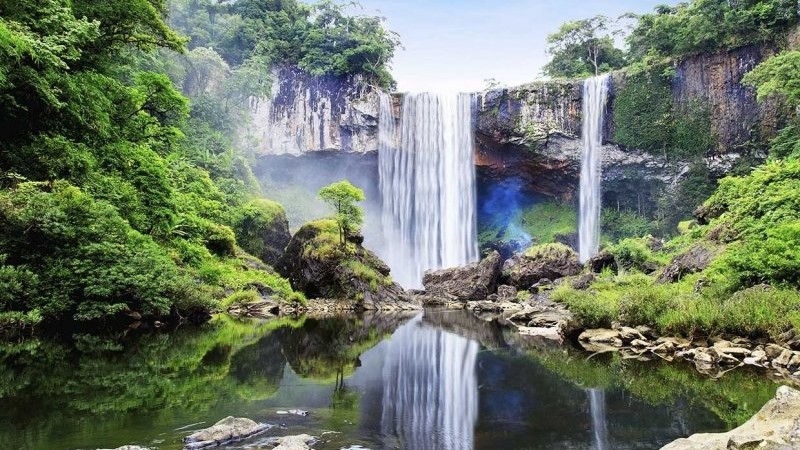
In the Central Highlands, the Cham jungle sanctuaries near An Khê and K’Bang (Gia Lai) are rarely mentioned in guidebooks about hidden jungle temples in Vietnam. Built by the Cham people long before modern borders existed, these temples are now half-consumed by roots and wild vegetation. Intricate sandstone carvings peek through the greenery — evidence of once-thriving kingdoms that traded, worshipped, and built across the region. Reaching them requires navigating quiet forest trails, crossing streams, and following local knowledge rather than map coordinates.
Northern shrines and hidden jungle temples in Vietnam
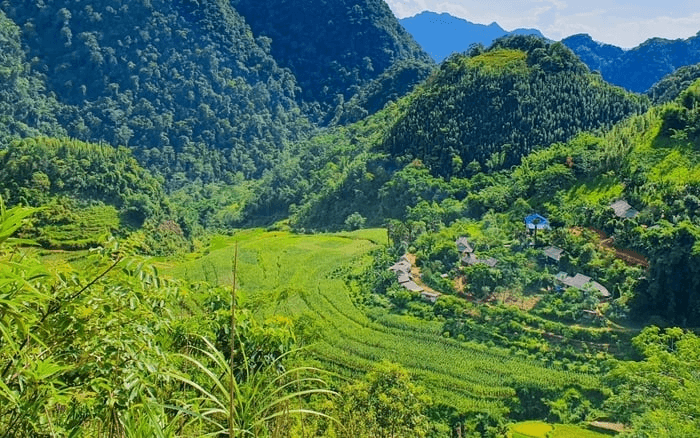
Further north, tucked within the thick forests of Thanh Hóa’s Pù Luông Reserve, small hidden jungle temples in Vietnam appear along ridge trails used by ethnic Thai communities. These sites are not monumental, but they carry centuries of spiritual presence. Weathered stone pillars, altar platforms, and ceremonial steps remain partially visible among bamboo and forest foliage. Travellers who wander here often describe a sense of stepping into a living museum, where nature preserves the past better than any wall or roof could.
Enchanting Khmer ruins among the hidden jungle temples in Vietnam
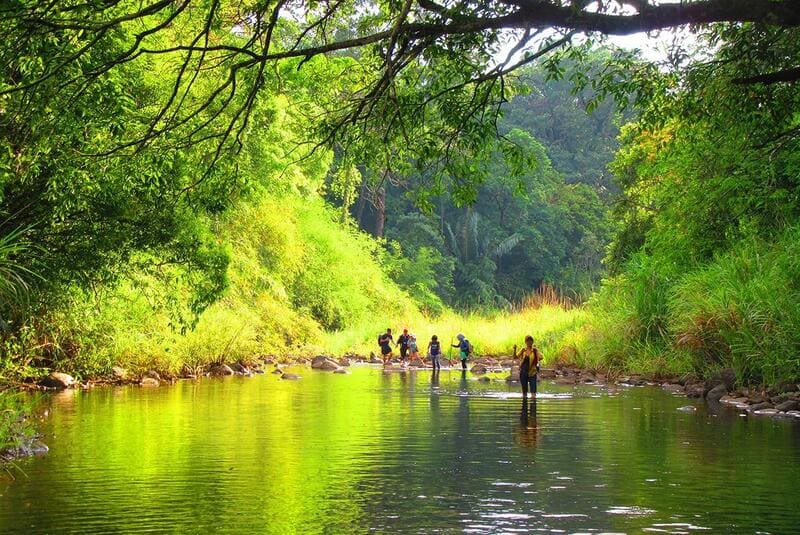
Perhaps the most enchanting of all are the forgotten Khmer-era ruins in the jungles of Tây Ninh and Bình Phước, where eroded temple foundations lie beneath towering Dipterocarp forests. These remote temples are quiet, solemn, and deeply atmospheric. The calls of gibbons echo across the canopy, sunlight filters through leaves in narrow beams, and every stone feels suspended in time. Standing among them, travellers experience a rare moment of silence that feels ancient, almost spiritual.
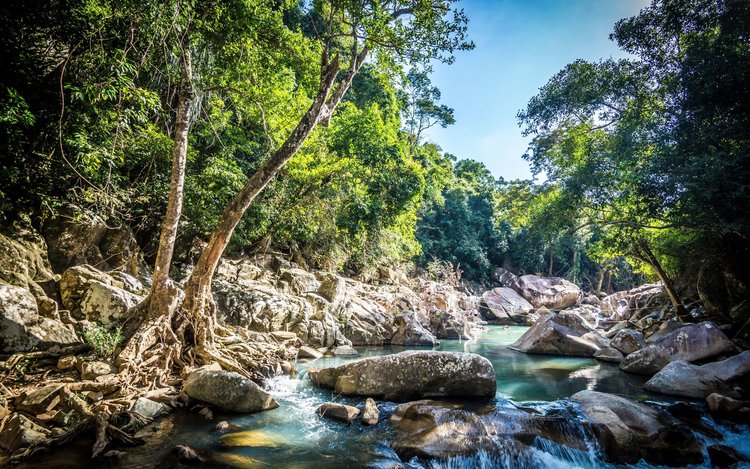
In coastal regions, jungle temples blend into mountain cliffs. On the forested slopes near Khánh Hòa’s Ba Hồ waterfalls, explorers sometimes stumble upon stone relics and tiny shrines hidden between boulders and vines. These remnants appear without warning — a carved niche here, an altar stone there, hinting at rituals once performed in nature’s embrace.
A living archive carved by time, not preservation
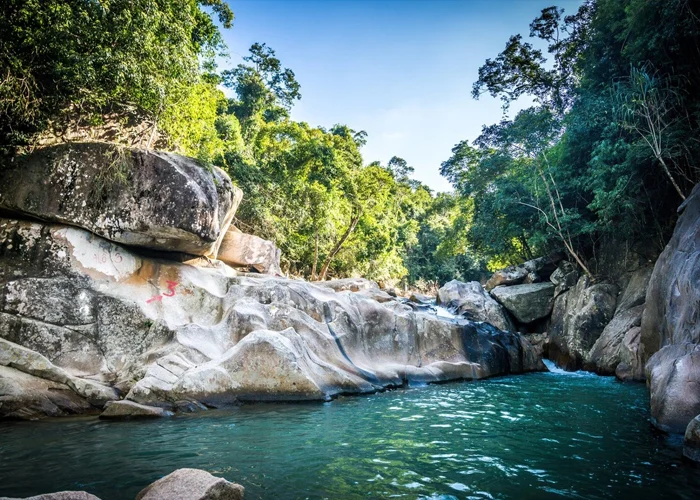
What makes these hidden jungle temples in Vietnam extraordinary is how nature has become their curator. Instead of restored walls or manicured grounds, travellers encounter structures shaped by centuries of wind, rain, root systems, and silence. Vines wrap around sandstone carvings like delicate frames. Tree roots weave through ancient bricks, lifting them into sculptural forms. Moss softens every line, as if nature is gently reclaiming what was once hers.
These temples are more than relics, they are living archives, where history is preserved not in museums but in ecosystems. Each site reflects a delicate balance: human devotion etched in stone, and nature’s slow, patient reshaping of everything left behind. Travellers who stand before these ruins are invited to witness a partnership between earth and architecture, a story told without words.
Vietnam’s hidden jungle temples offer more than beauty, they offer perspective. Each structure is a reminder of civilizations that rose and fell long before modern travellers set foot on these trails. They are places where history fades into nature, where vines trace the outlines of ancient carvings, and where silence holds memories the earth has chosen to keep.
Conclusion
Venturing into the lush forests to seek out the hidden jungle temples in Vietnam is an unforgettable journey back in time. By stepping off the crowded tourist trail, you discover ancient, moss-draped sanctuaries that whisper stories of forgotten kingdoms and powerful spiritual devotion. Pack your hiking boots, respect the sacred nature of these remote ruins, and let the untamed wilderness lead you to Vietnam's most profound archaeological secrets.
Ready to share your epic jungle discoveries and connect with fellow explorers? Follow our Facebook Page and join our ExoTrails Community Group to connect with fellow explorers and stay updated on the latest trails!
FAQs
Are the hidden jungle temples in Vietnam safe to visit without a local guide?
While some ruins are easily accessible, the majority of these deep jungle sanctuaries require a highly experienced local guide. The dense foliage, unmarked trails, and unpredictable weather make solo navigation incredibly risky for tourists.
What should I pack for an expedition to these ancient jungle ruins?
You should absolutely pack strong insect repellent, a sturdy pair of waterproof hiking boots, and a fully charged power bank. Because these deep jungle locations have no facilities, carrying plenty of drinking water and a basic first-aid kit is crucial.
Can I take photographs inside these sacred, overgrown temple grounds?
Yes, photography is generally welcomed and encouraged at these beautiful ancient sites. However, you must always maintain a high level of respect; avoid climbing on fragile stone walls or touching delicate moss-covered carvings to preserve them.